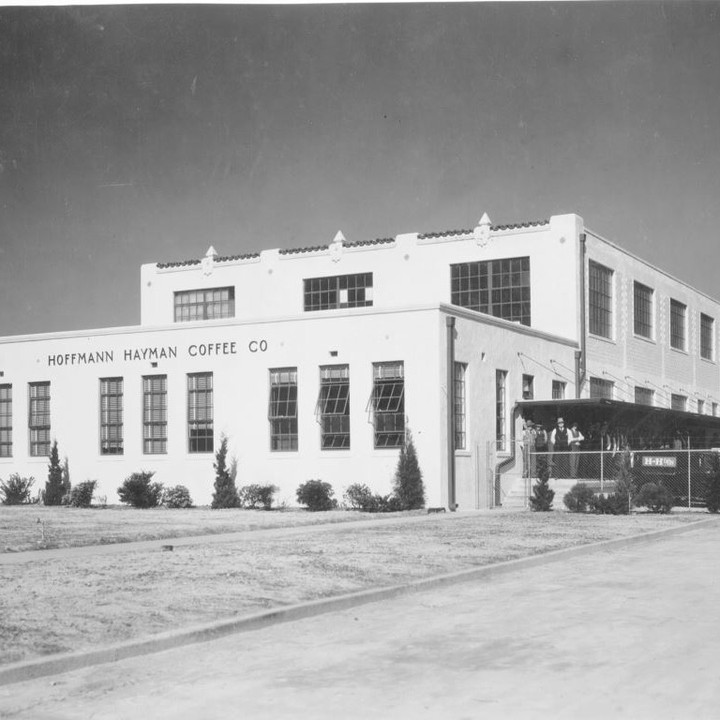
These photographs document the Hoffmann-Hayman Coffee Company plant in San Antonio — the building where the beans were roasted, the tins were filled, and the Crystalvac jars were packed — along with letterhead, loading-dock iron, and cross-references that tie the place to the product. The image grid follows the ordered sequence: in _data/galleries/factory/order.yml; this outline groups the same material by theme so you can browse by topic.

Historic views (1930s)

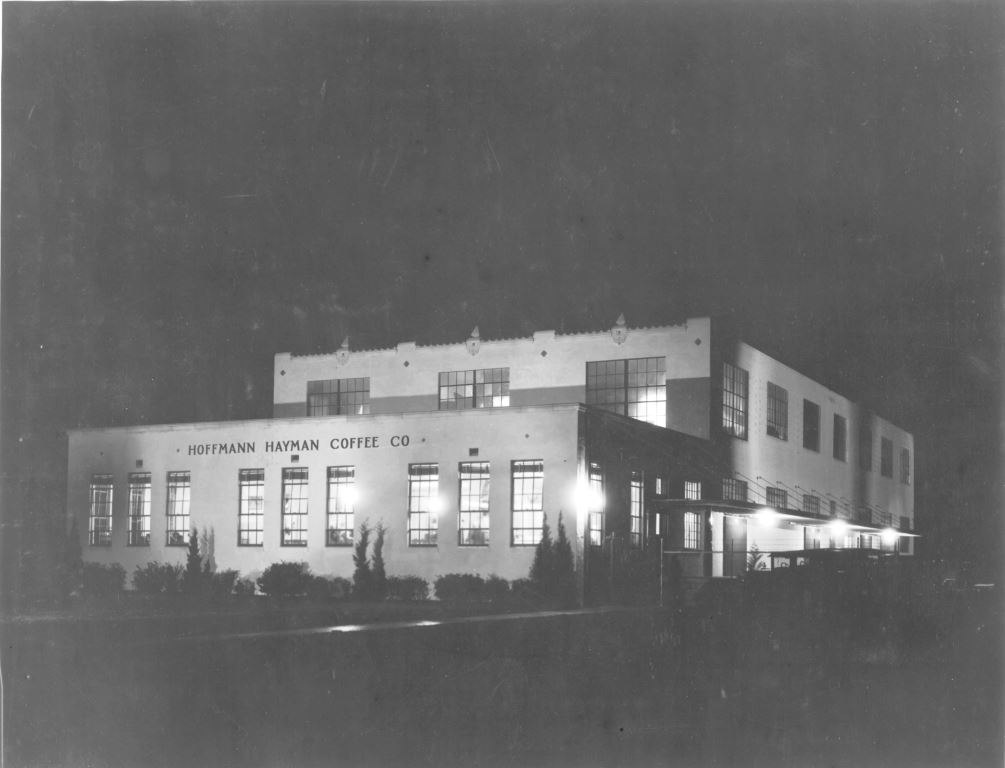
  • G. W. Mitchell 1932 daytime and nighttime exterior photographs of the new plant
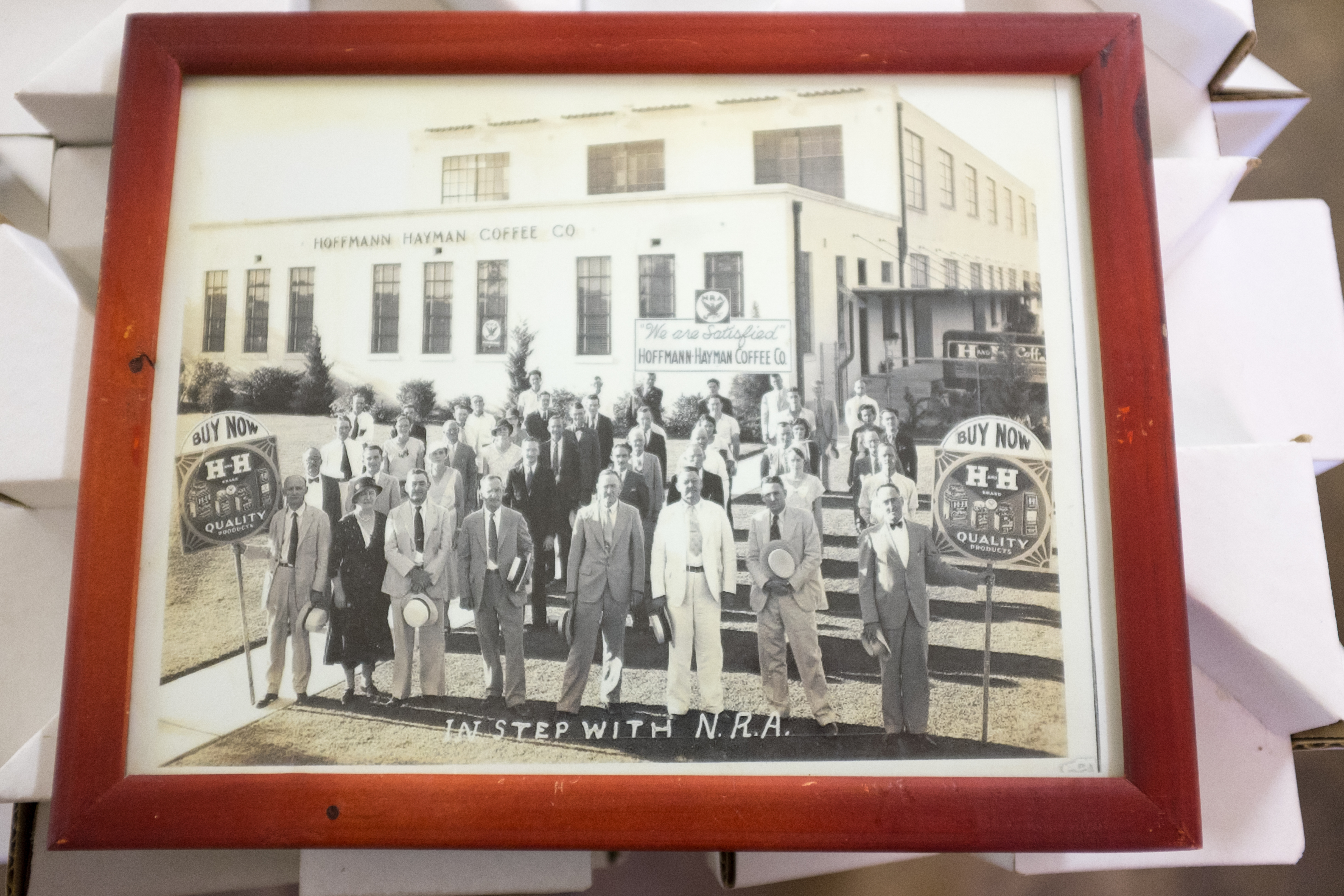
  • 1930s workforce / family group photo at the building
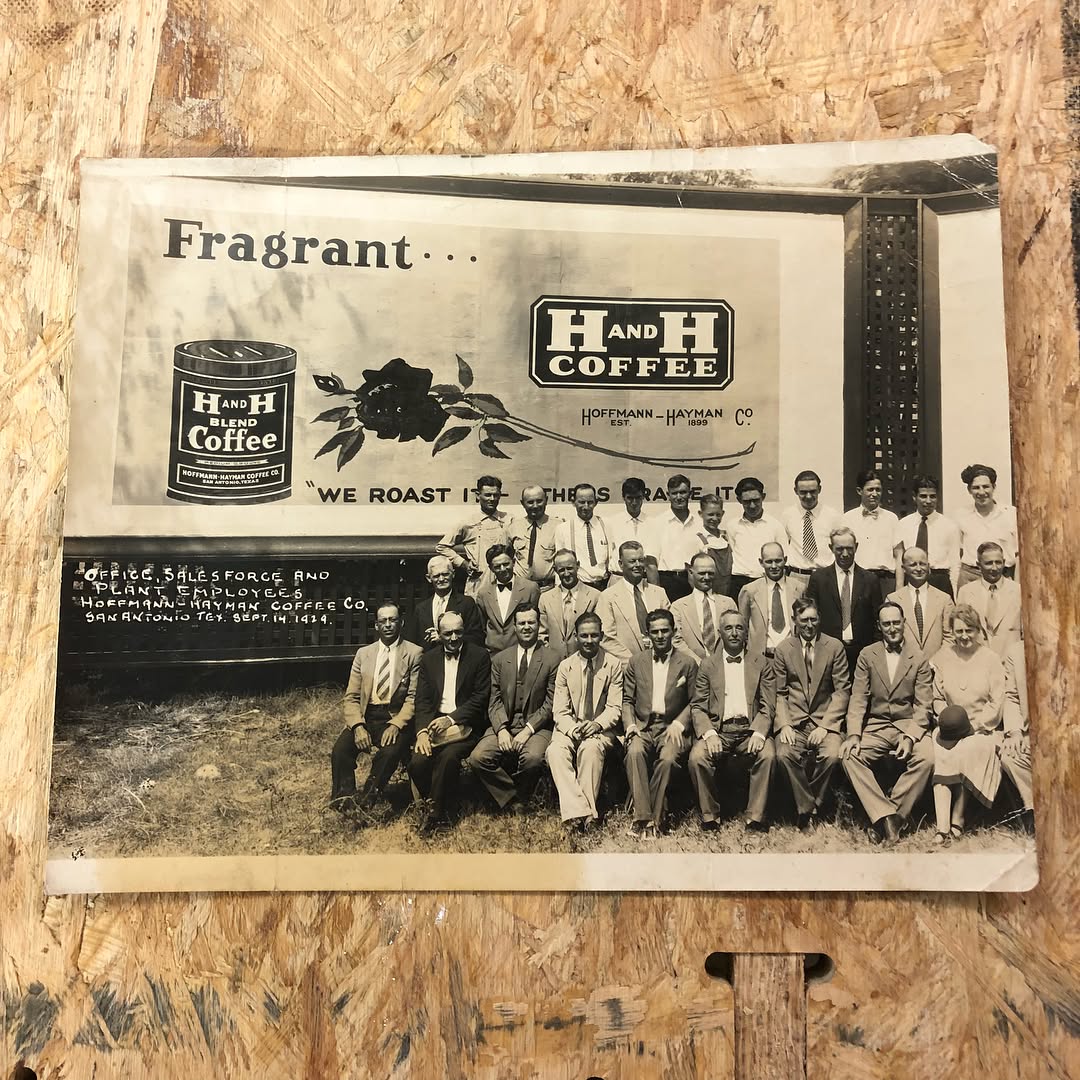
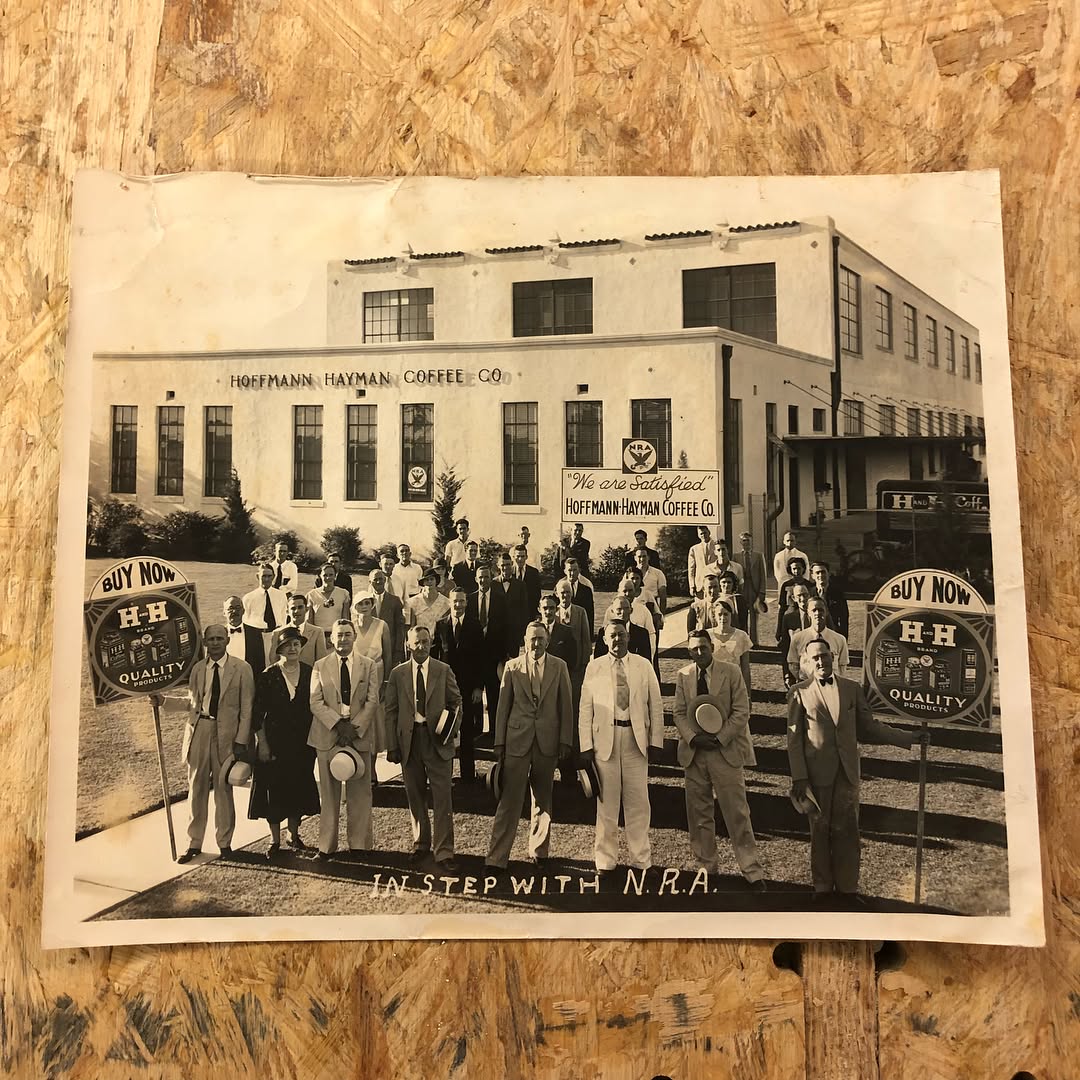
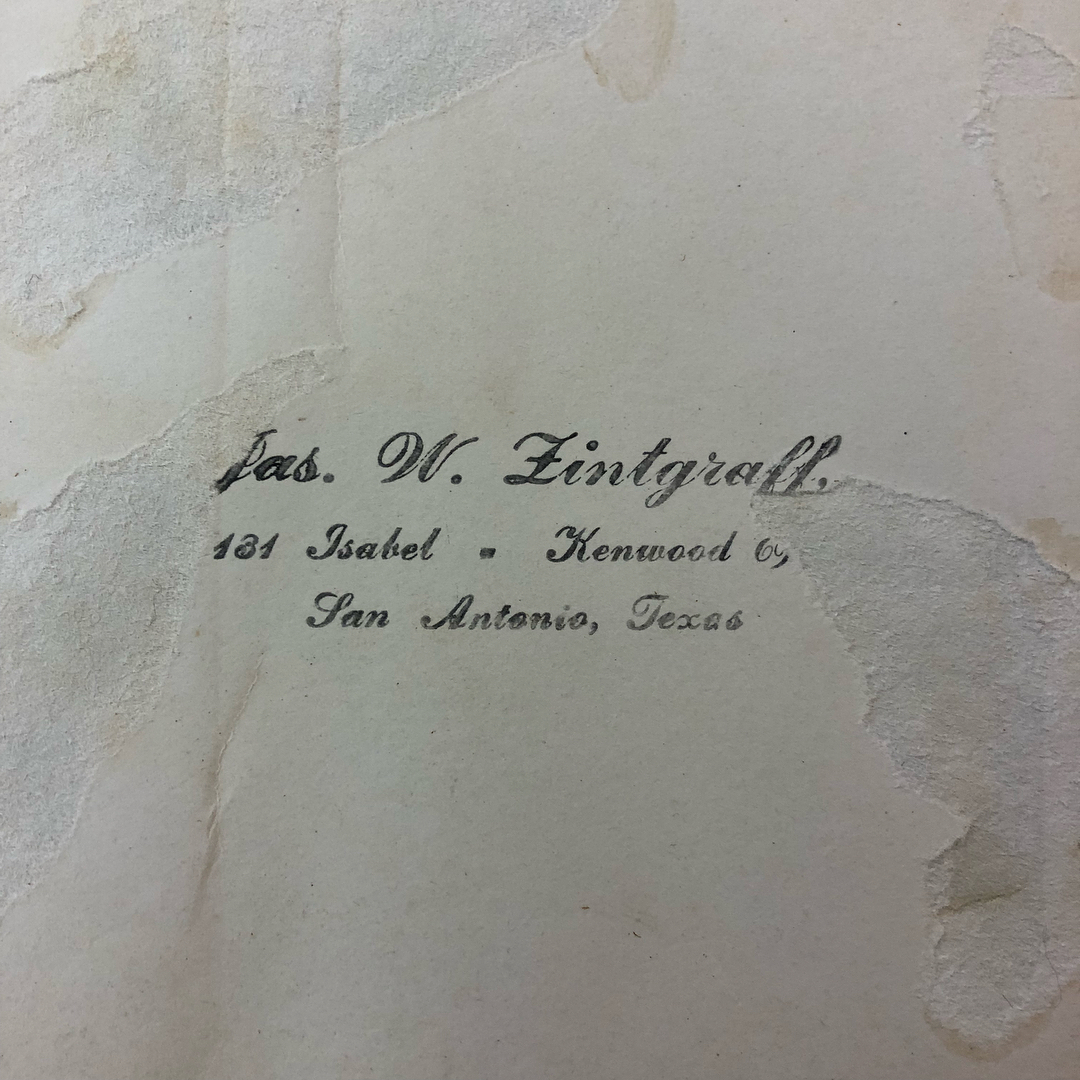
  • 1934 Jas. W. Zintgraff press prints — office and plant staff at the Fragrant billboard, N.R.A. group on the front steps, and the Zintgraff studio stamp on the reverse
  • 1932 exterior (Minnie Hoffmann context)

Current exteriors — front, south, roof line

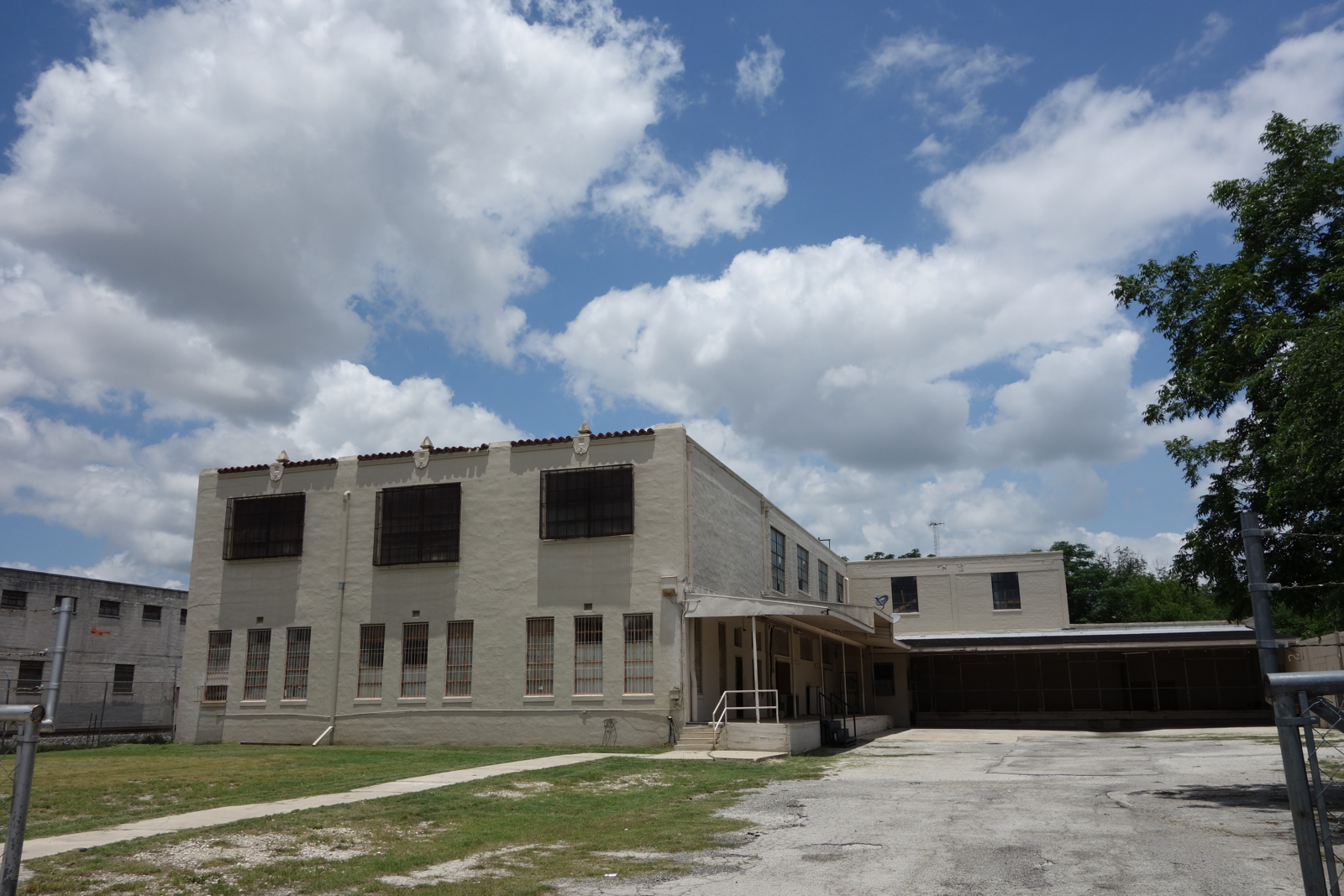
  • 2014 front approach and façade close-up
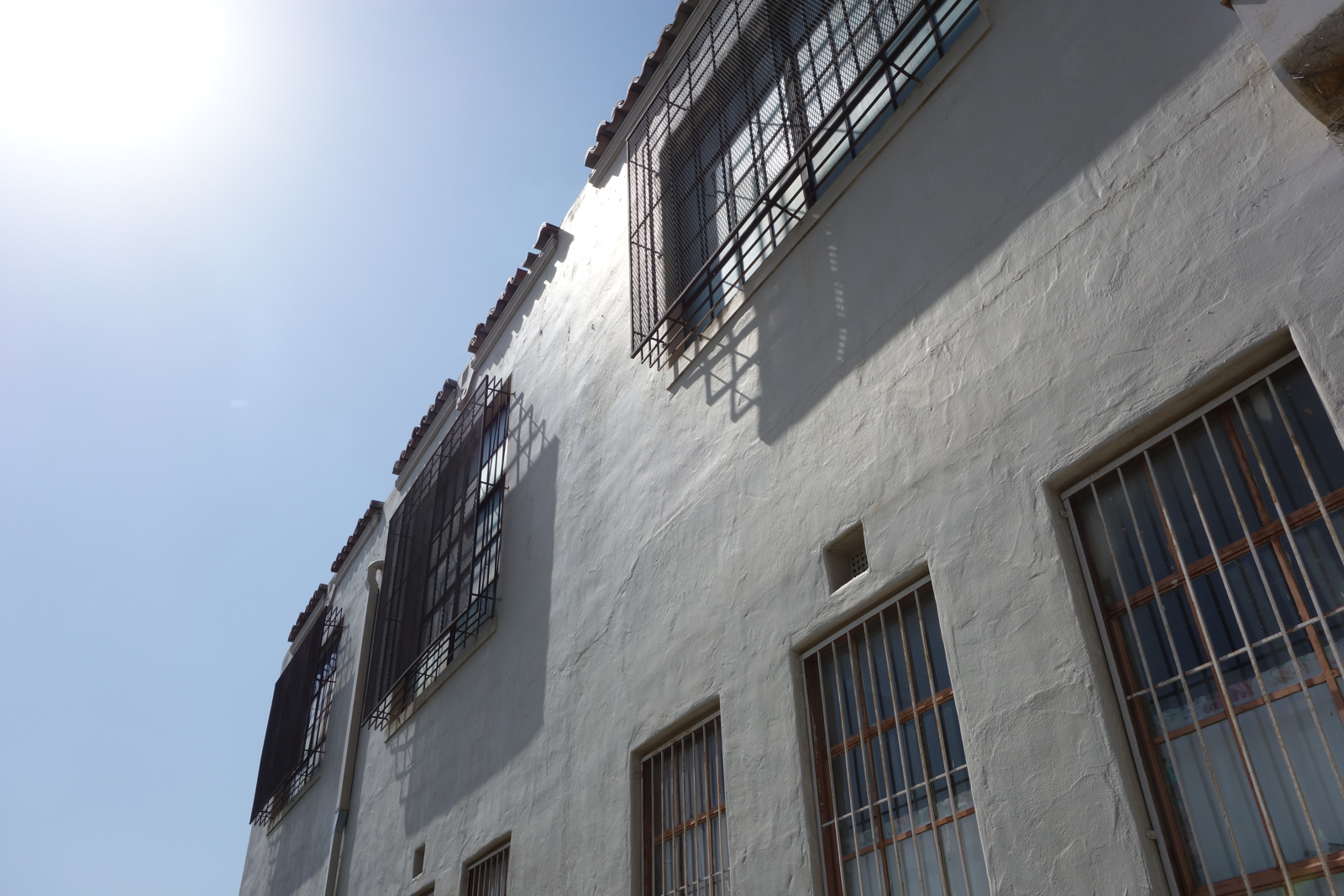
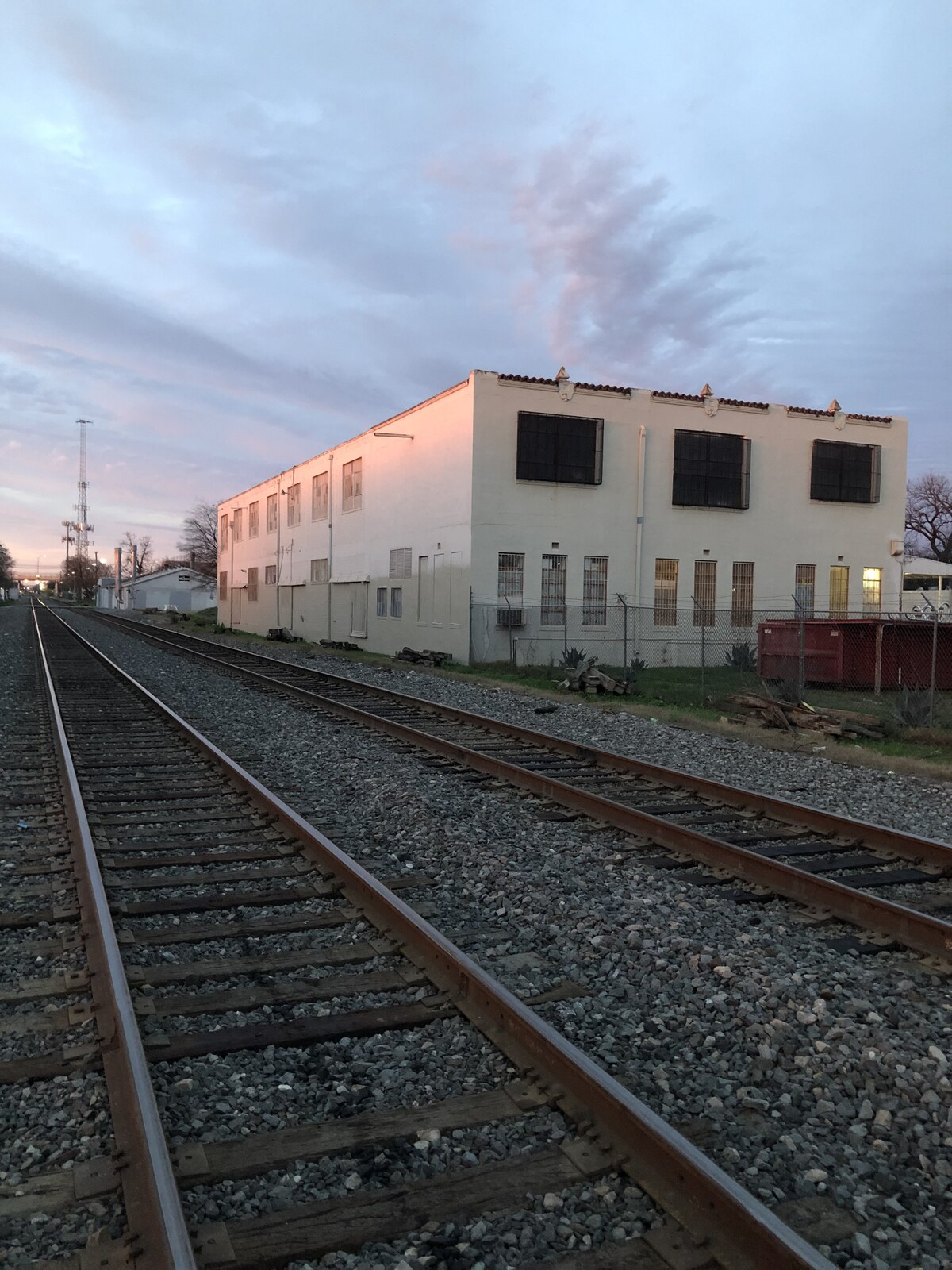
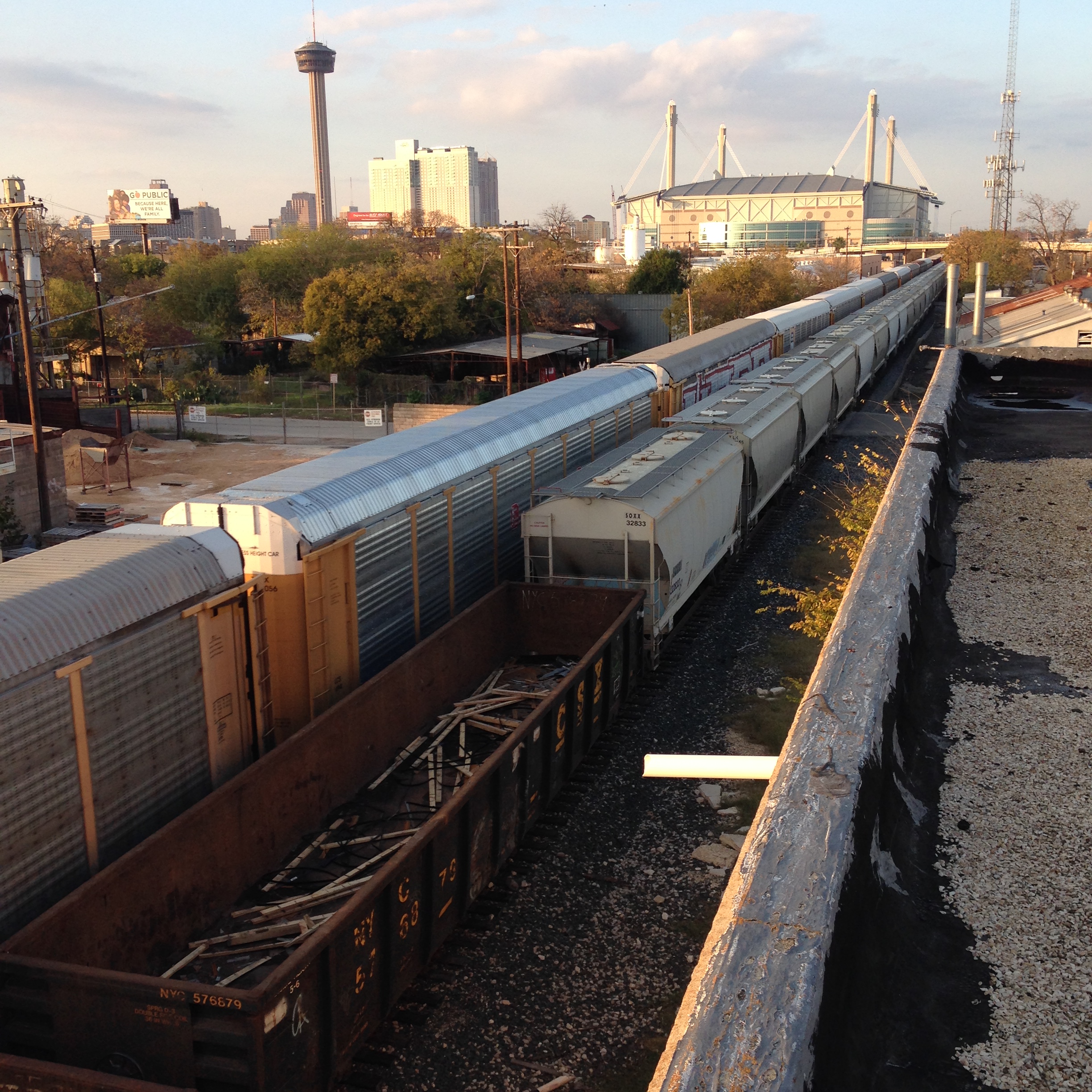
  • South end and full west rail flank at dusk (Feb 2019 — sun on south parapet)
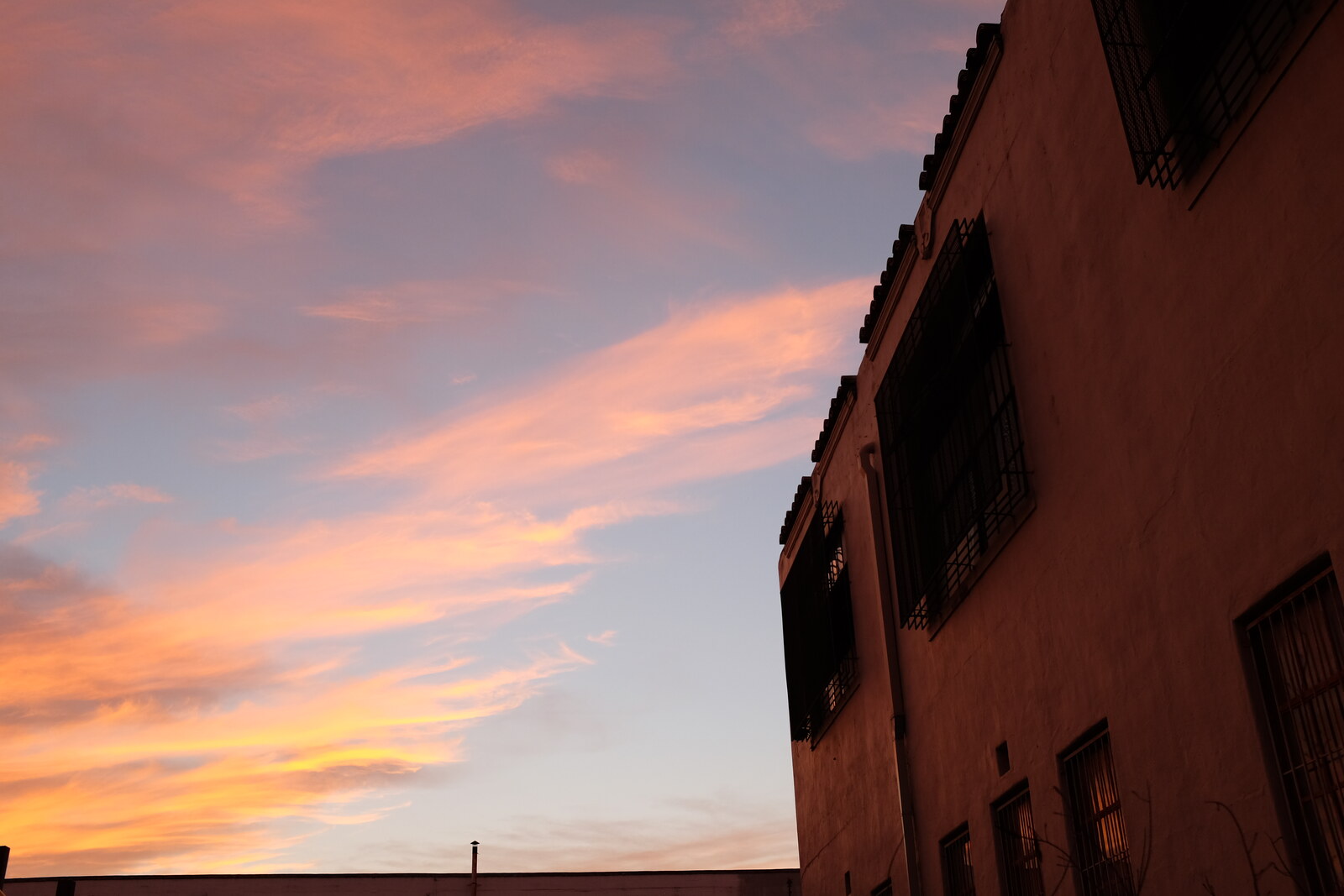
  • South face at dusk with interior light through cages (Mar 2021)
  • Oct 2015 — gravel roof above the south parapet, pantile coping and finials, siding and neighbors to the southwest
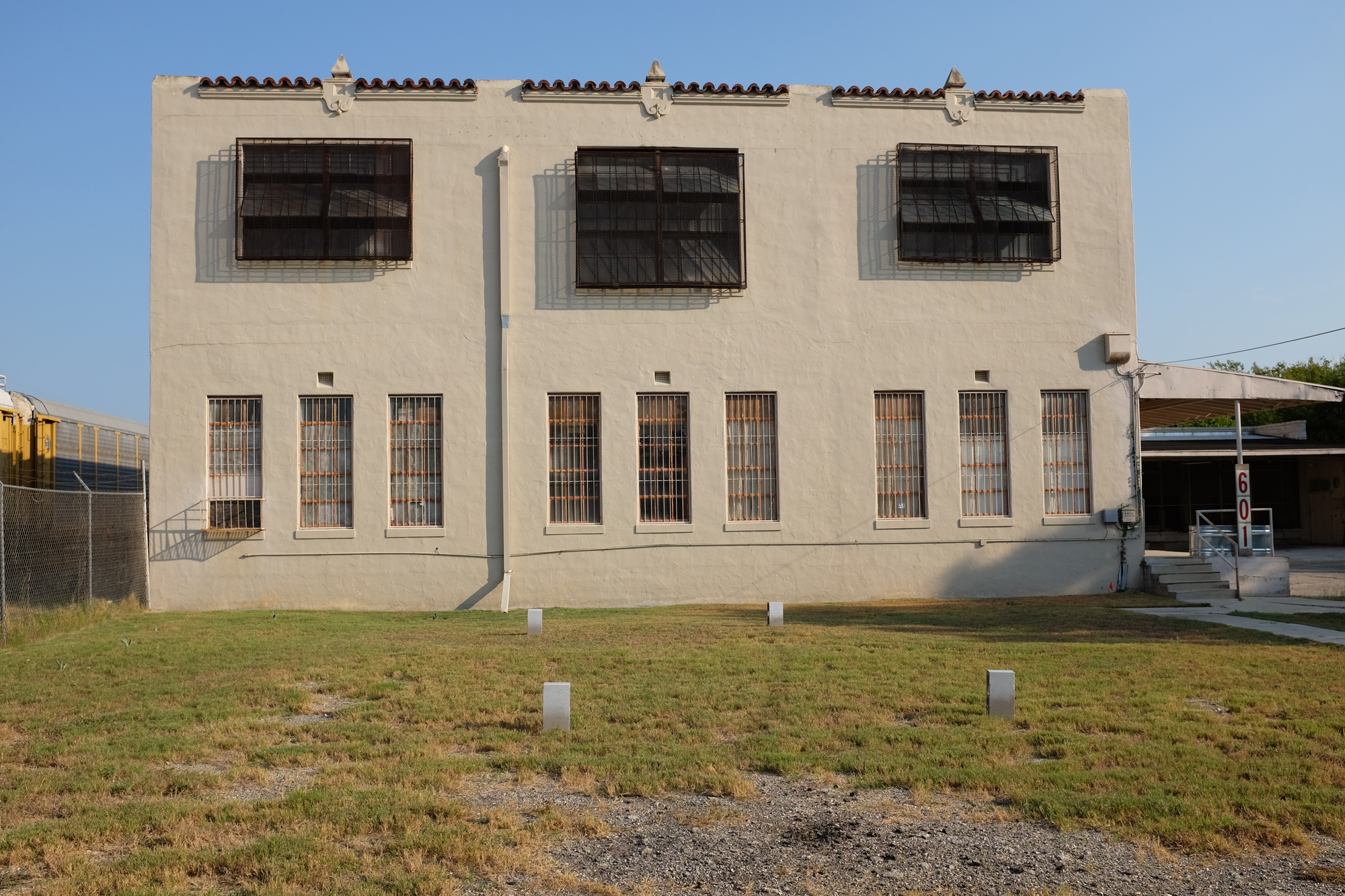
  • Oct 2015full south elevation in daylight: Delaware 601 entry, striped grilles, pantile bays
  • South dockUnion Foundry Co. vertical emboss on a white-painted column (Instagram)
  • First-floor 601 foyer — green paint-swatch trials on textured plaster (Instagram)

Delaware Street curb

  • 2024 zinc survey marker stamped G — M — A in the asphalt at the entry gate (1932 Sunday Light street address context)
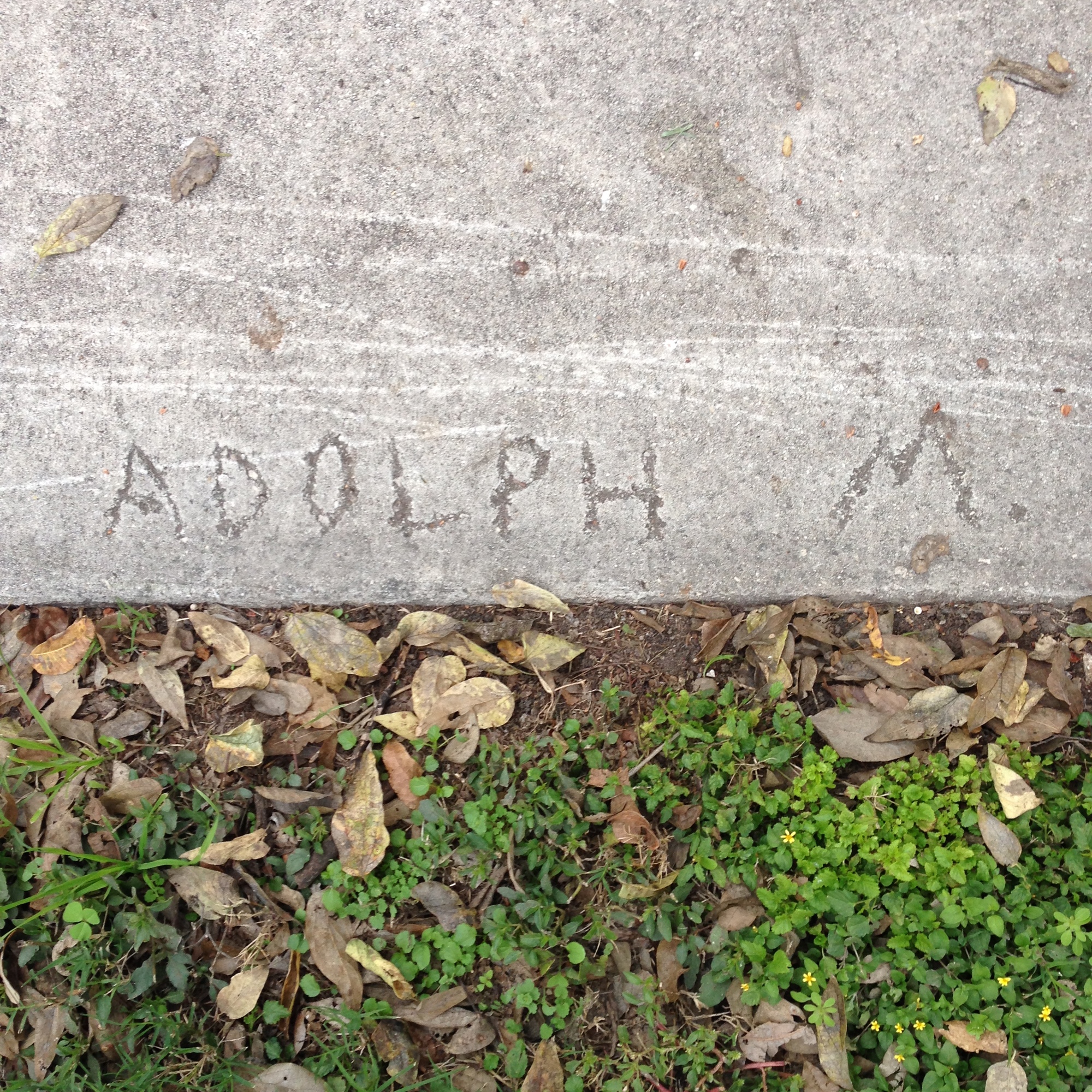
  • 2014 wet-cast sidewalk ADOLPH M. and JESSE inscriptions beside the gate

Rail siding and rolling stock

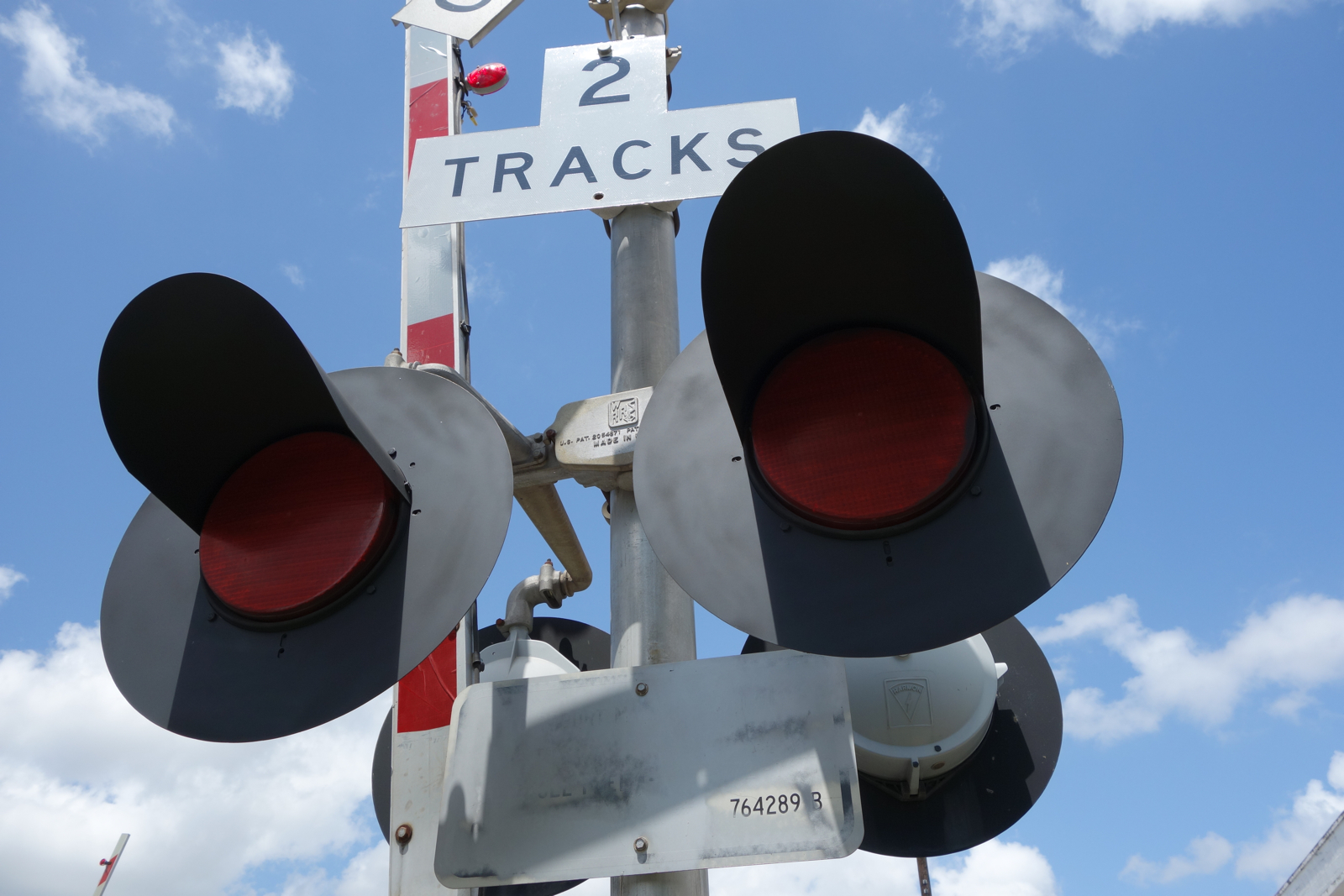
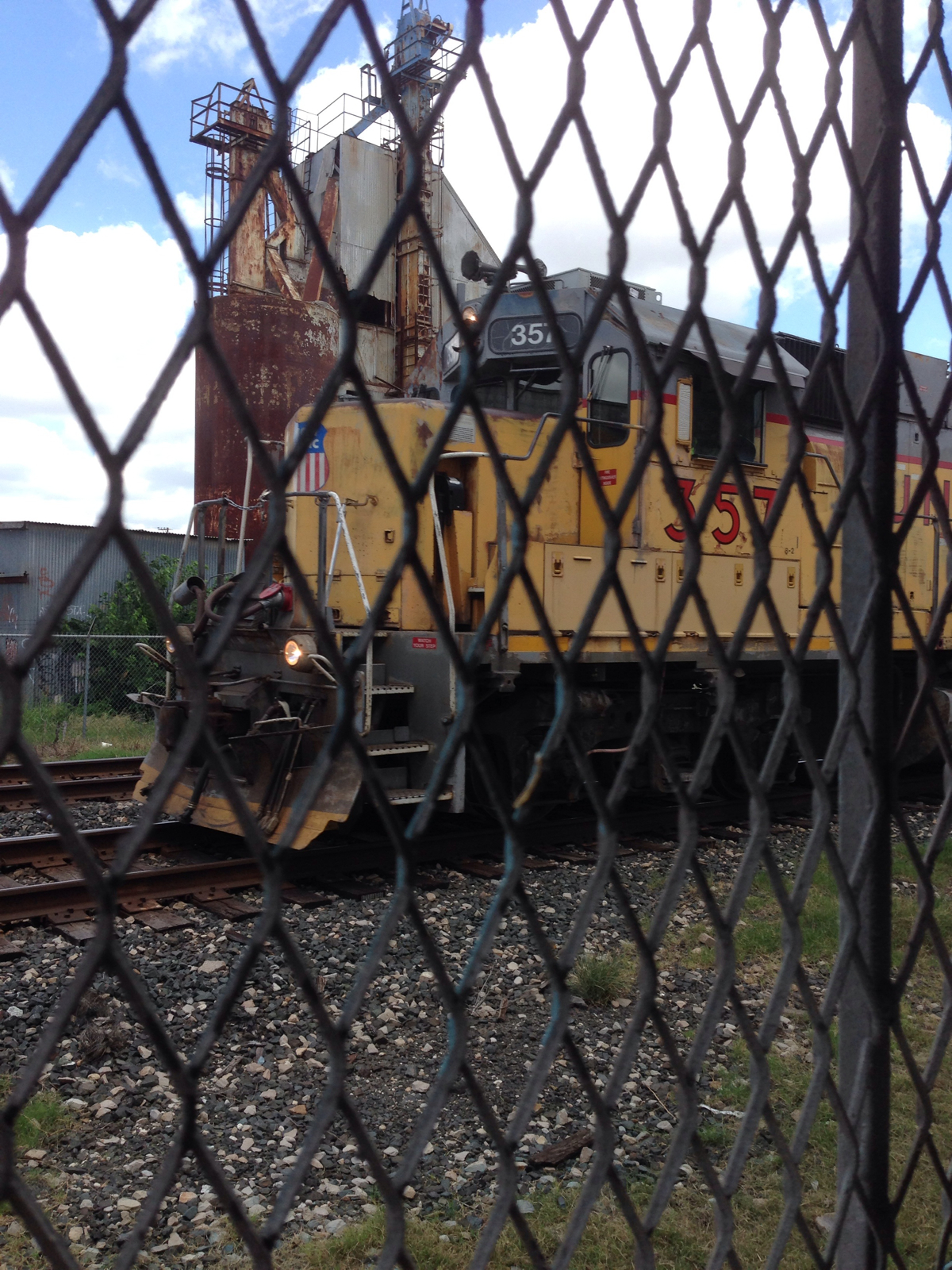
  • Railroad crossing, passing freight train, double train meet
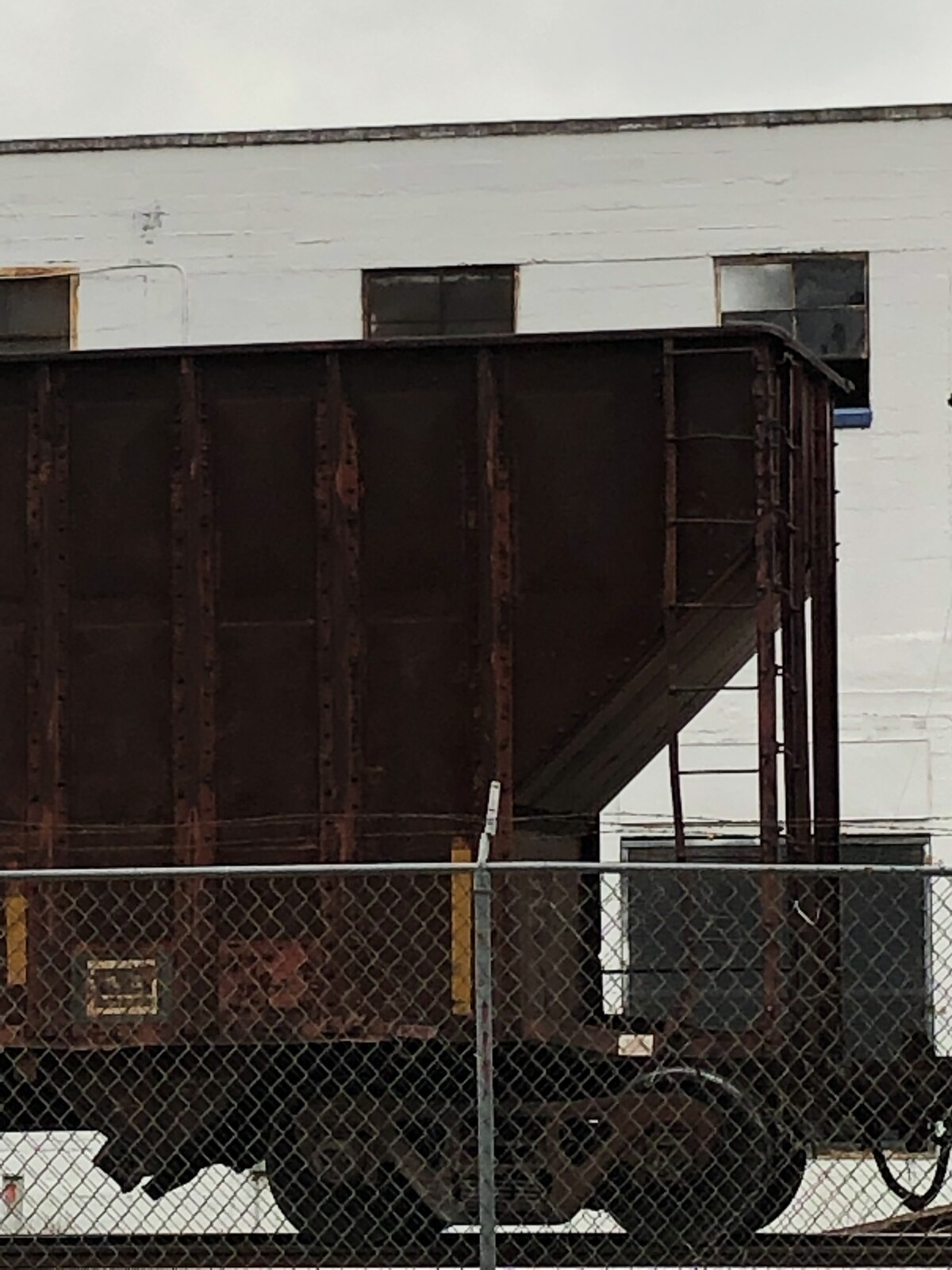
  • 2019 covered hopper on the track behind the plant

Masonry supplier marks

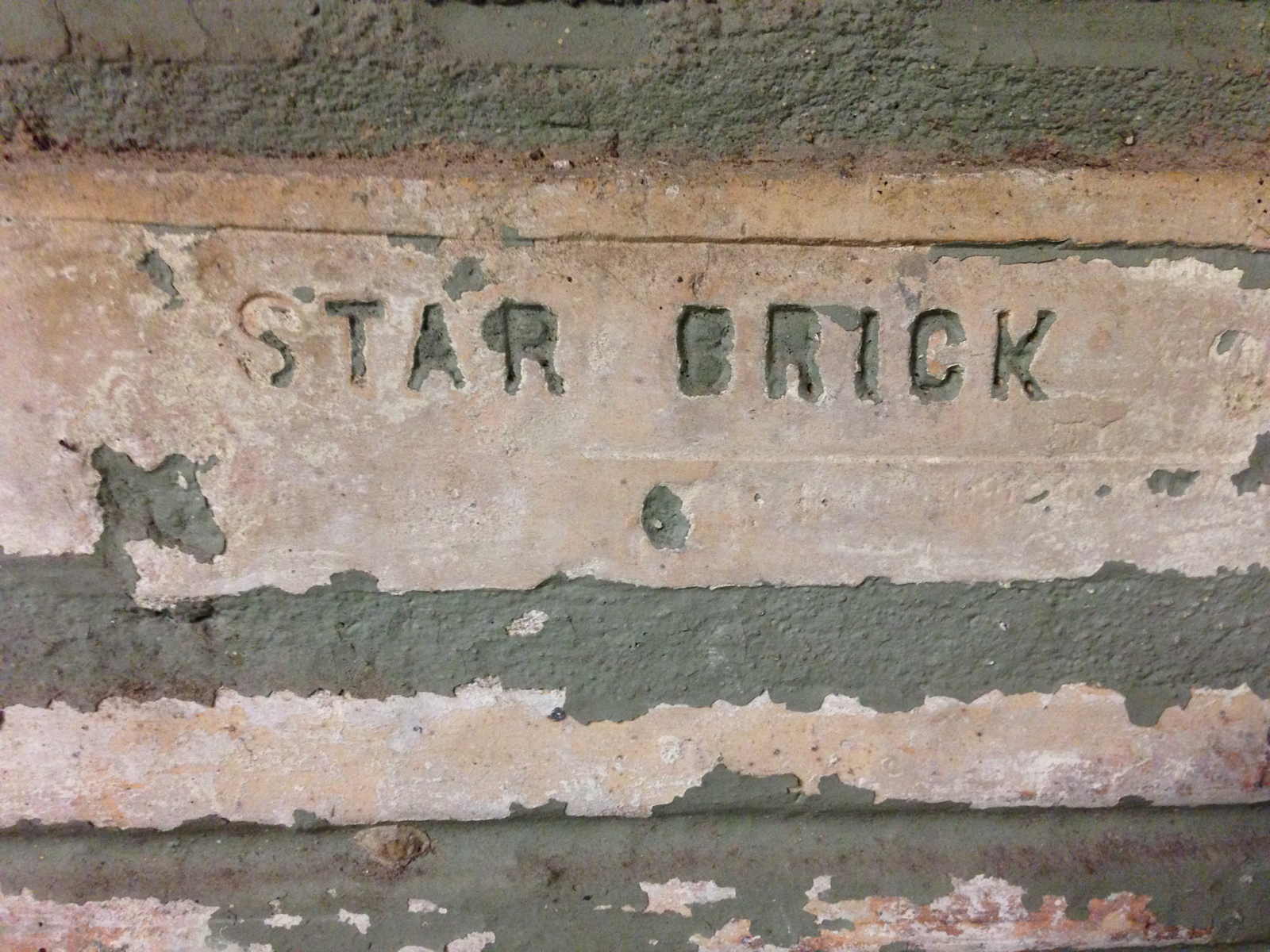
  • Interior STAR BRICK embossed stretcher (first floor, north wall, after the freight-elevator look-up)
  • Star Brick of San Antonio sample photograph
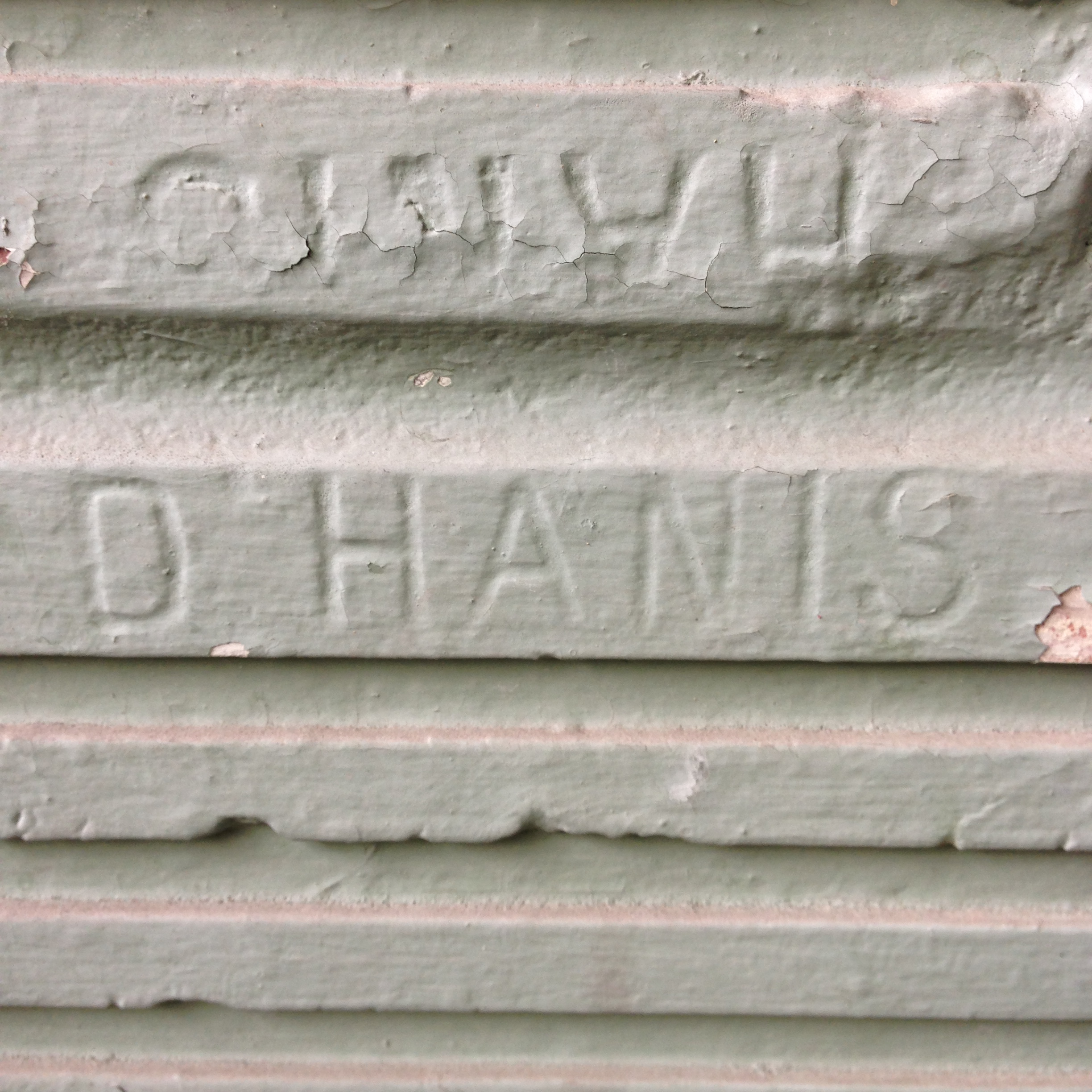
  • Painted D Hanis brick in the walls
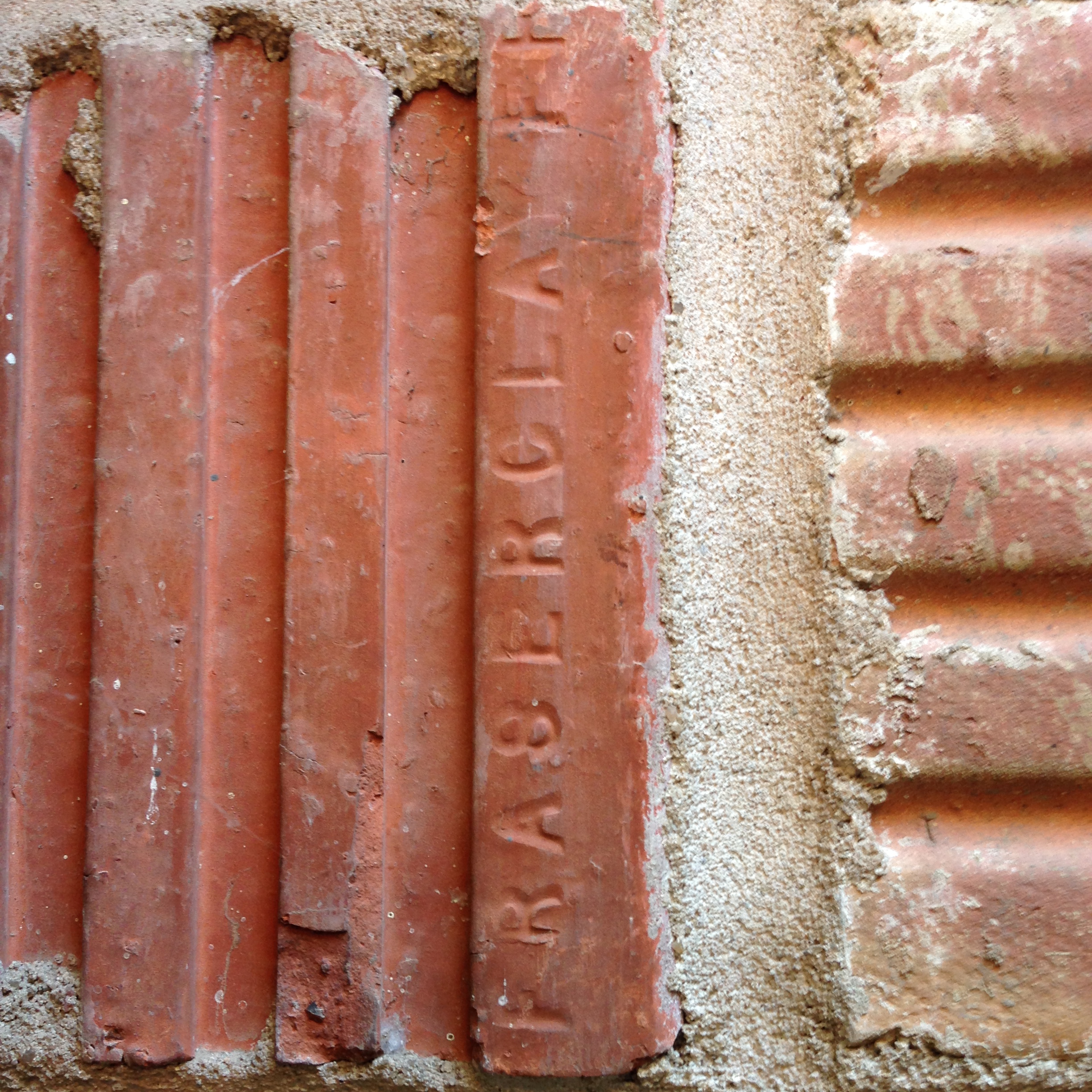
  • Fraser Clay and Fraser Clay Co. raised marks on hollow structural tile in situ (2014, 2015)

Vault zone and first-floor shell

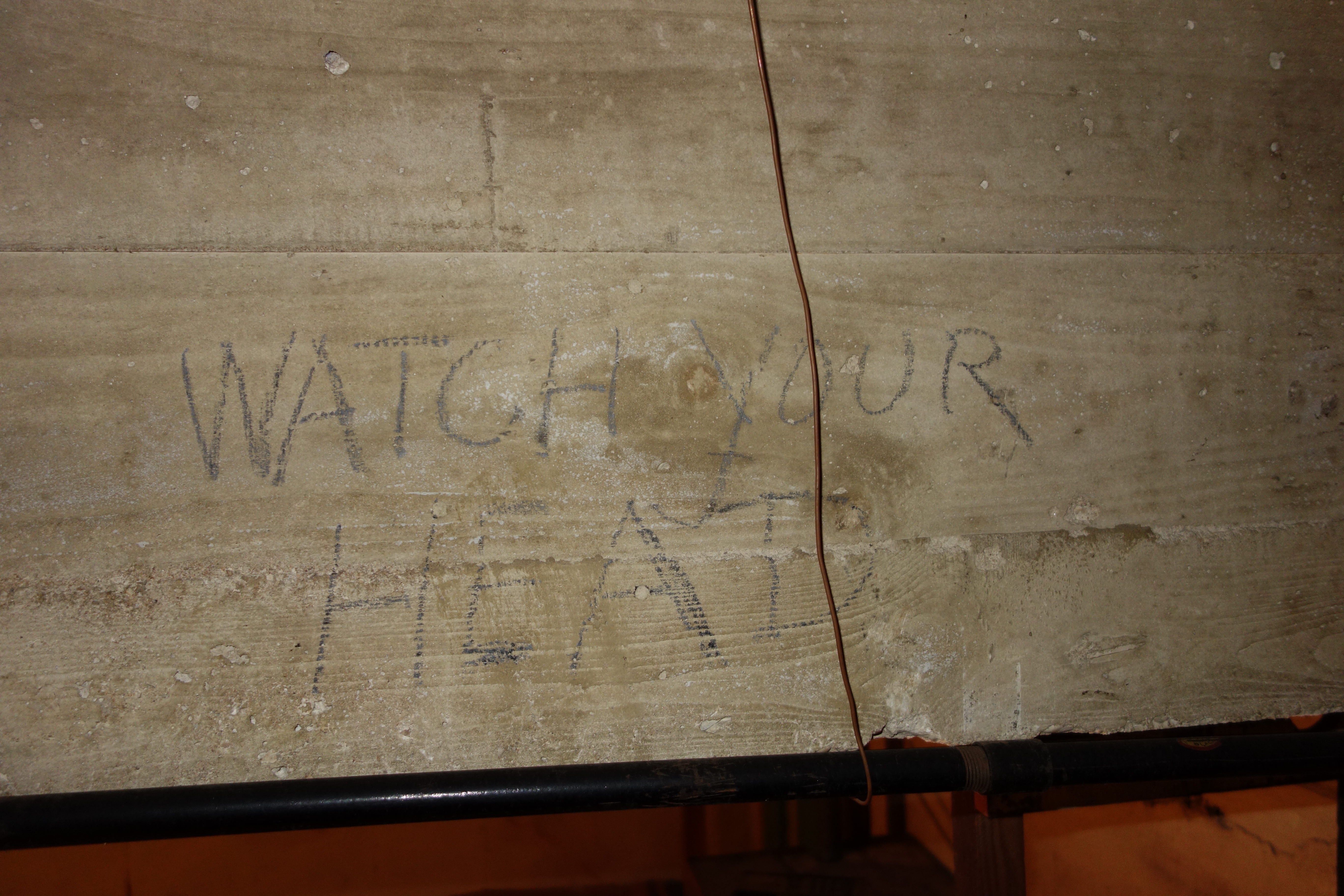
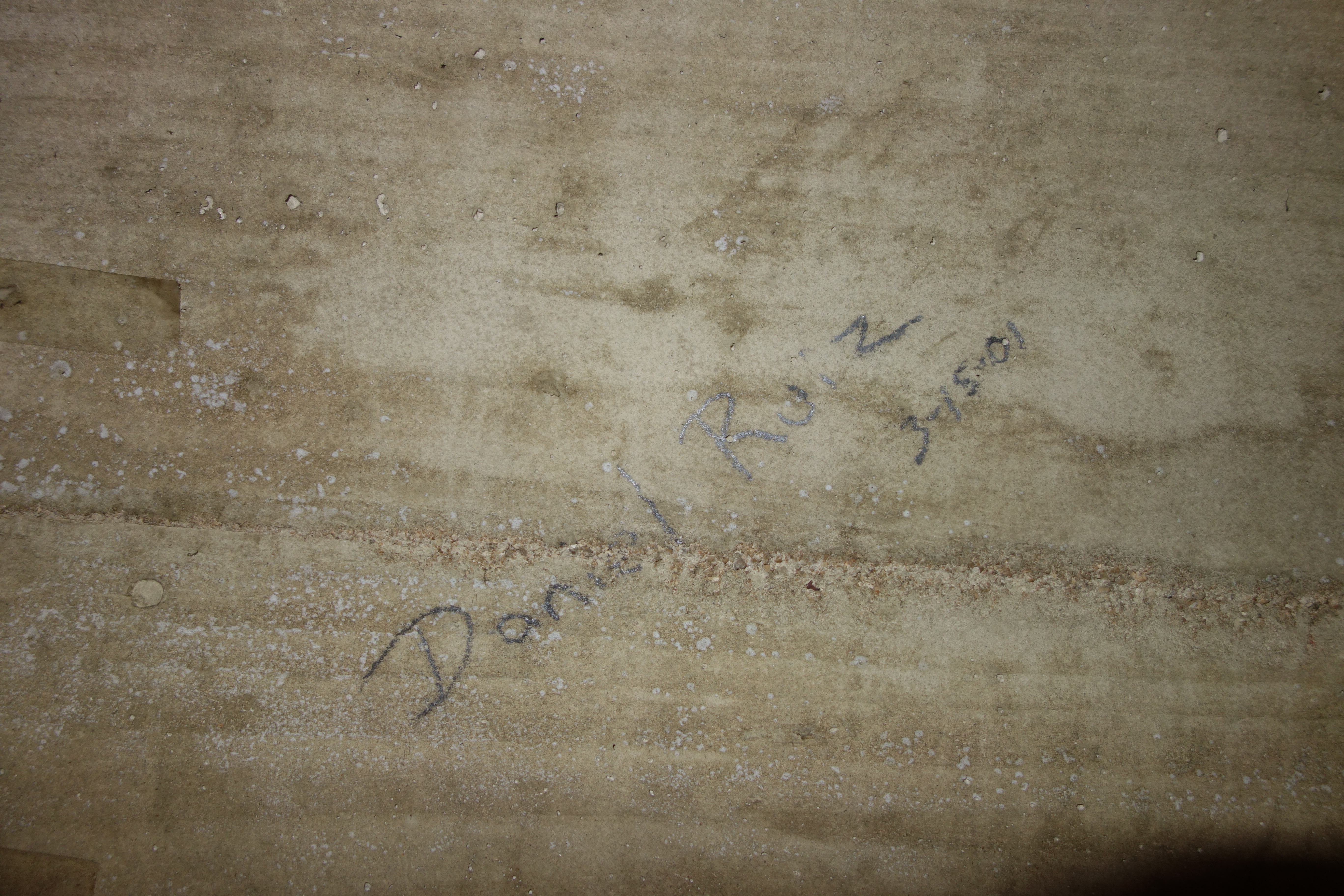
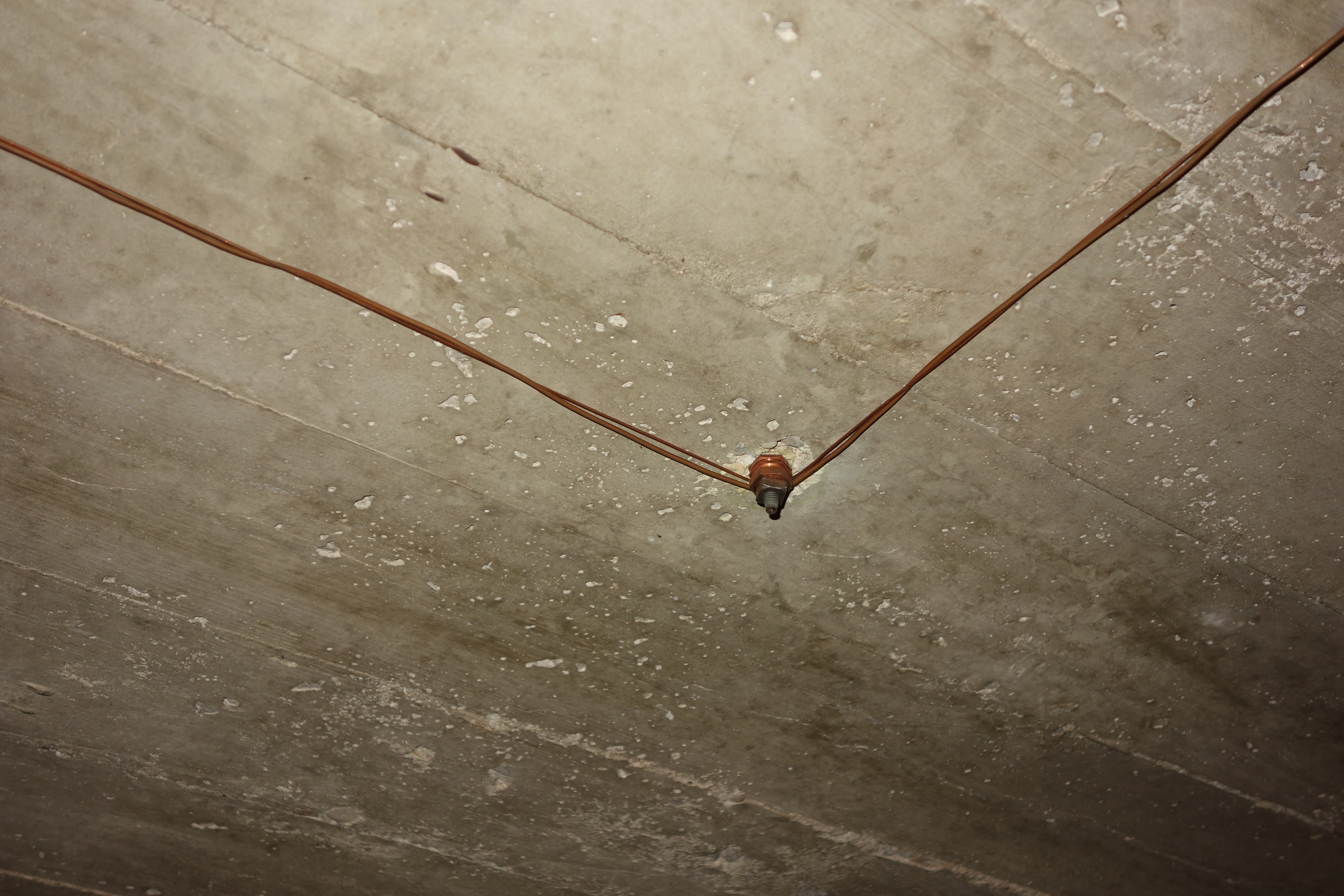
  • Board-formed concrete WATCH YOUR HEAD, Daniel Ruiz / 3-15-01, and twin bare copper wires at the vault soffit
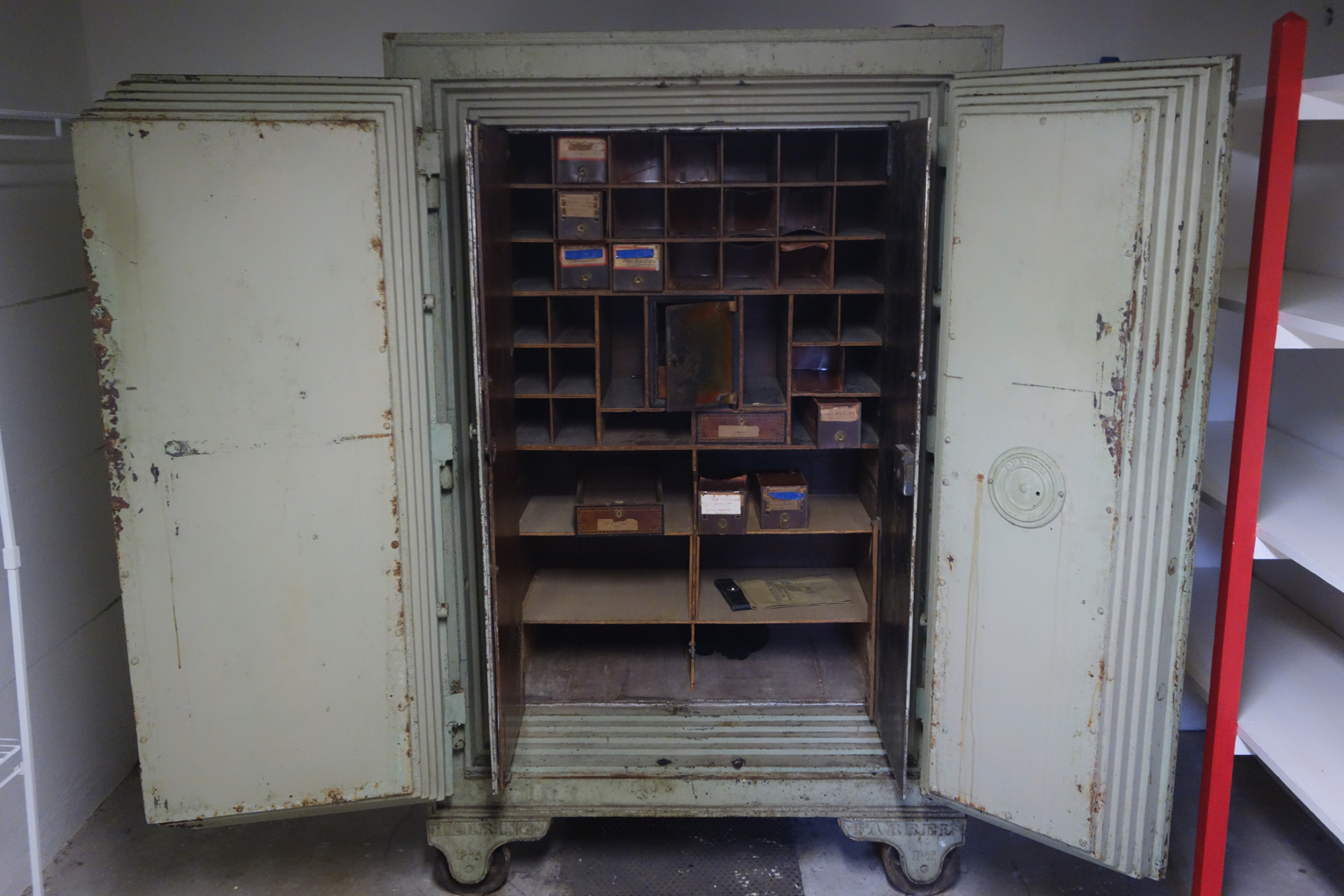
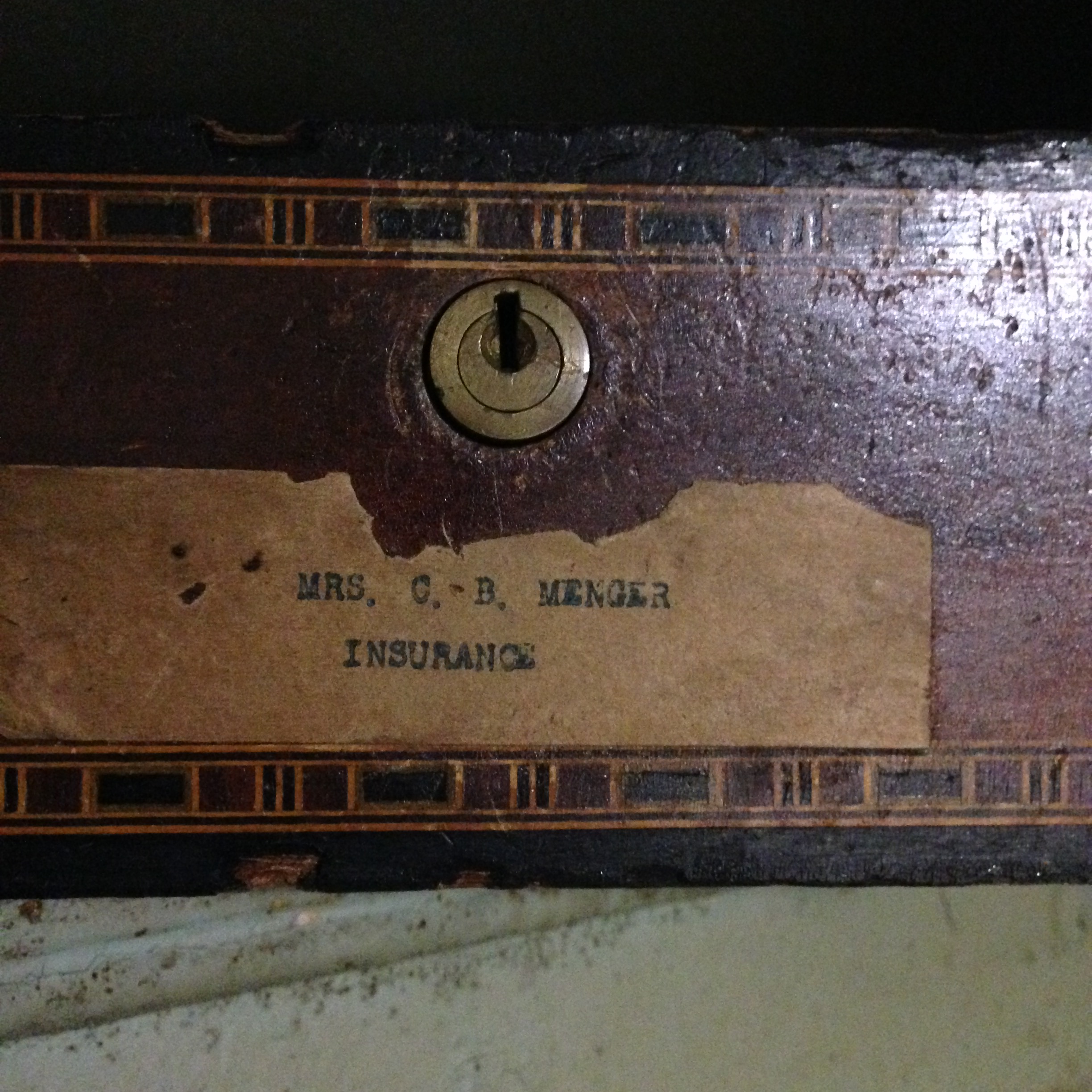
  • Large floor safe, Sargent & Greenleaf time-lock door on the small safe outside the vault, Mrs. C. B. Menger / Insurance drawer label inside the vault safe
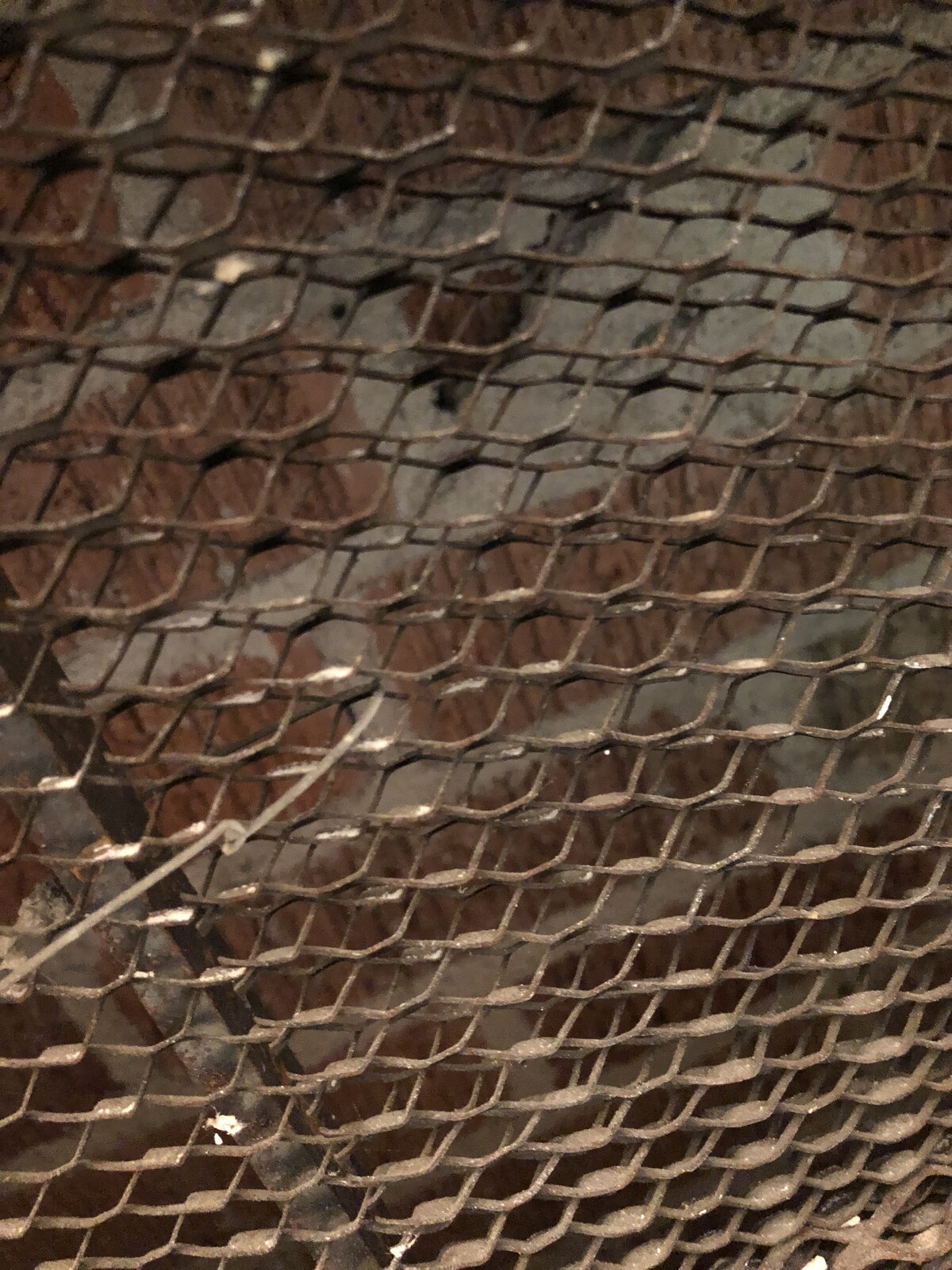
  • First-floor bathroom — exposed expanded-metal lath next to the vault
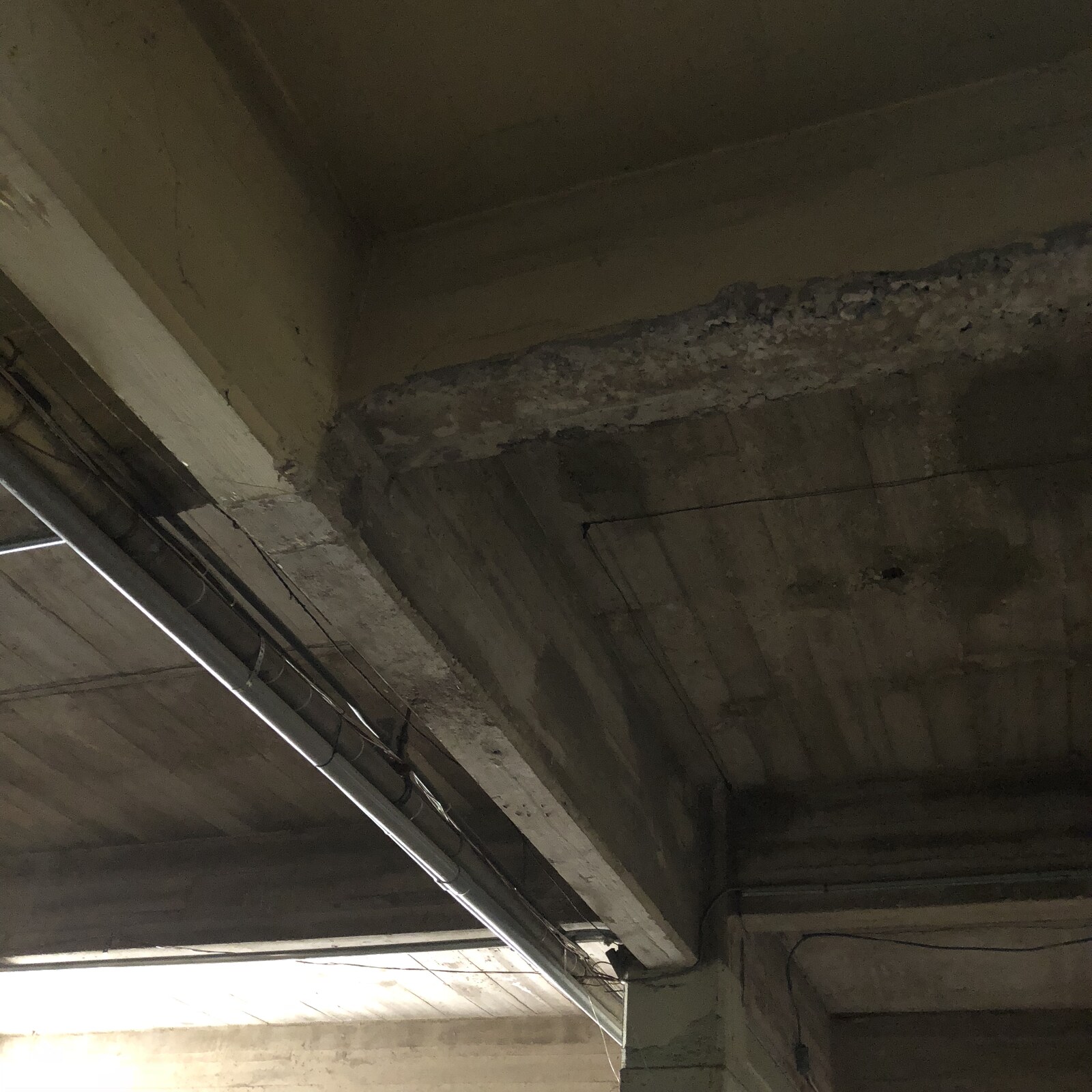
  • Board-formed beam soffit — domestic water line and power conduit
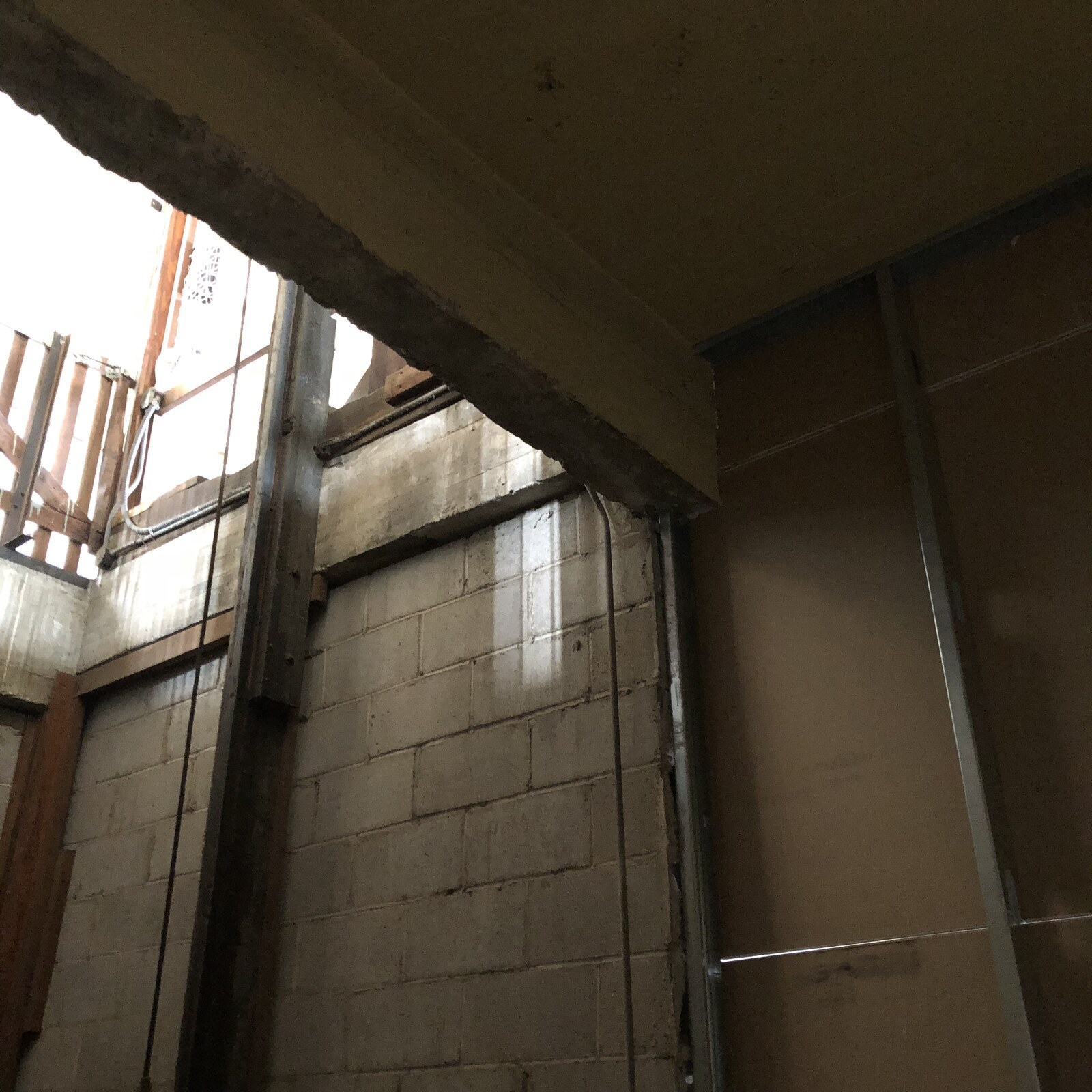
  • Freight elevator — first-floor north entry looking up the CMU shaft (guide rails, conduit, daylight)

Vertical transport — interior freight and track-side lift

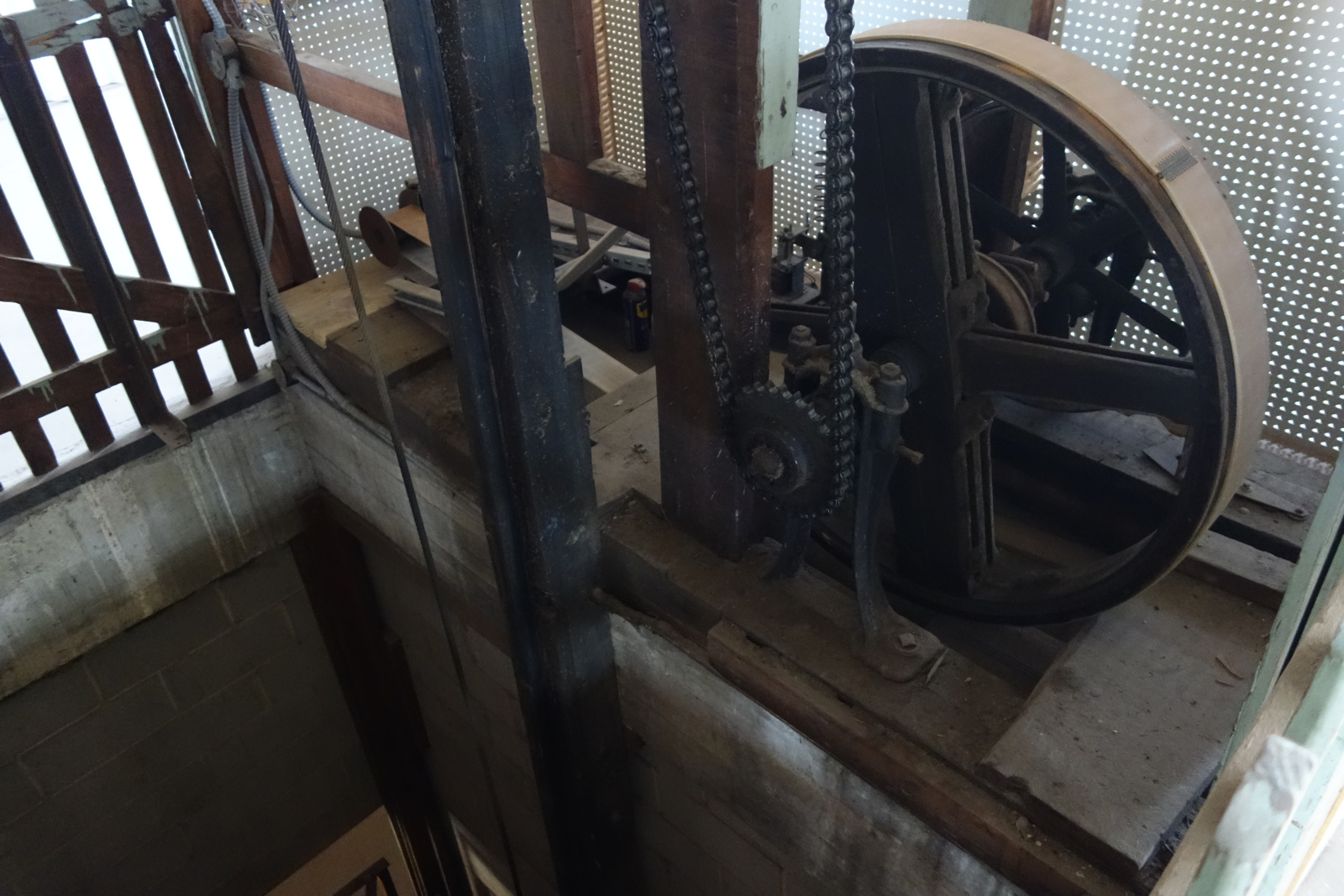
  • Freight elevator motor and second-floor chain-on-sprocket drive detail (Oct 2015)
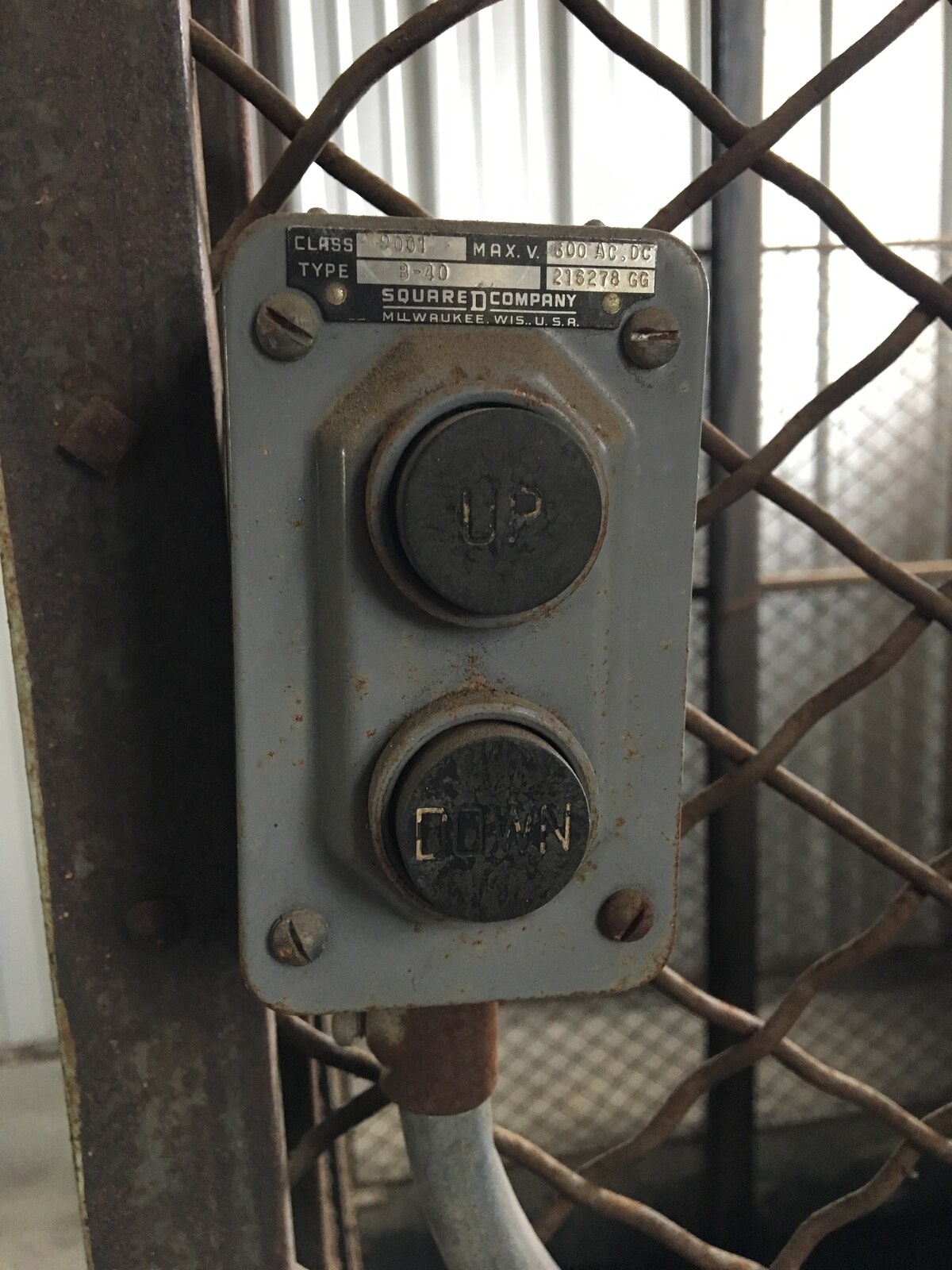
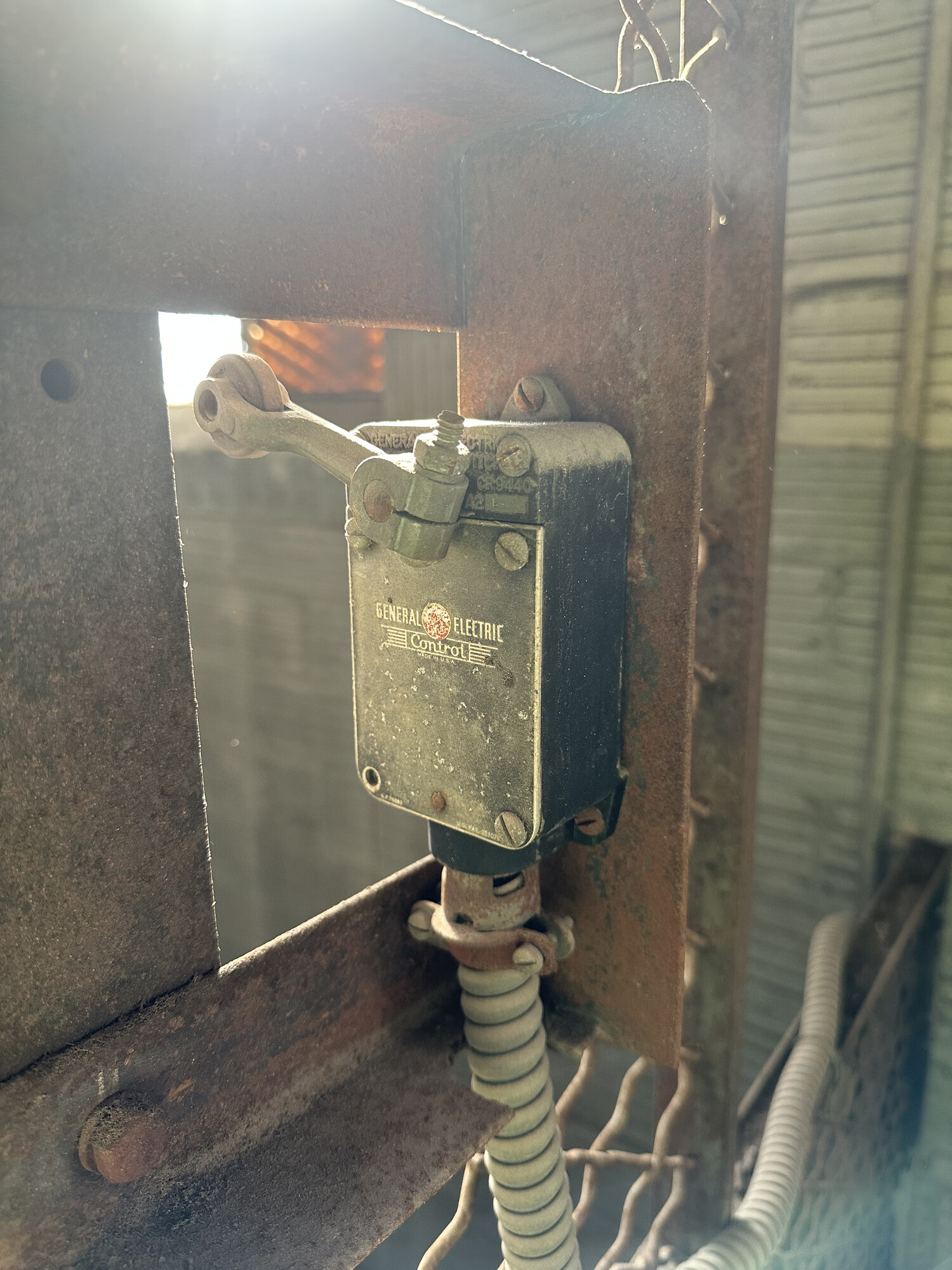
  • Track-side liftSquare D UP/DOWN station and GE Control roller limit switch (exterior door to the SP siding; Jan 2025 on the switch frame)

Life safety and second-floor gas

  • Cast-iron fire-hose hardware with Fire Hose Mfg mark
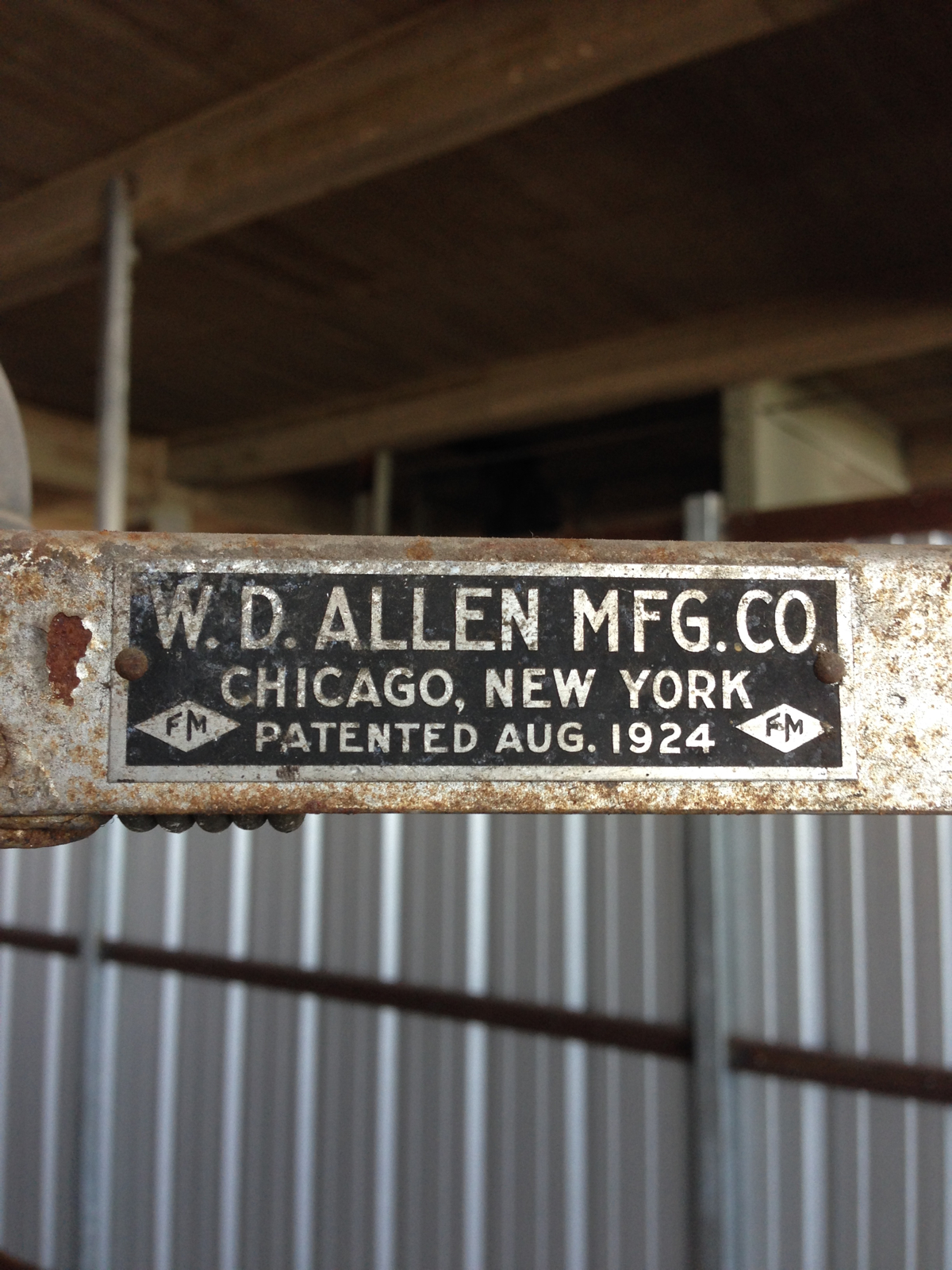
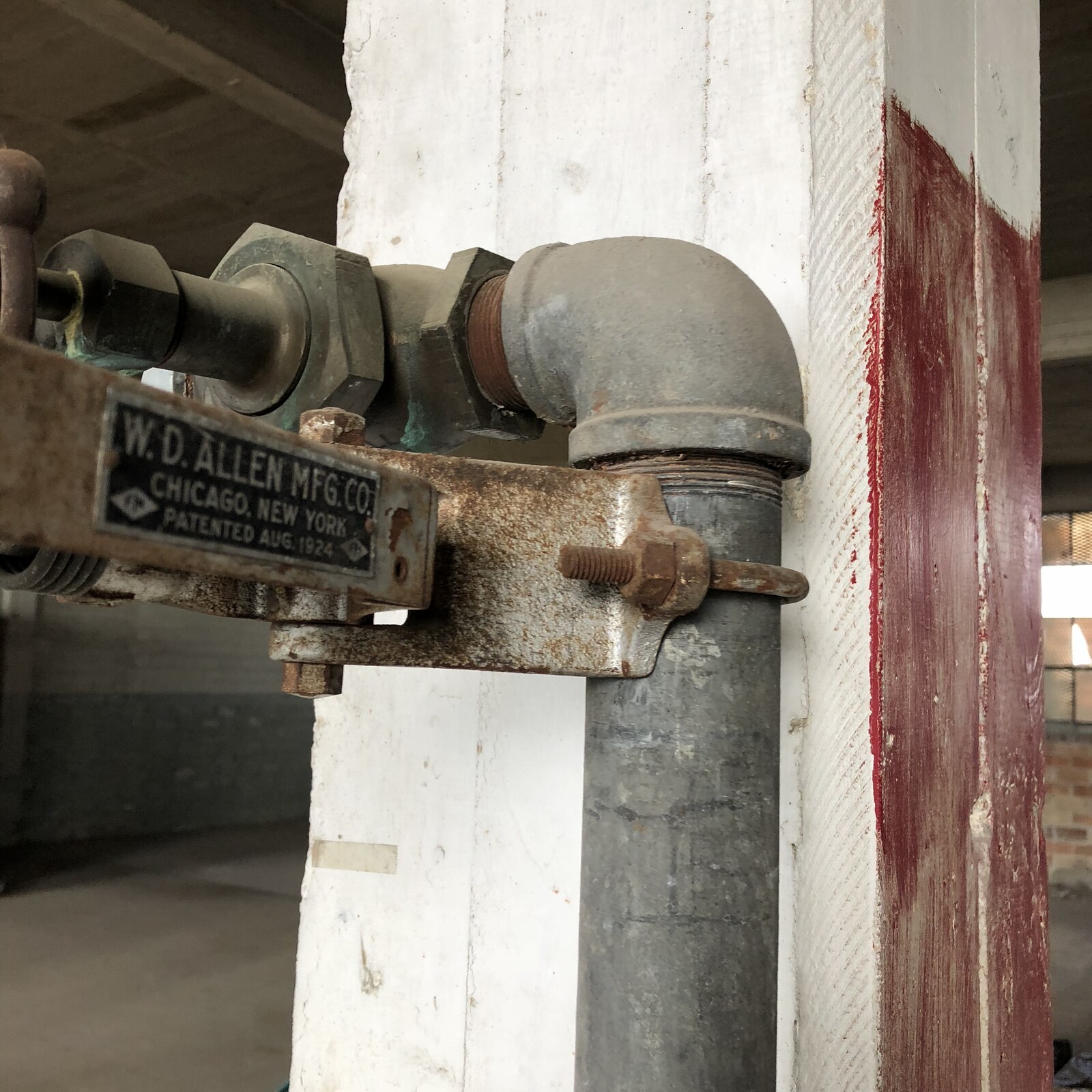
  • W. D. Allen fire-hose swing bracket (second floor — station 2 of 2)
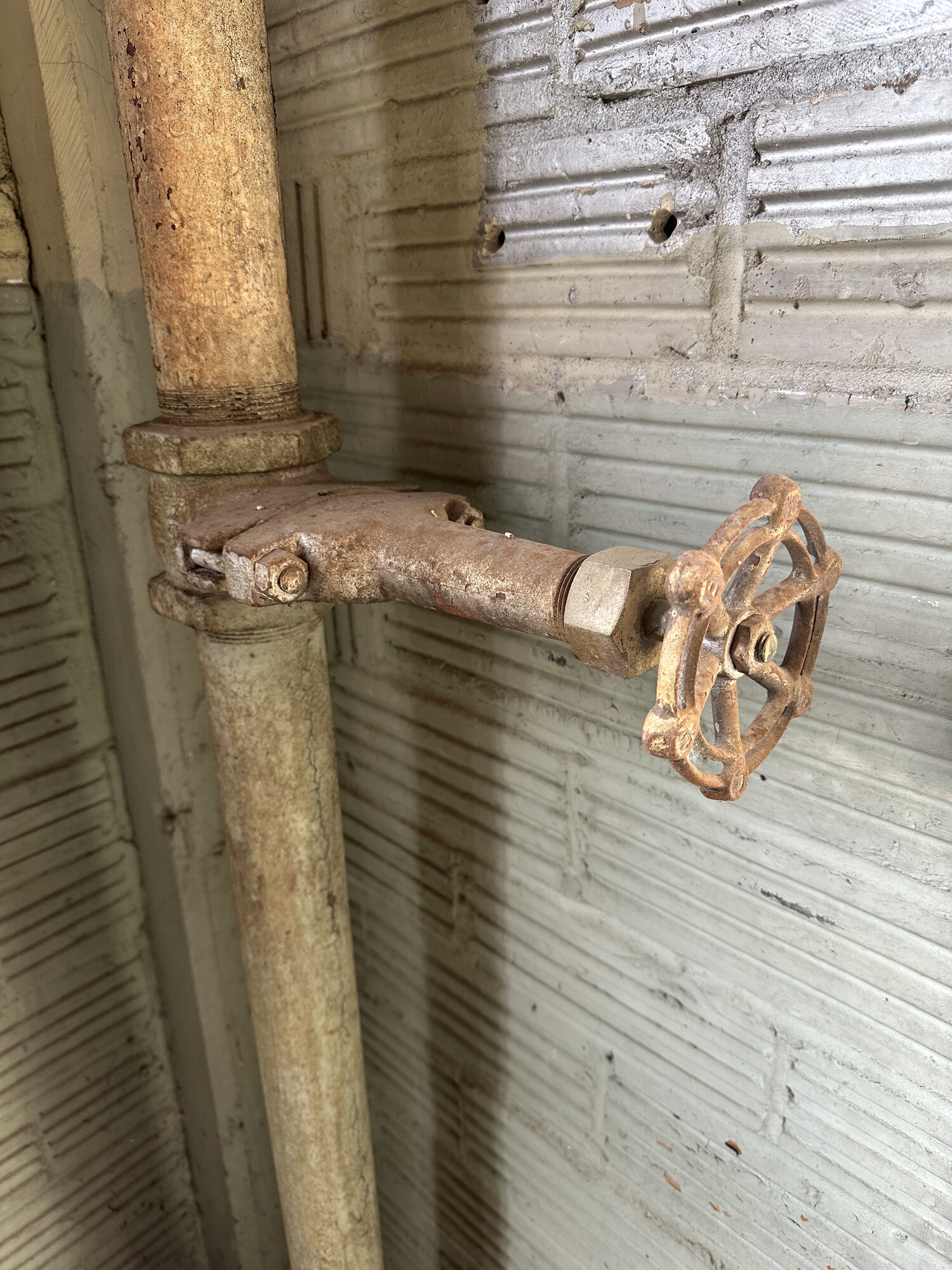
  • Northwest corner — cast handwheel gas shutoff on a vertical riser (Jan 2025)
  • Ceiling gas header with paired large gate-valve handwheels (Dec 2014)
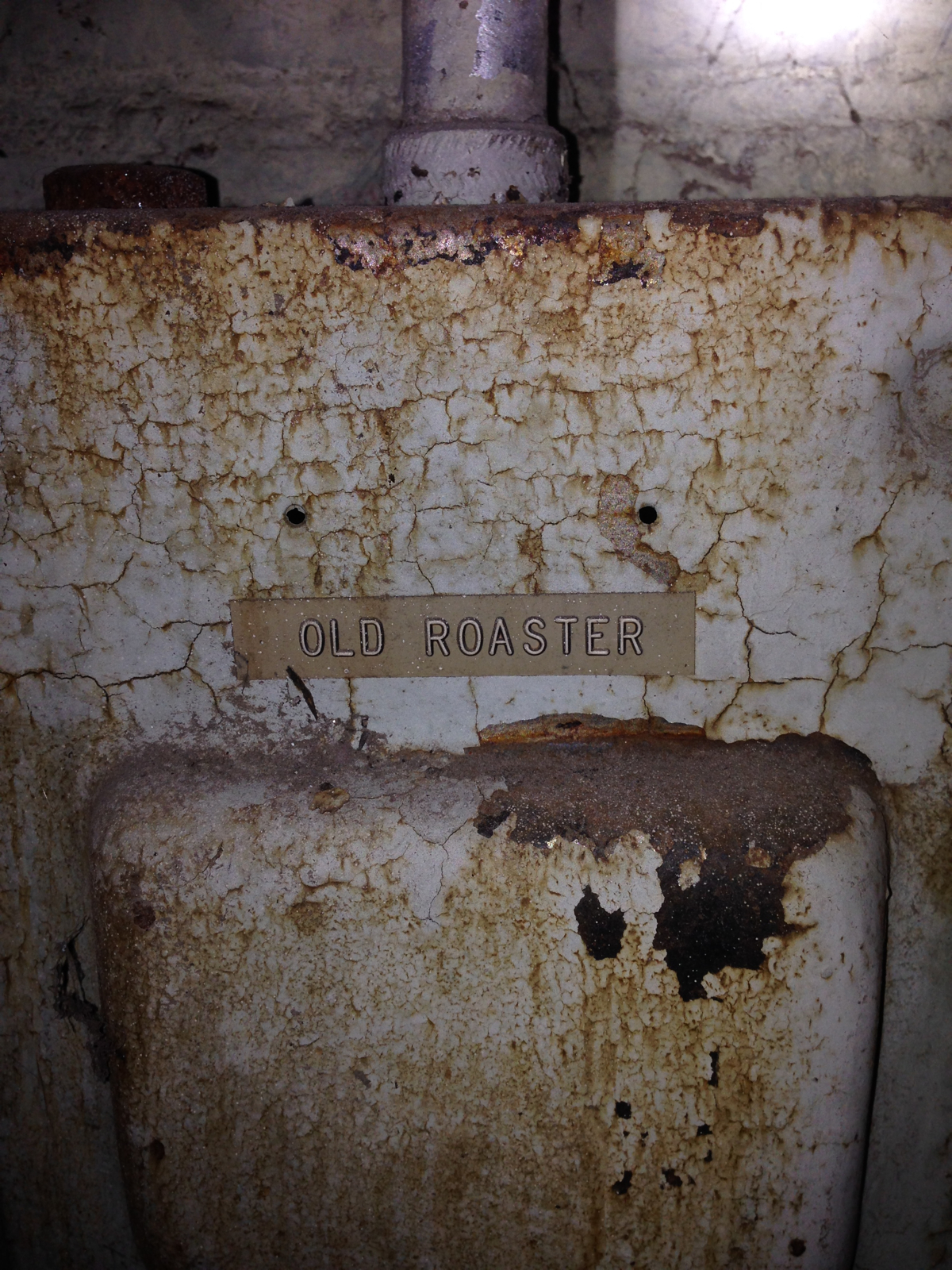
  • OLD ROASTER rusted wall enclosure by the upstairs gas run (Instagram)

Electrical distribution and north-side heater

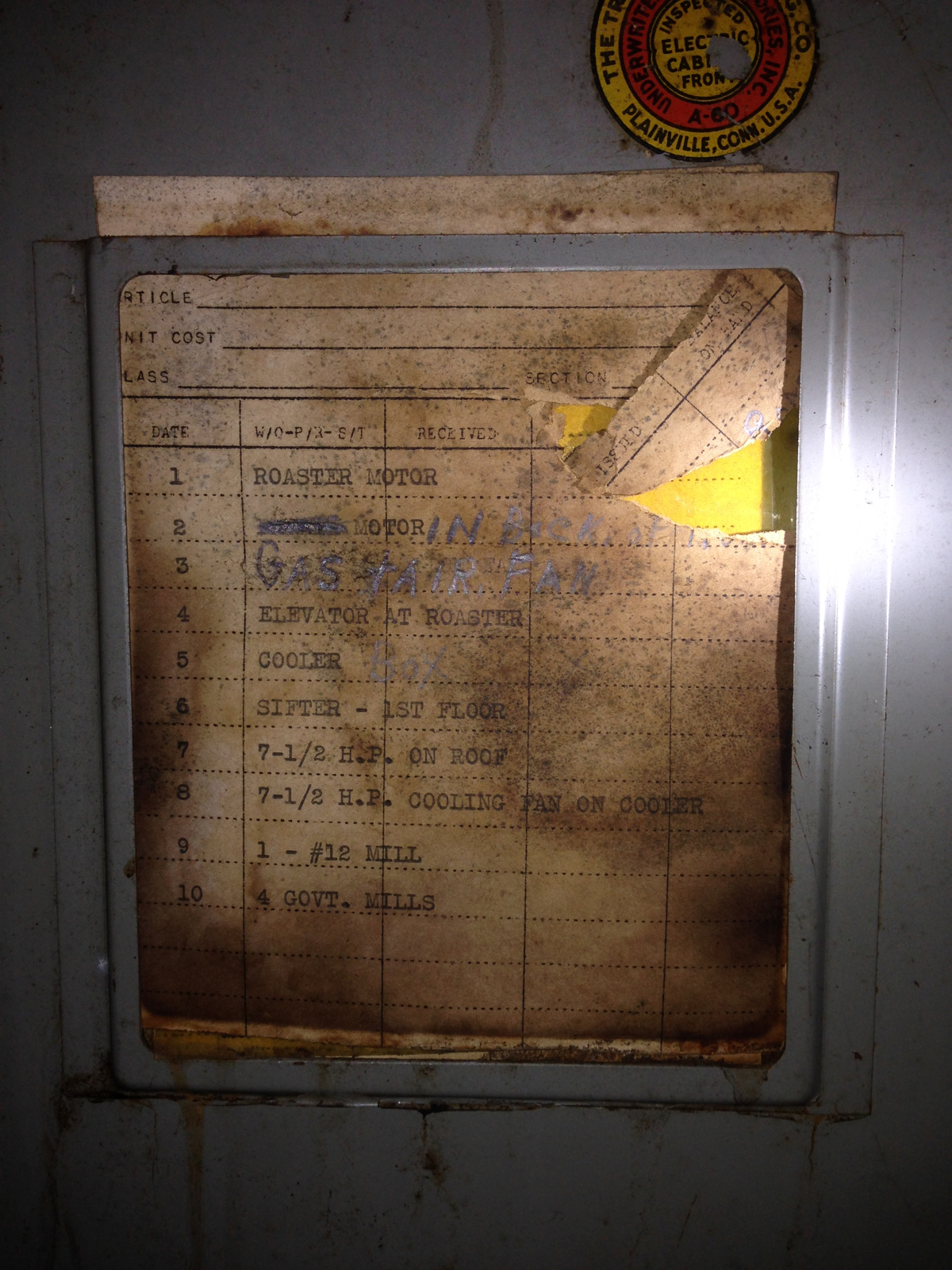
  • First-floor Trumbull Electric breaker directory (roaster, gas-air fan, mills, 1st-floor sifter, etc.)
  • Retained H & H paper order tab inside a panel
  • Westinghouse GF323N hundred-amp safety-switch nameplate near the main panels
  • Wall-mounted gas-fired cabinet heater on north structural tile beside the same electrical bay (Feb 2015)
  • Second-floor Federal Pacific panel directory — pencilled TEA MACHINE, AIR COND., SIFTER (H and H Tea tie for the tea circuit)

Roaster hardware, reclaimed wood, Master Chef on site

  • Old roaster sheet-metal power enclosure (sparse historic caption)
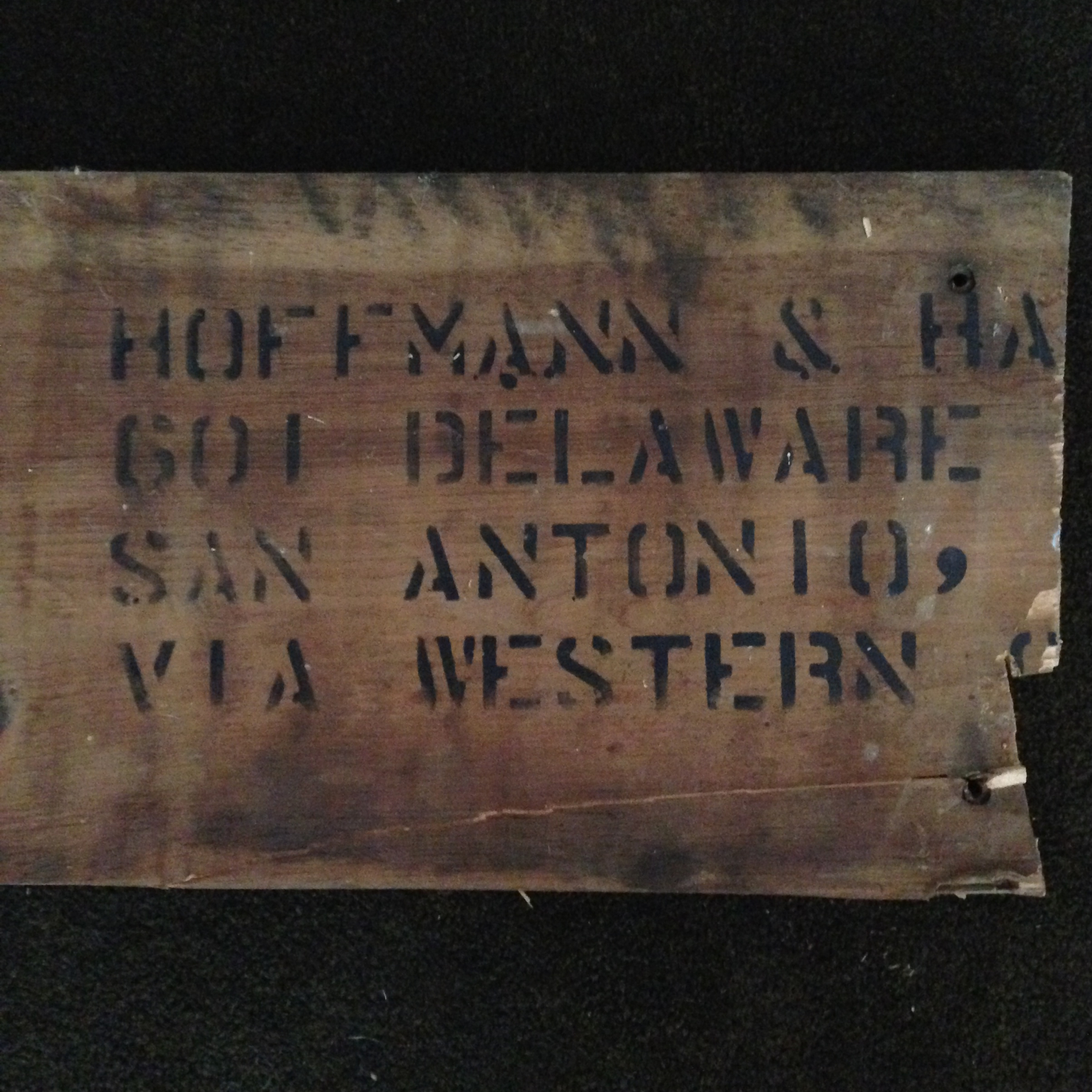
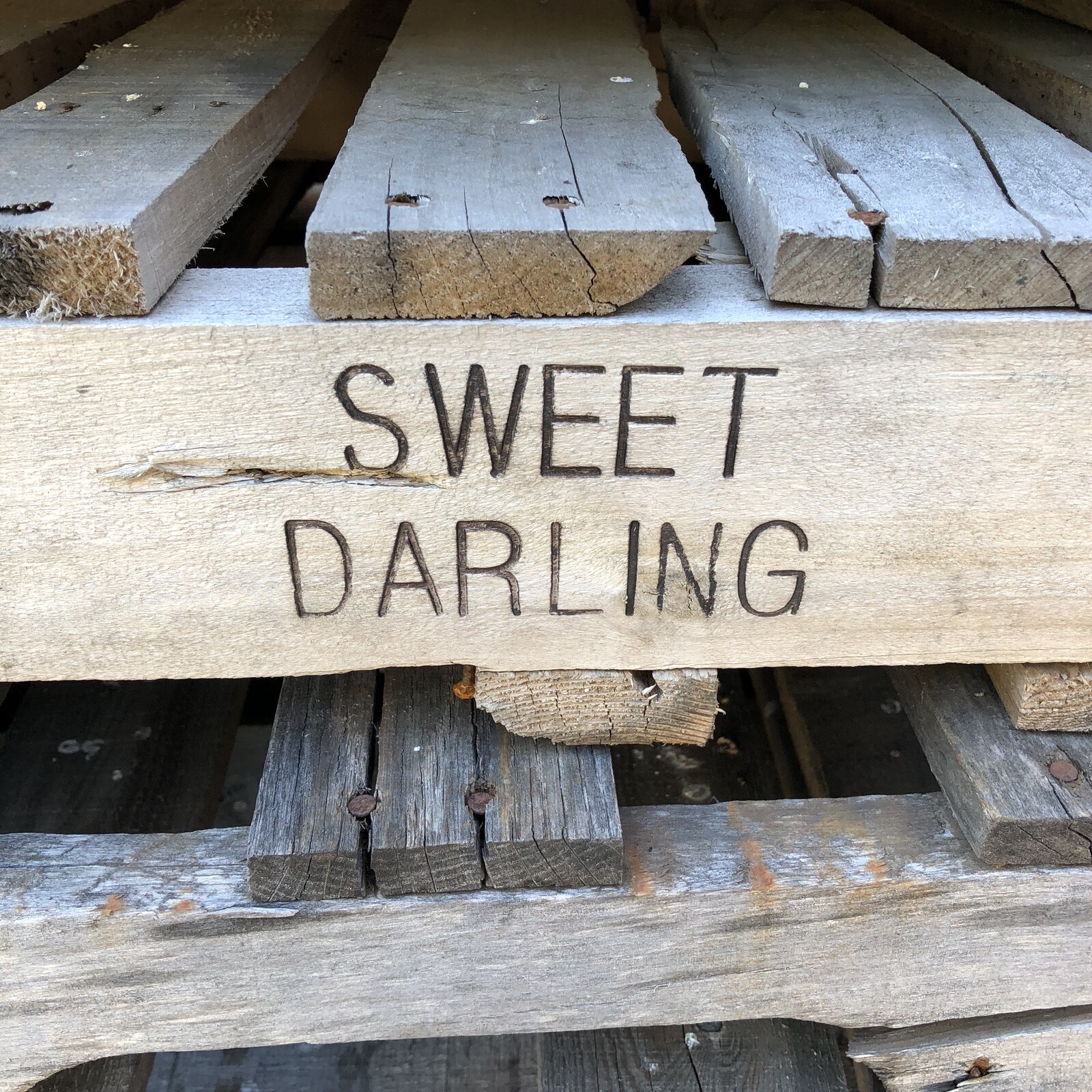
  • Hoffmann-Hayman crate board and Sweet Darling stencil board from the reclaimed-wood stack
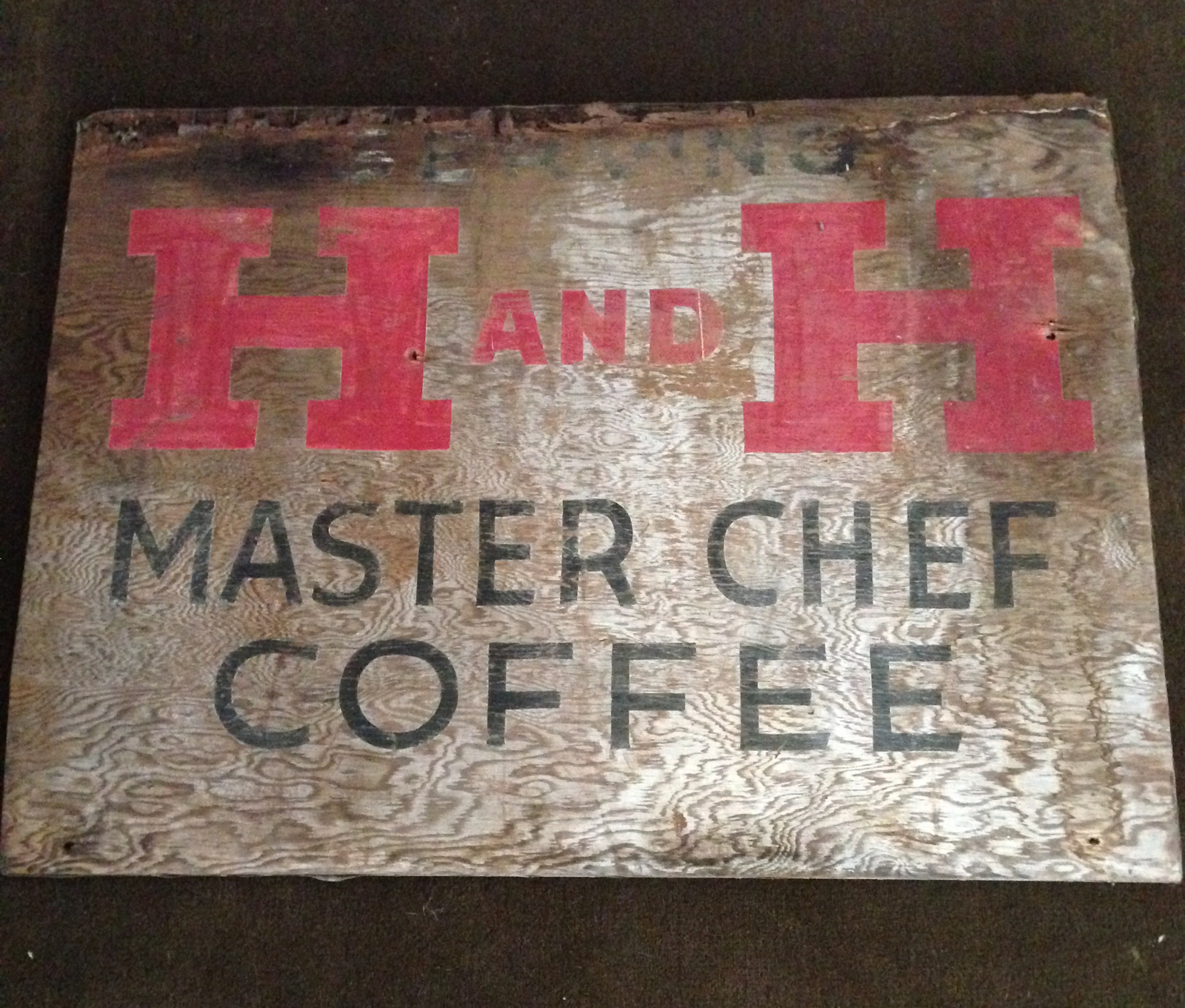
  • May 2014printed Master Chef plywood upside down in the east-wing shed wall (salvaged crate wood)
  • Master Chef sign from the shed wall; Oct 2015 glossy fascia under the west-wall north window (rail side)

Second-floor expansion above the office — structure and chronology

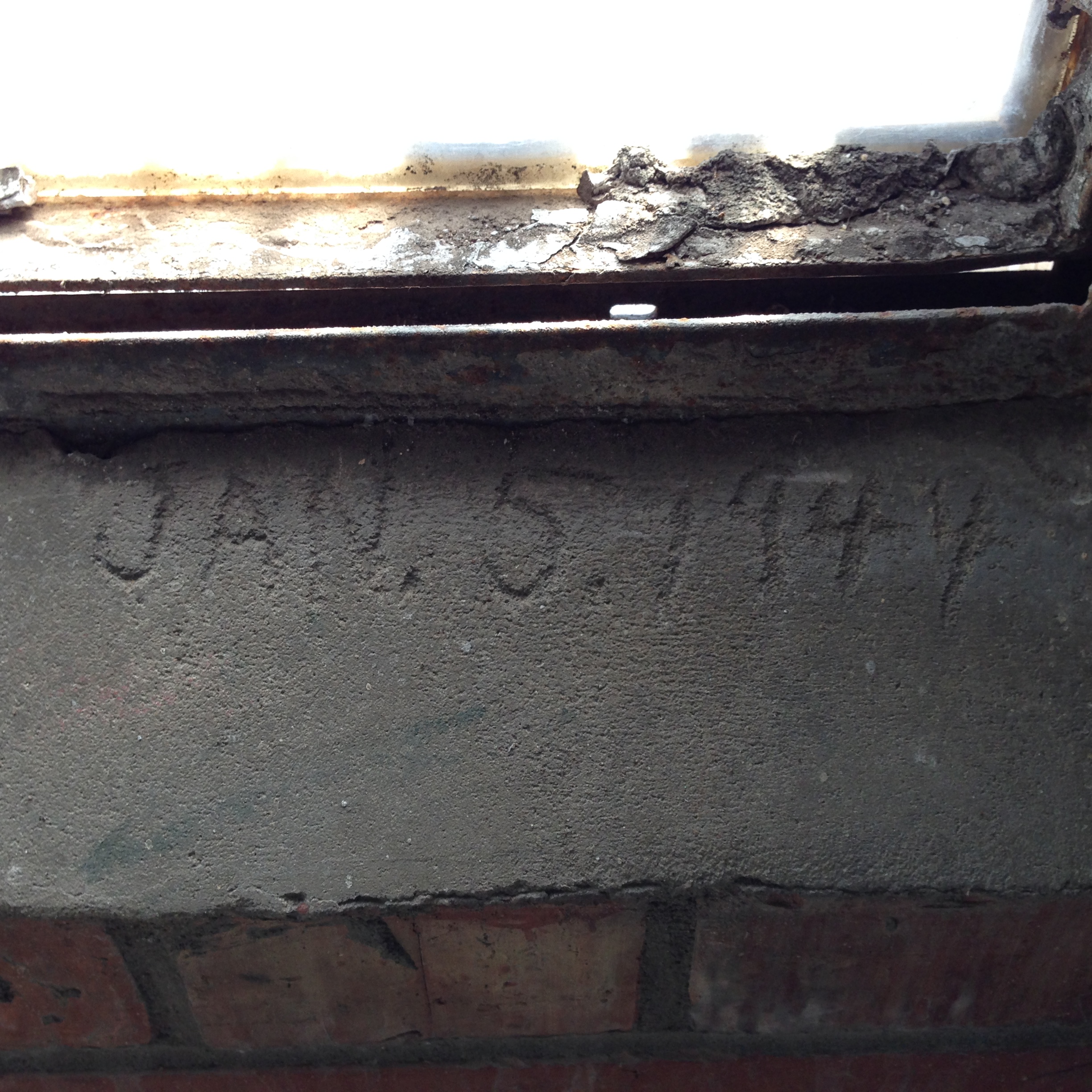
  • Carved window-sill date for the expansion
  • Northeast wing — wide shot toward steel sash: pan-formed joists, green layout marks, damp slab patch (Apr 2015)
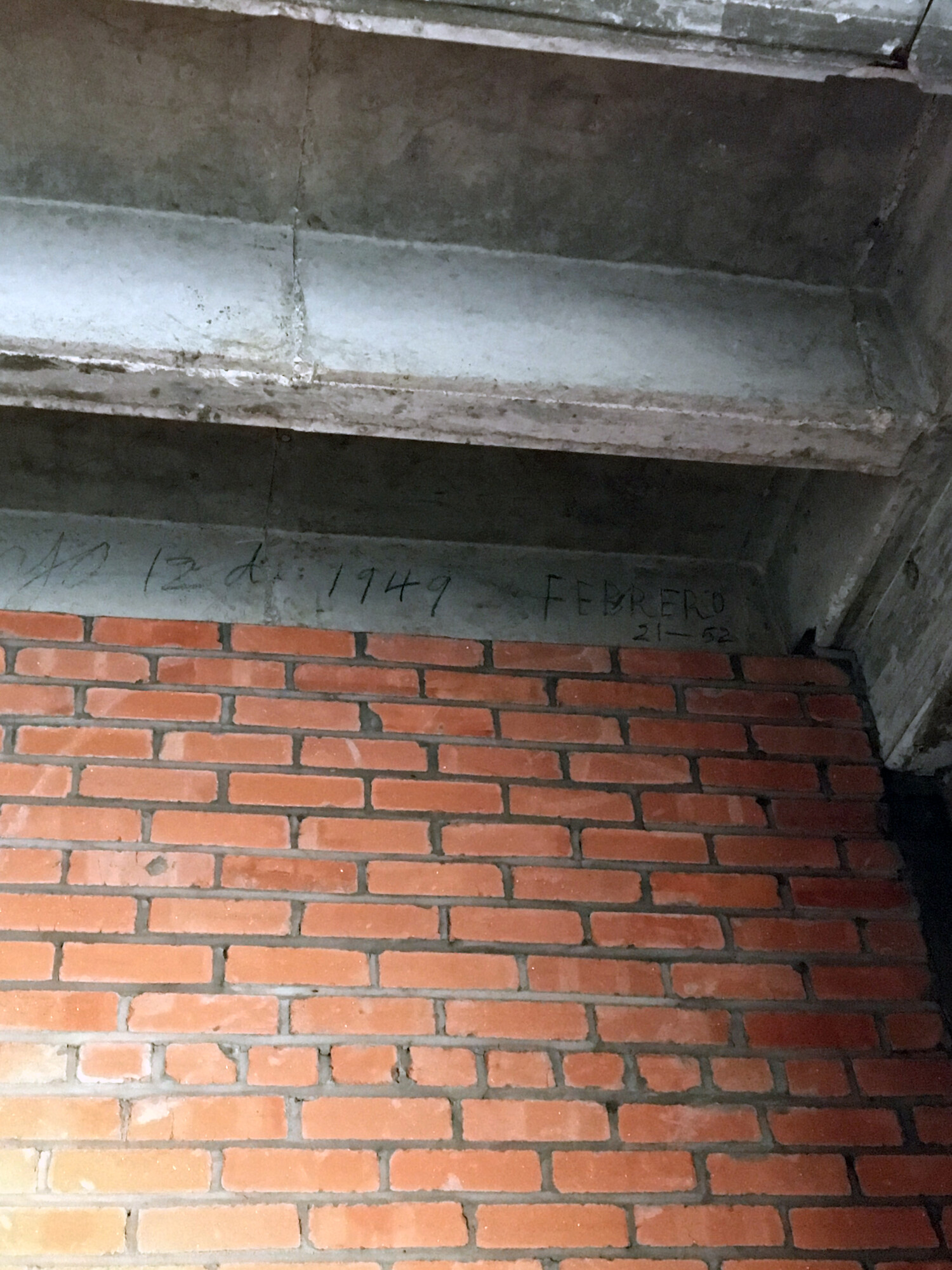
  • Concrete beam over brick — Spanish 12 de 1949 FEBRERO (and 21-52) — predates the 1950s pencil series (Nov 2016)
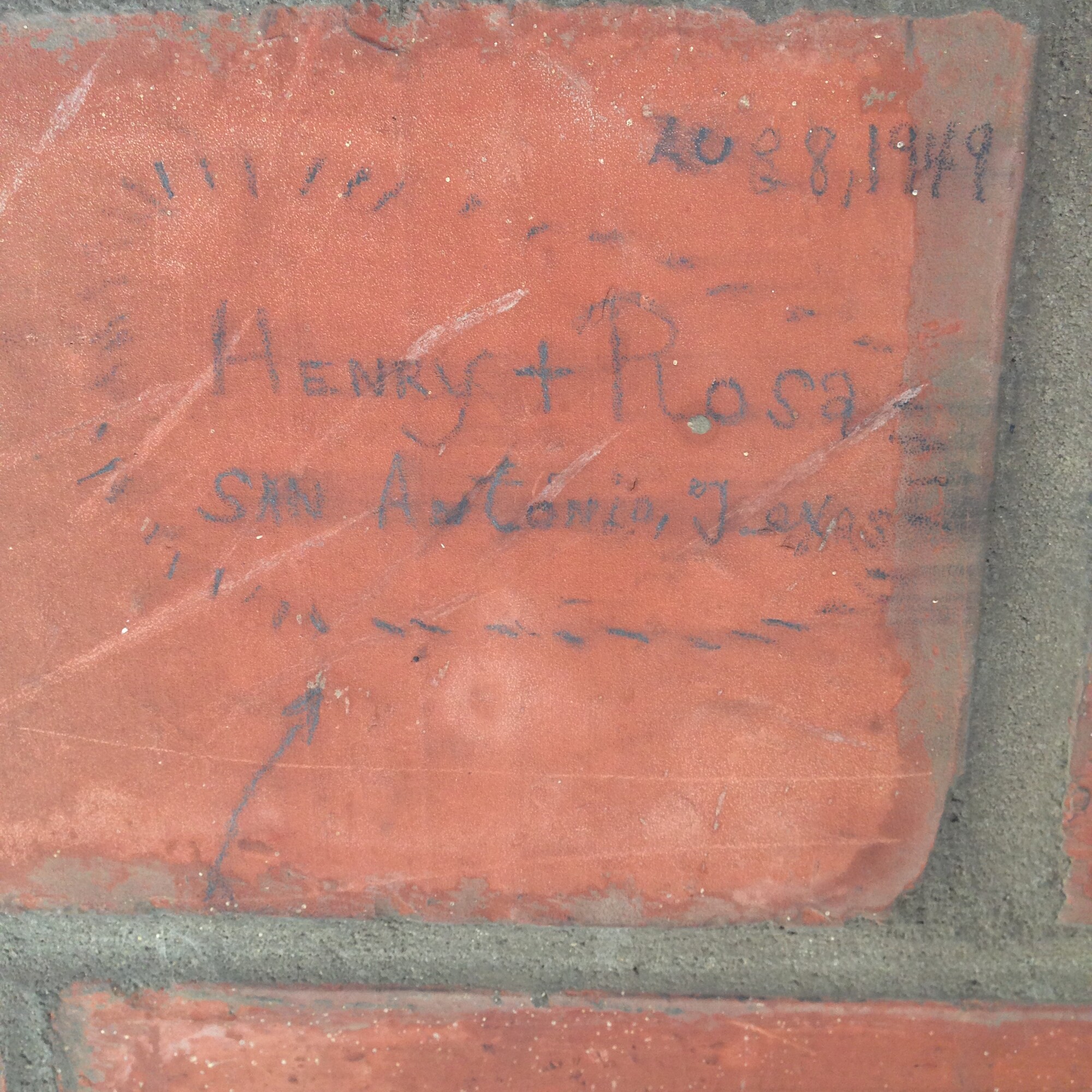
  • Brick faceHenry + Rosa heart, Aug 8, 1949, San Antonio (Oct 2014)
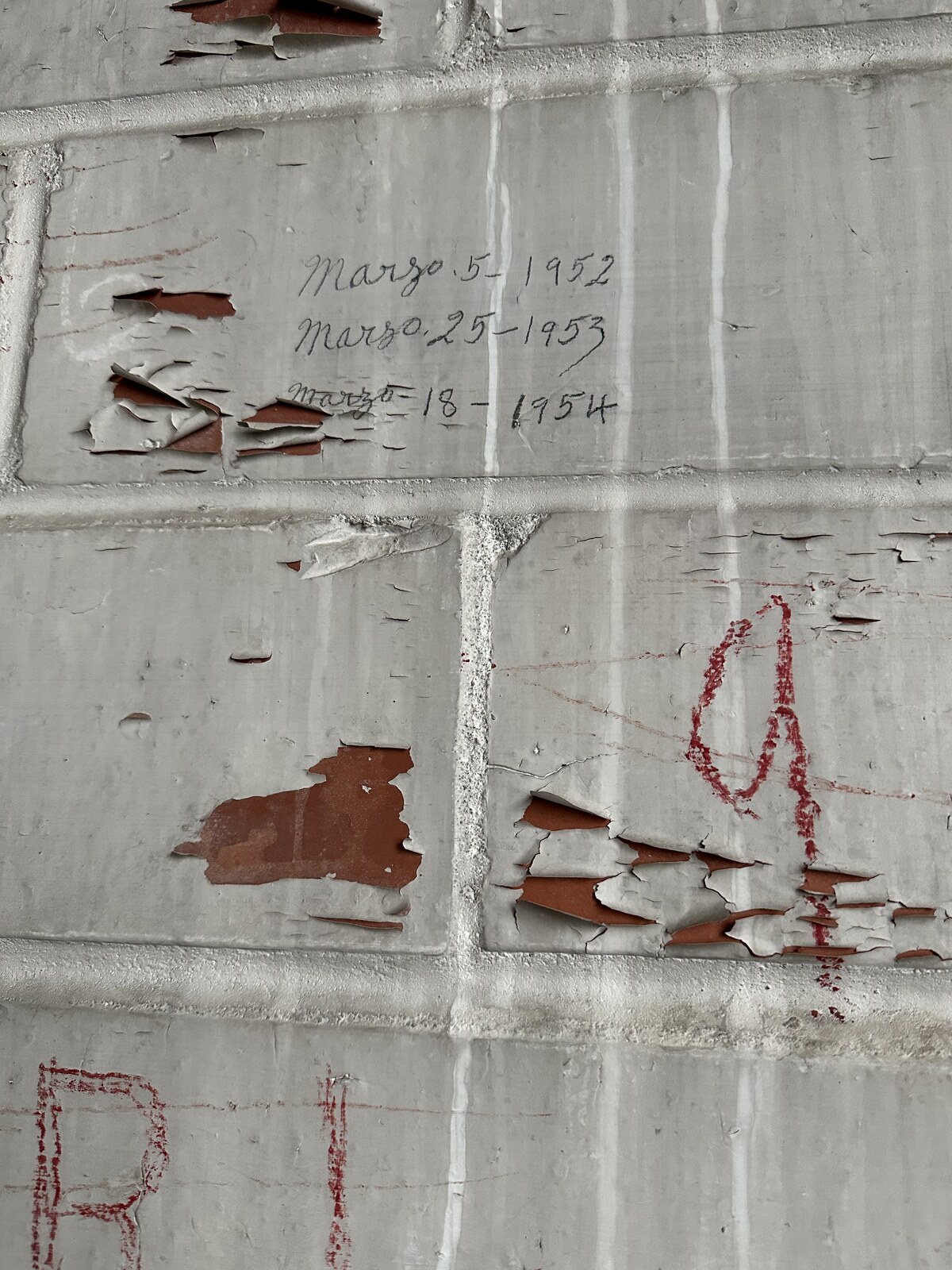
  • East wall — three Marzo pencil dates 1952–1954, red crayon, peeling faux-brick plaster (Feb 2023)
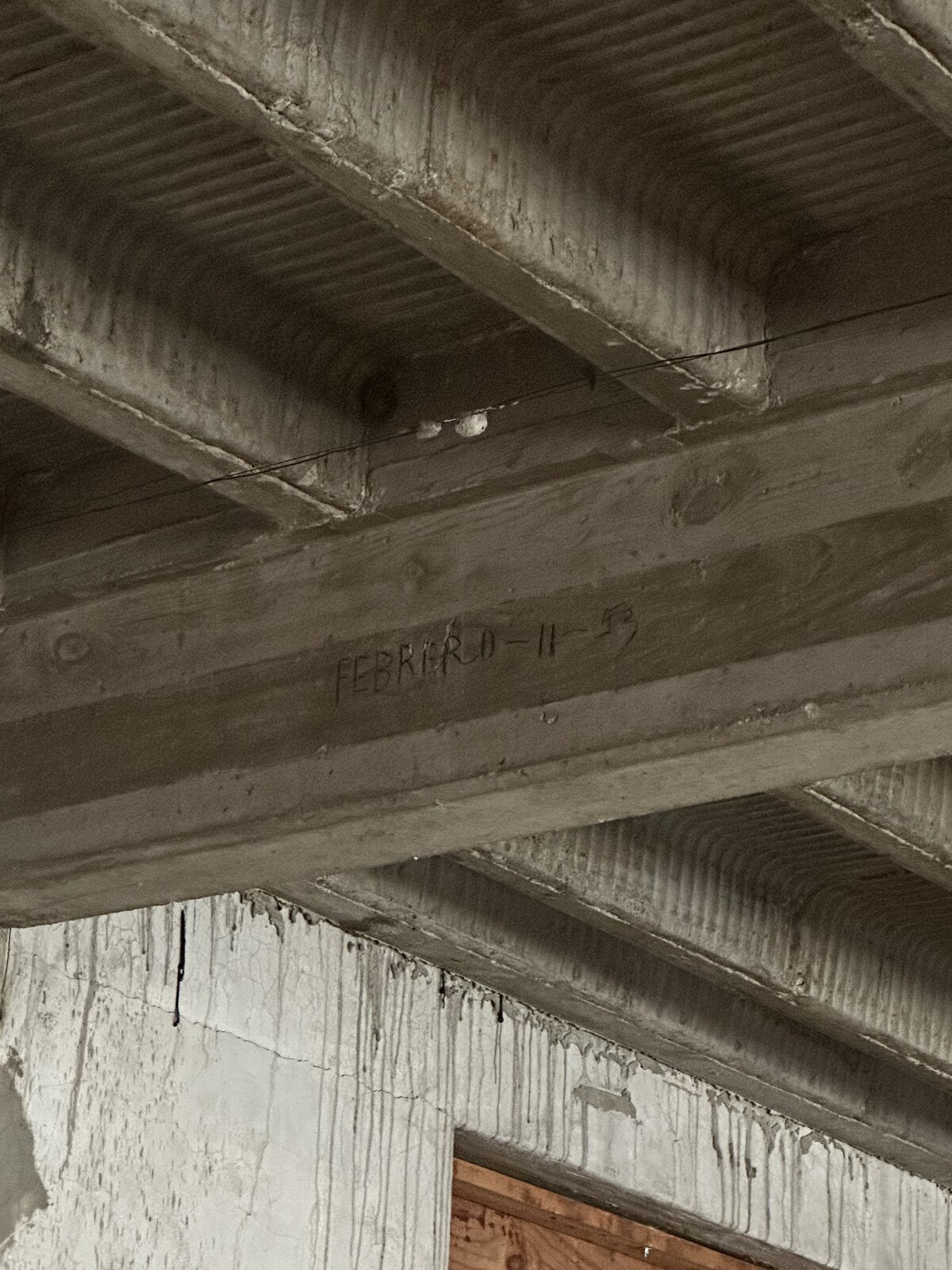
  • Ceiling joist junction with the original 1932 exterior leafFebrero 11 – 53 on the joist, whitewash drips on the old outside wall (Feb 2023)
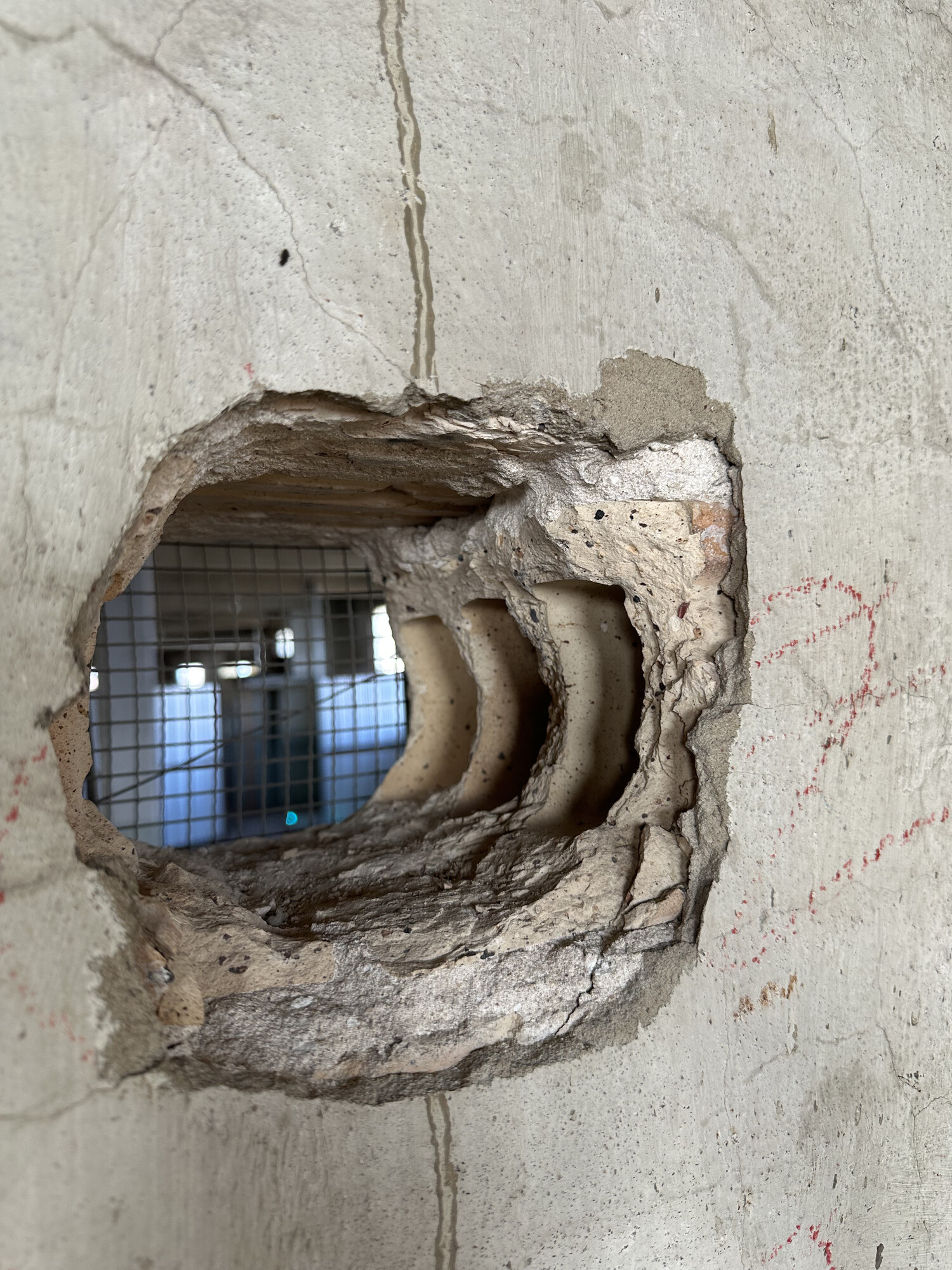
  • Hole through that 1932 face — brick-on-hollow-tile cross-section and caged window beyond (Jan 2025)
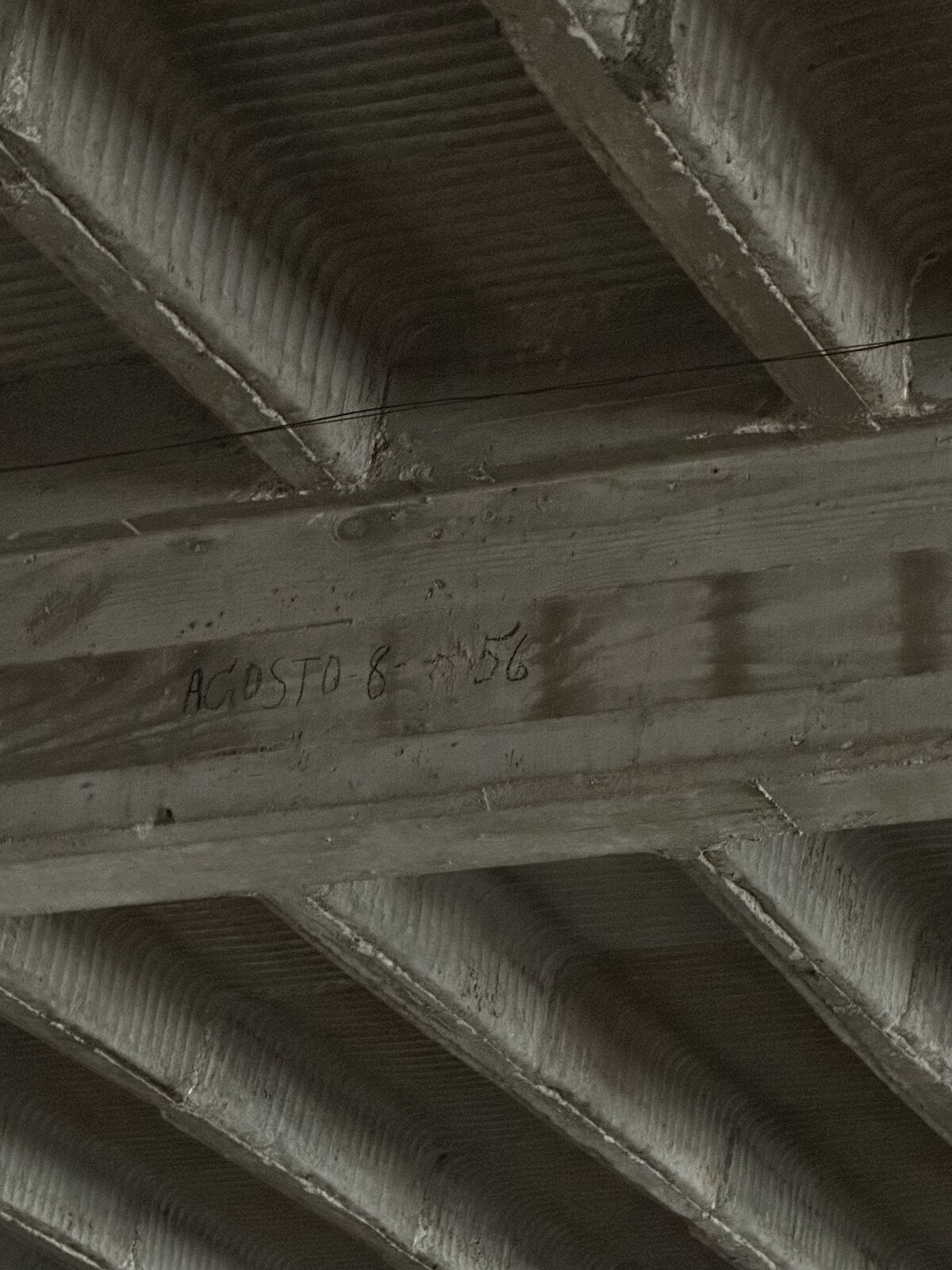
  • Agosto 8 – 56 pencil on a ceiling joist in the same room (Feb 2023)
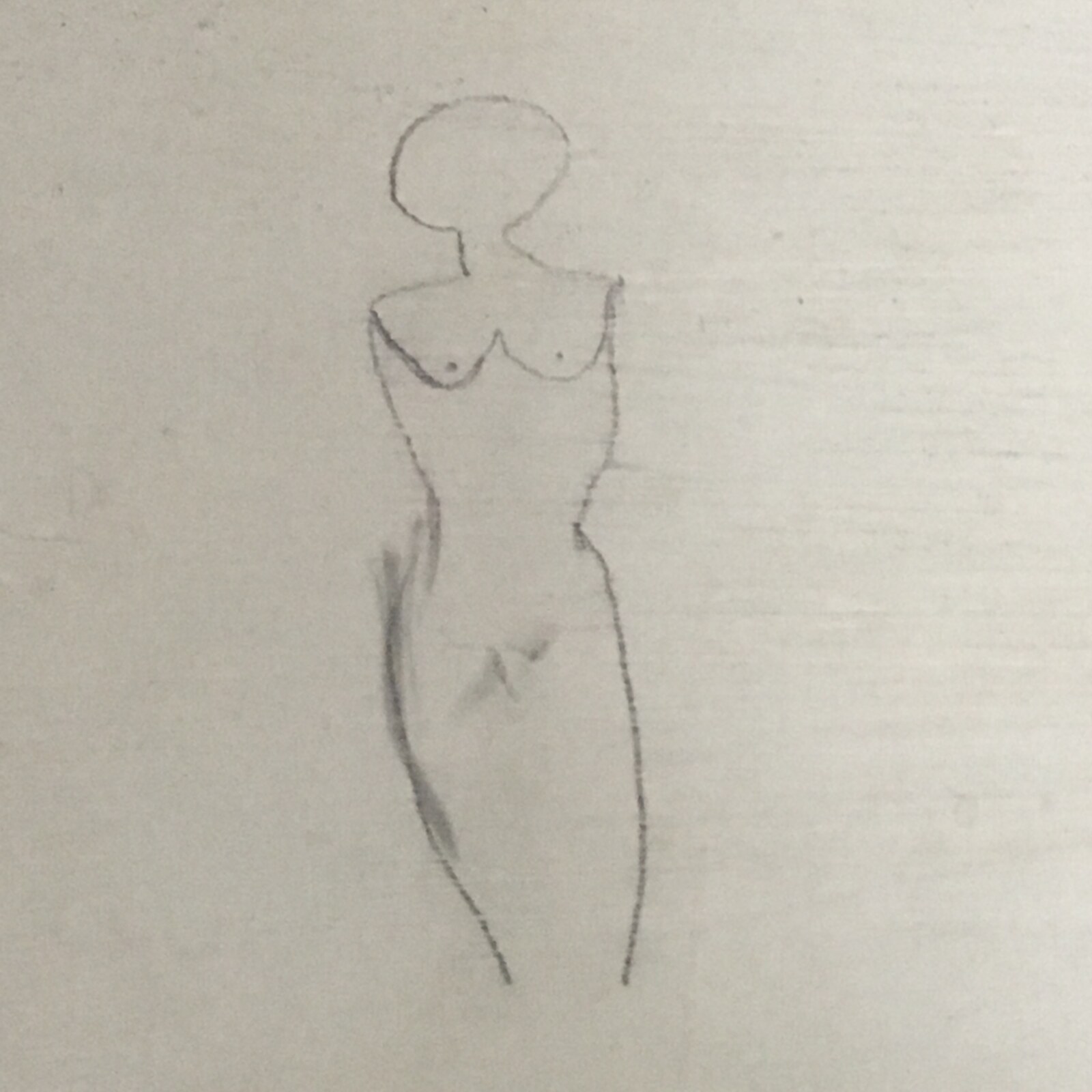
  • Informal upstairs figure pencil on stucco

Inventory bay (second-floor expansion)

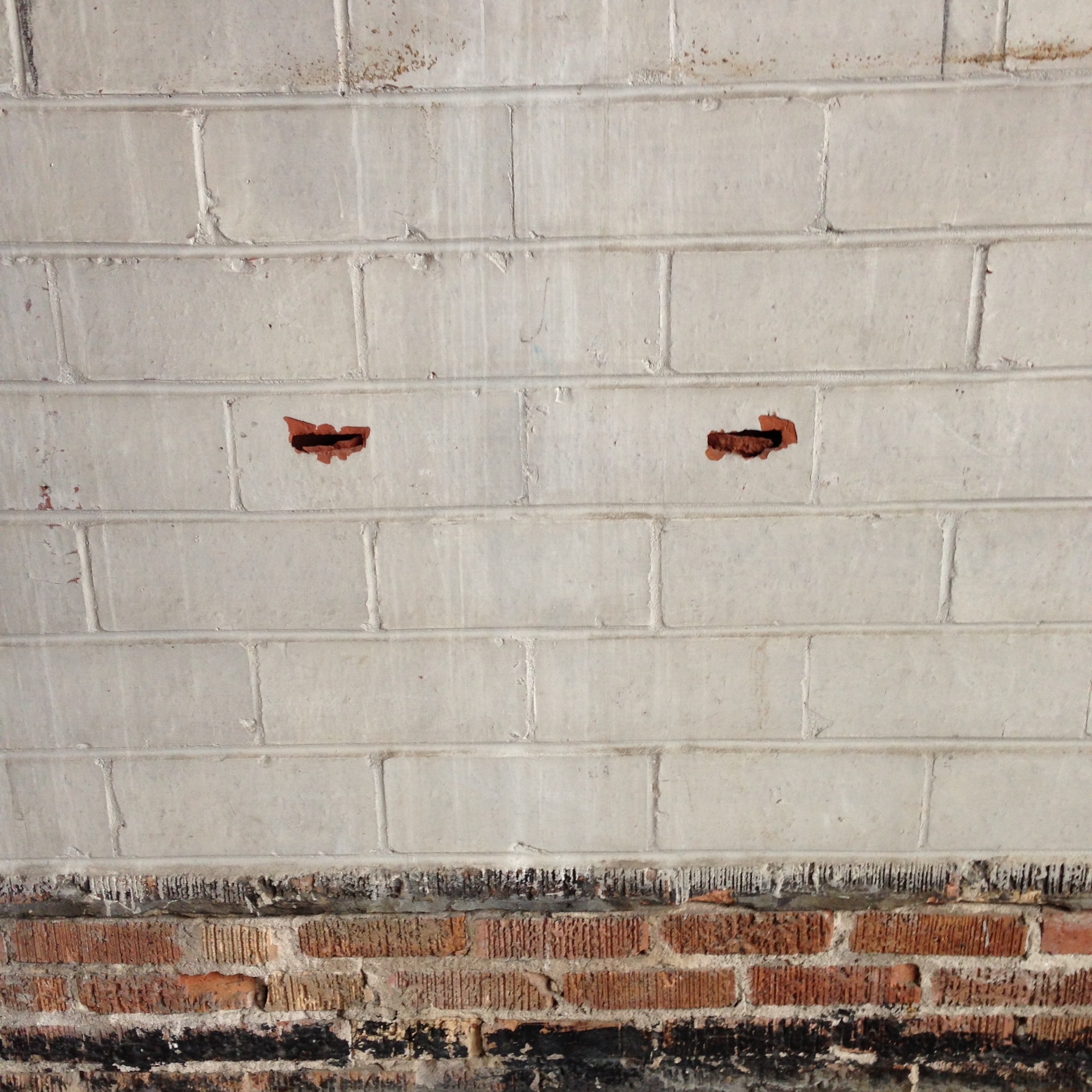
  • CMU west wall — paired forklift punctures (Nov 2015)
  • Brick face — blue-pencil green-coffee tally (Santos / Colombia figures)
  • Painted wood door or partition — 16 + 27 = 43 and Donje (Instagram)

First-floor office-adjacent column (2026)

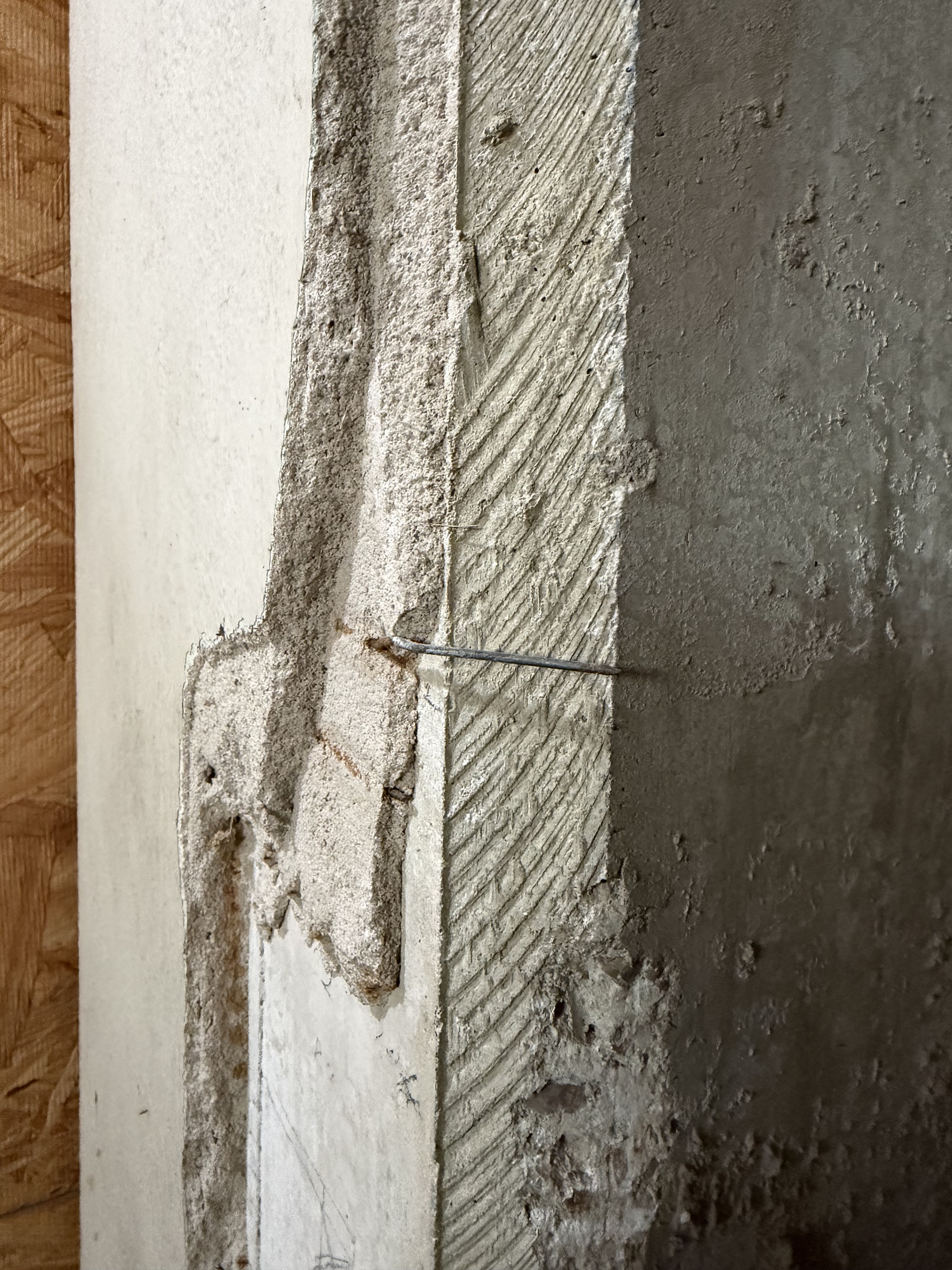
  • Opened column wrapOSB, scratch coat, mortar patch, masonry core with steel wall tie (Apr 2026)
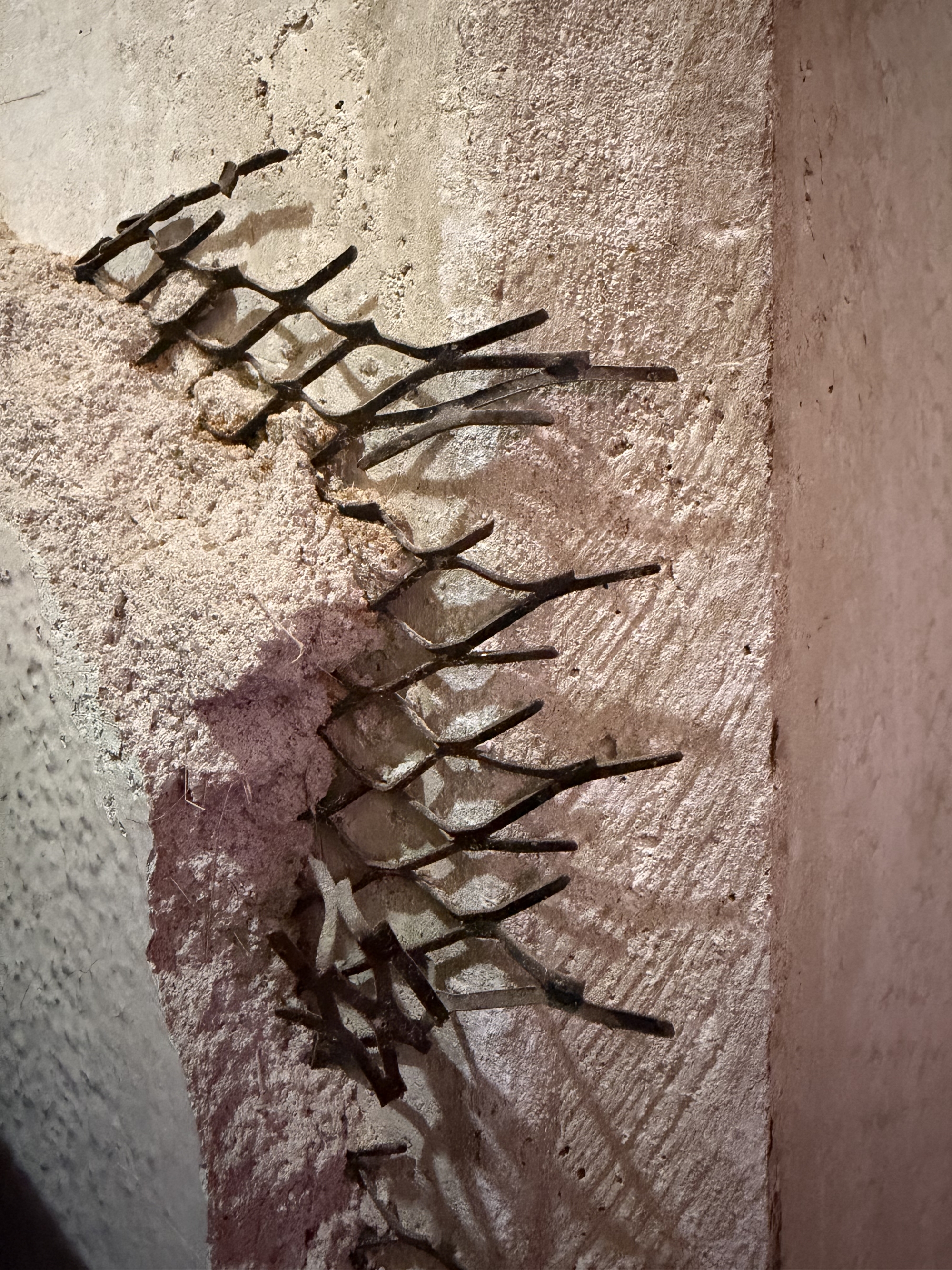
  • Spalled finish with expanded-metal lath fingers bent out — companion damage on the same column (Apr 2026)

Stairs and first-floor cut-through sketch

  • American Mason Safety Tread Co. emboss on a cast tread to the second floor (Oct 2014)
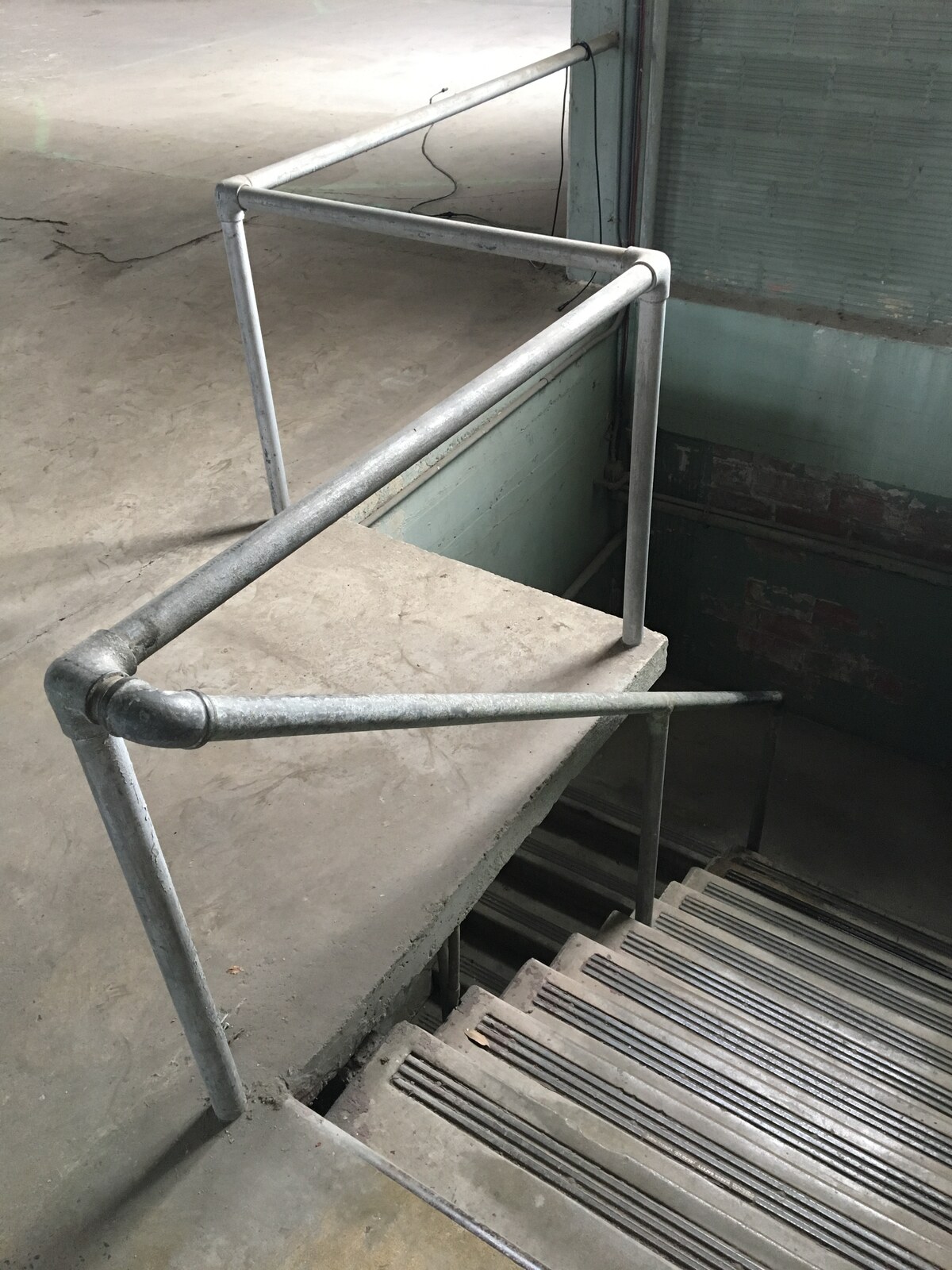
  • Stair down from the second floor — galvanized pipe-fitting handrail
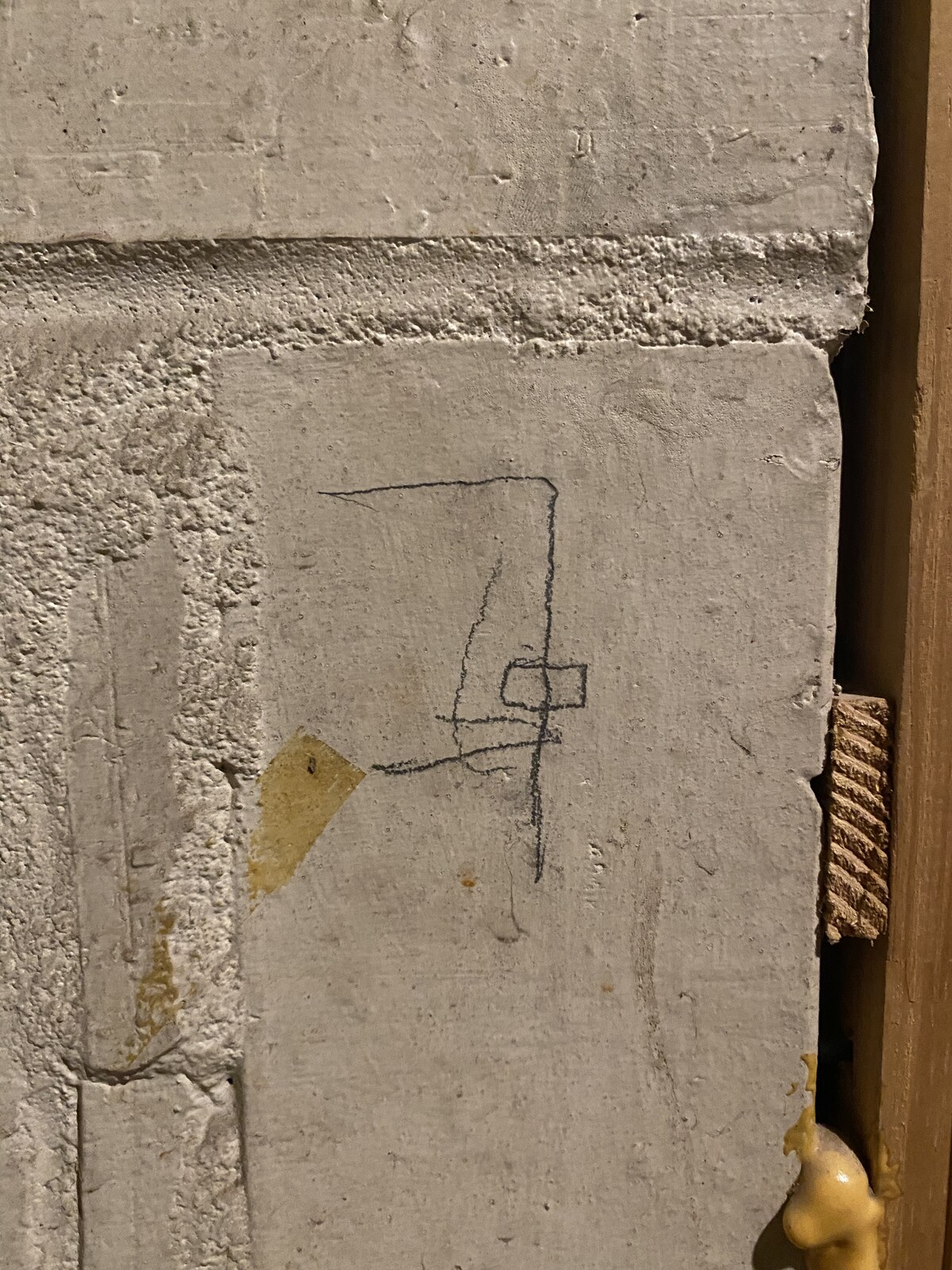
  • First-floor pencil elevation-style sketch at the bathroom doorway cut beside the stair foot (Mar 2022)

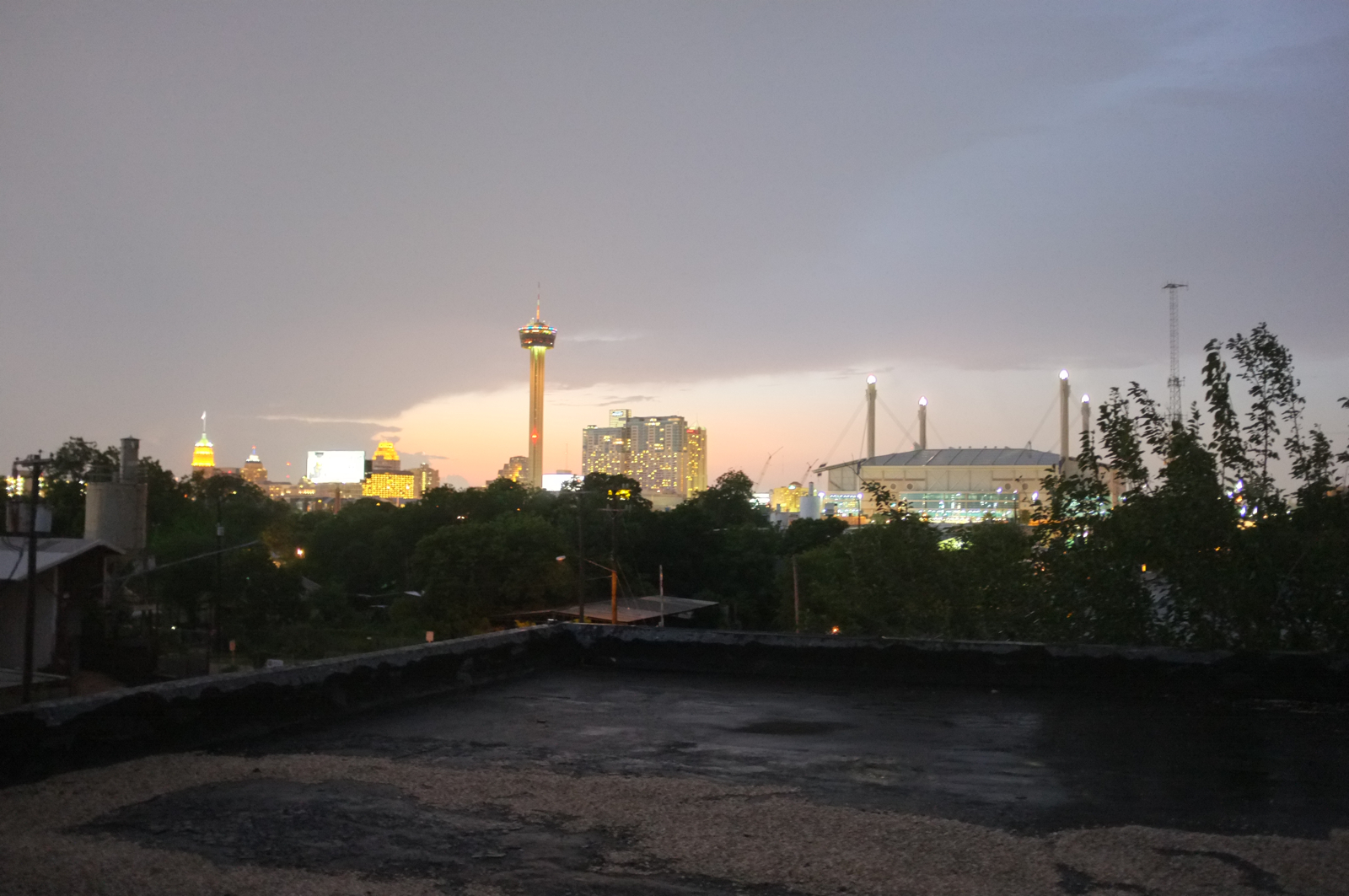
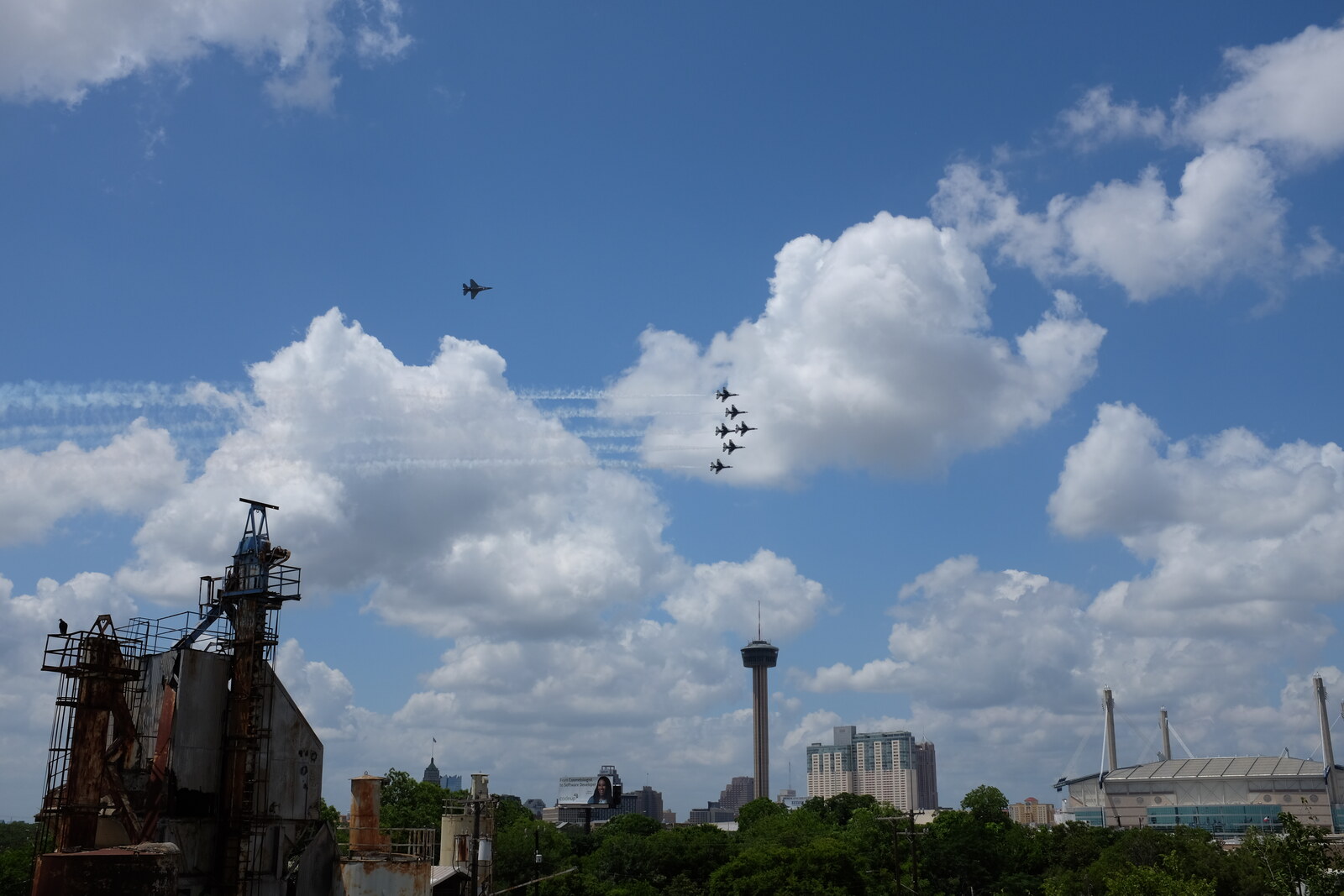
Rooftop and skyline

  • Fourth of July dusk view from the roof
  • Thunderbirds America Strong flyover, Tower of the Americas13 May 2020

Company letterhead

  • Full sheet with factory vignette and officers
  • Masthead detail and building illustration crop from the same stationery

Supplier reference (glass)

  • Three Rivers Glass Co. supplied Crystalvac-style jars packed on Delaware Street; the Texas Historical Commission marker at the Three Rivers glassworks is in the Reference gallery (not the coffee plant building).

For the broader story of the firm and the building, see the history page.
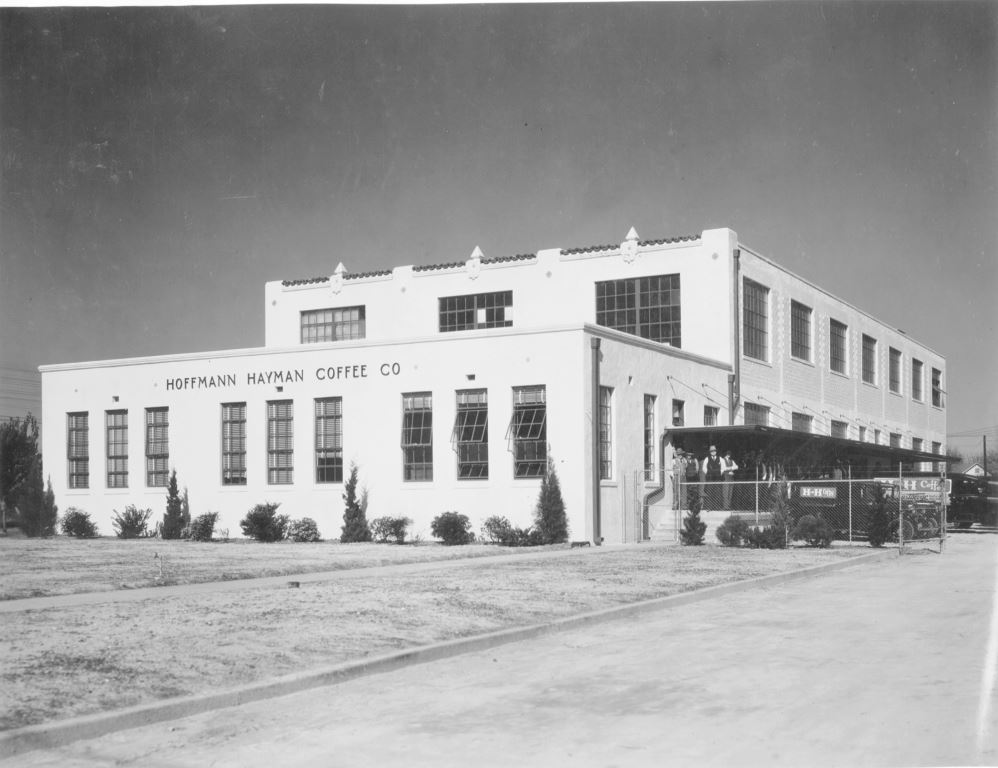
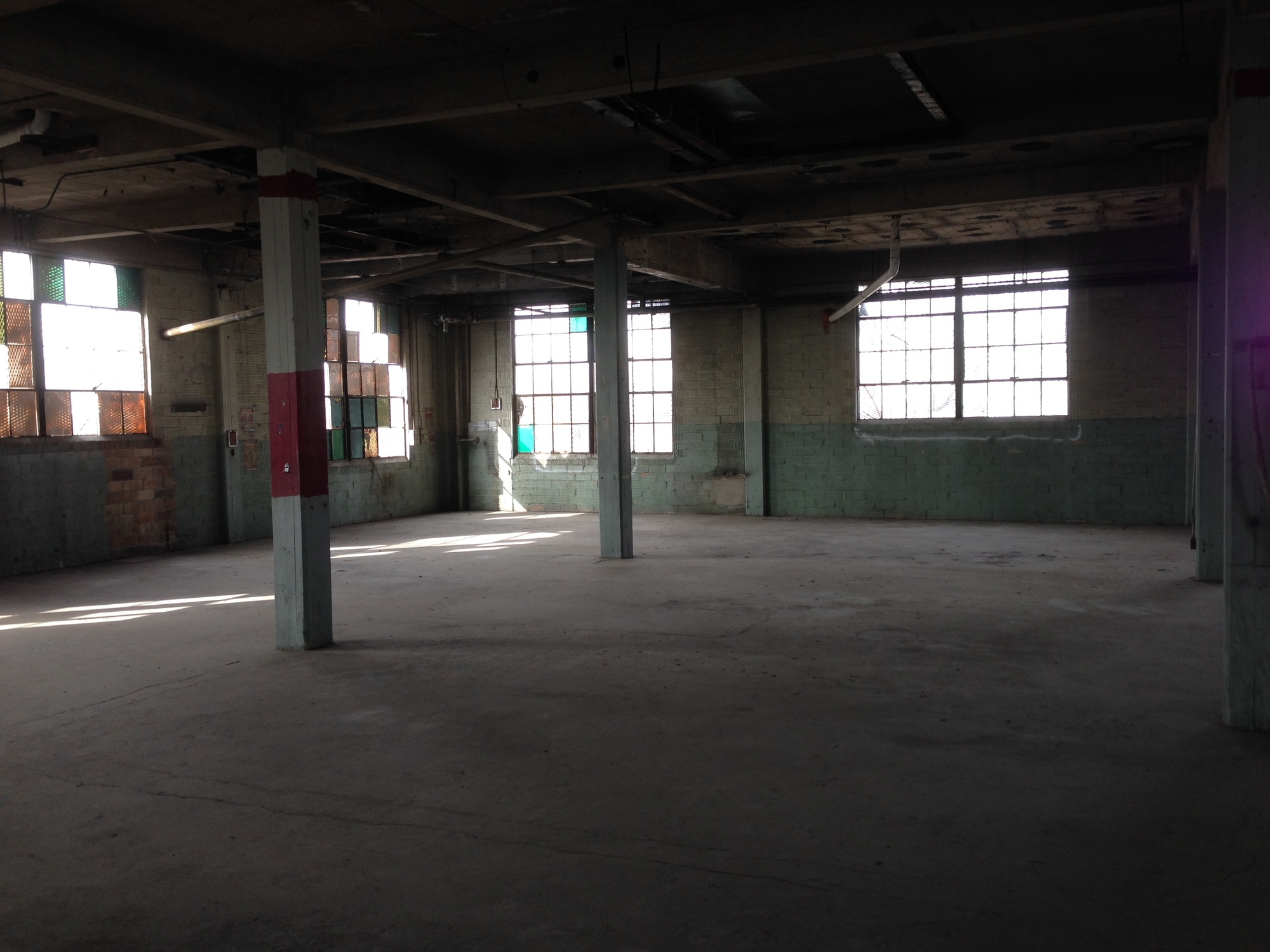
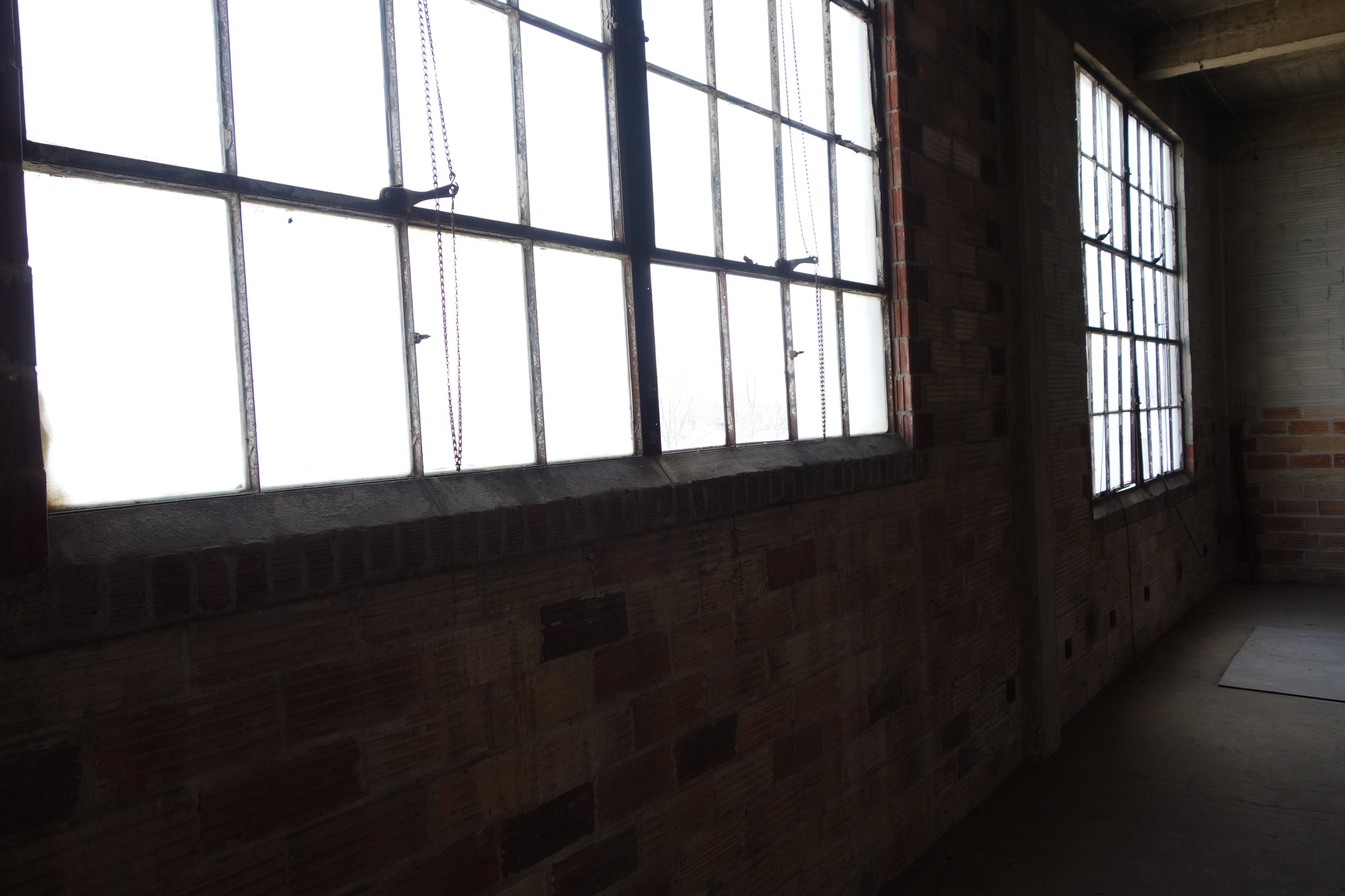
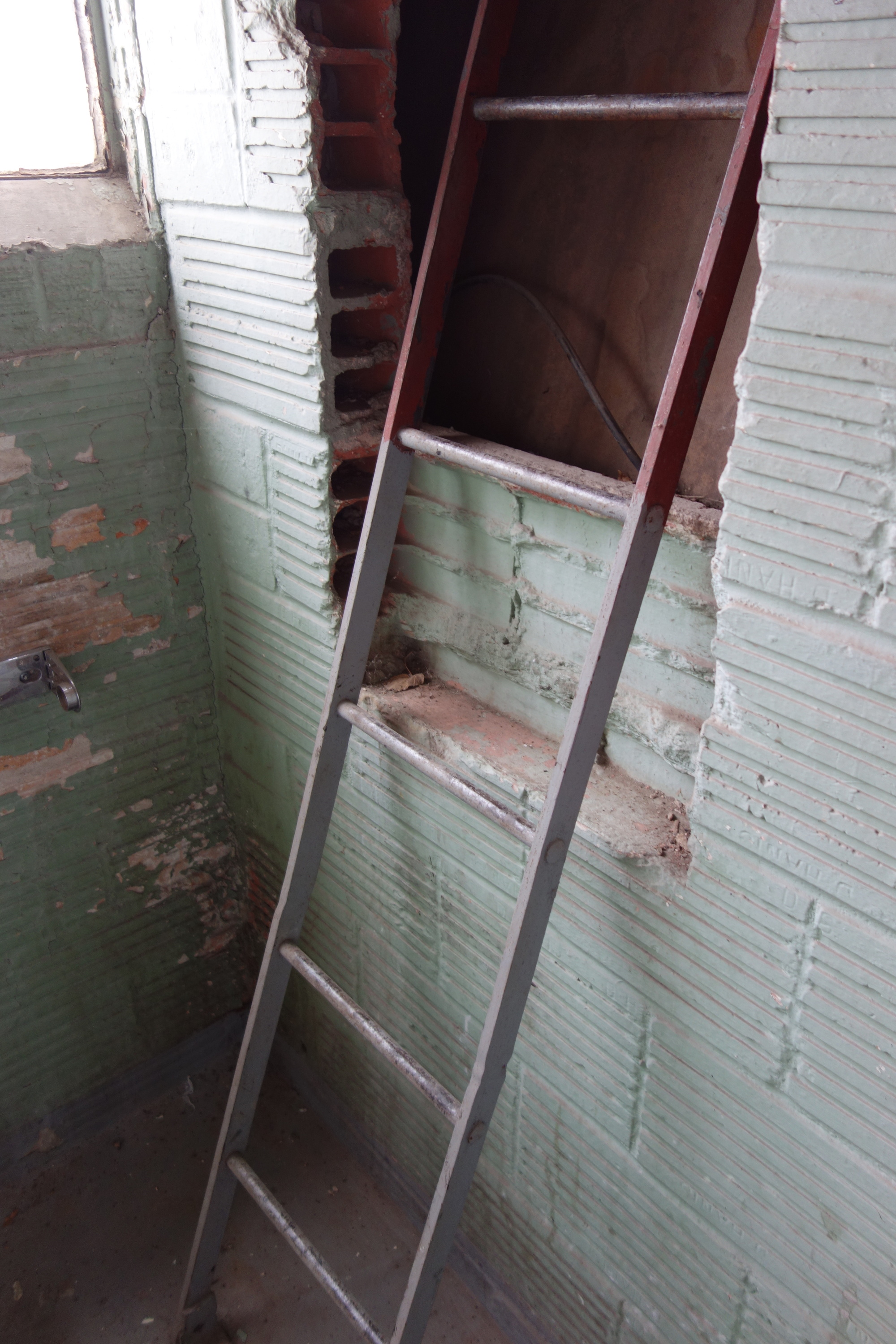
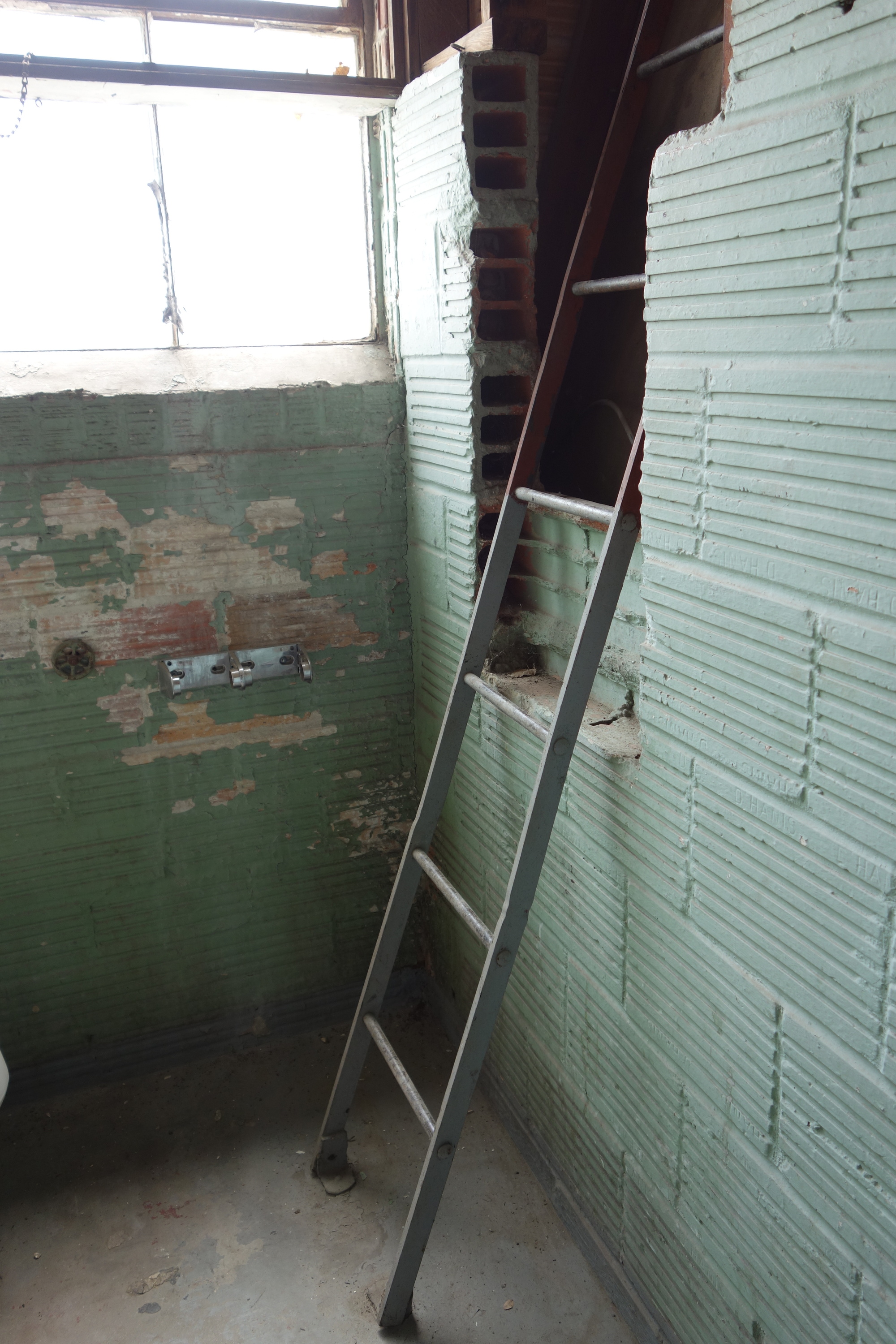
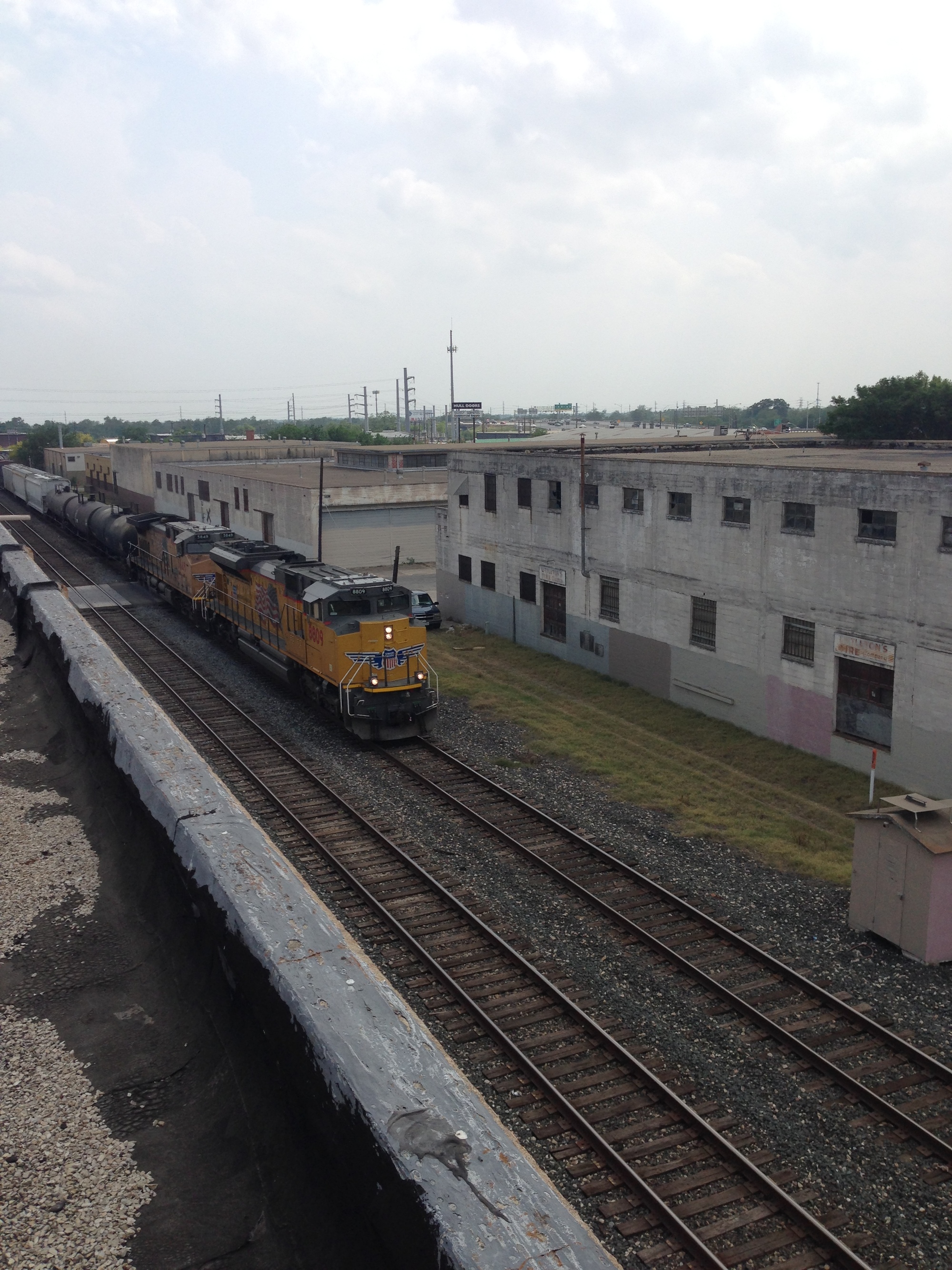
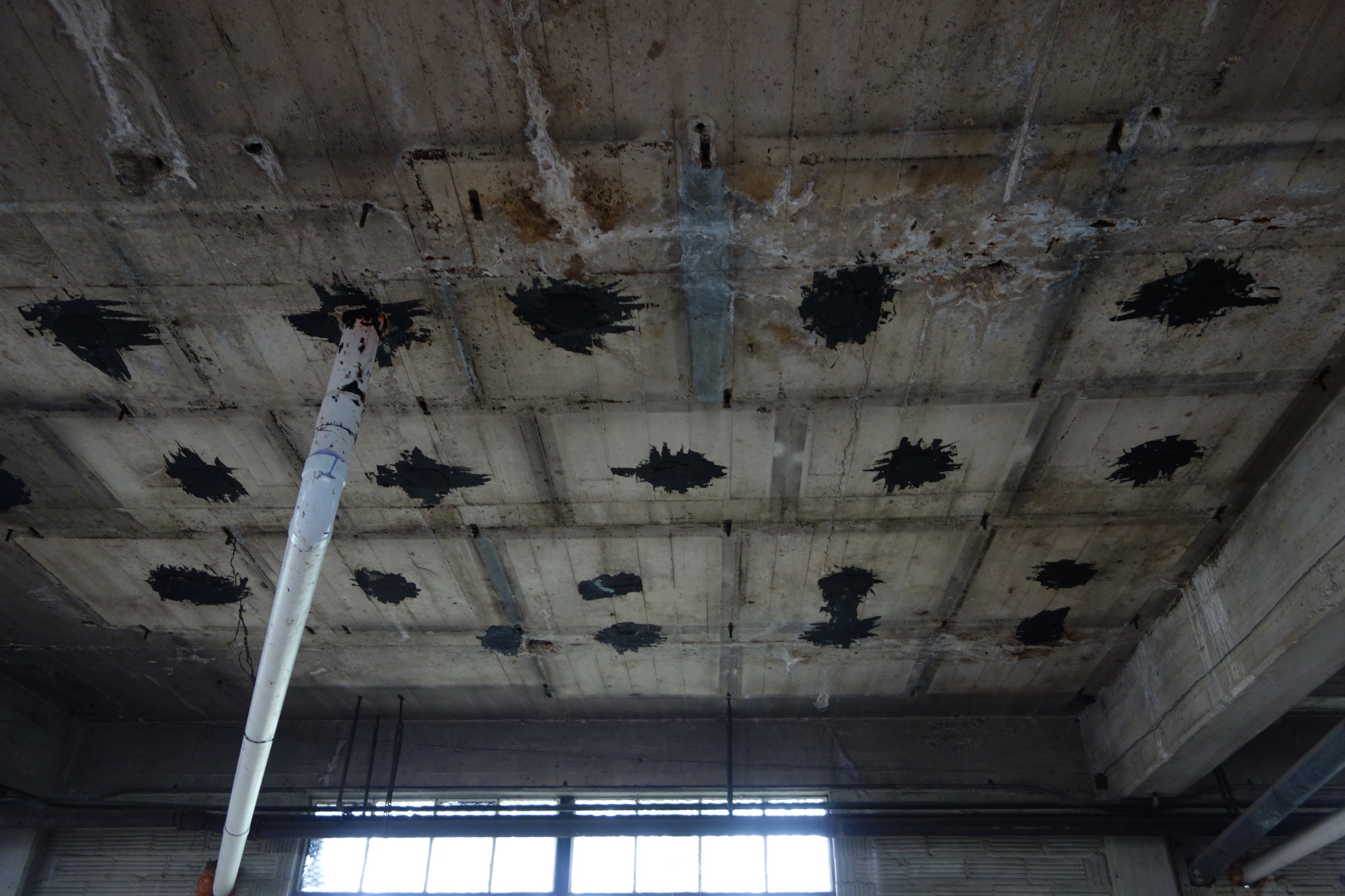
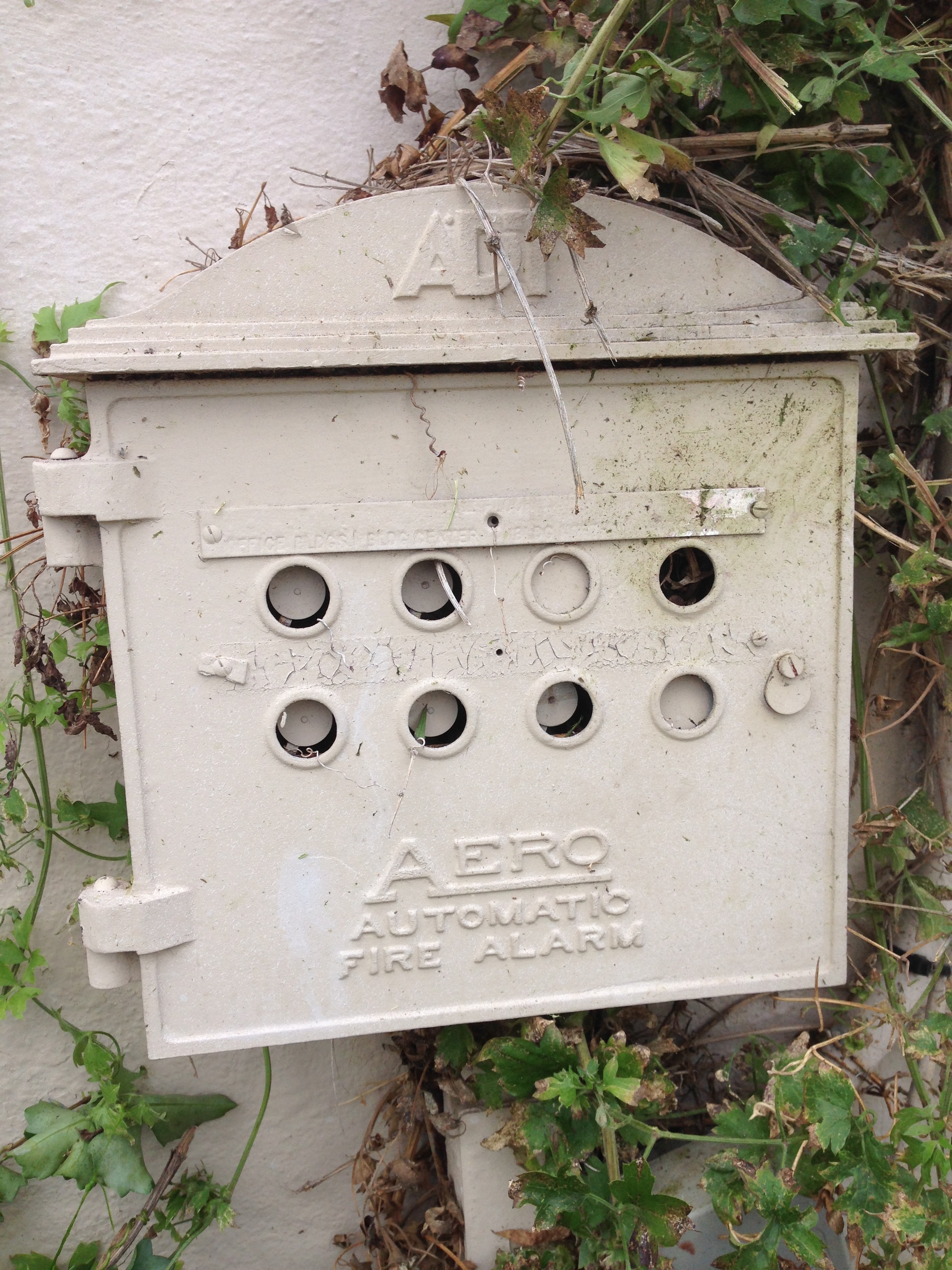
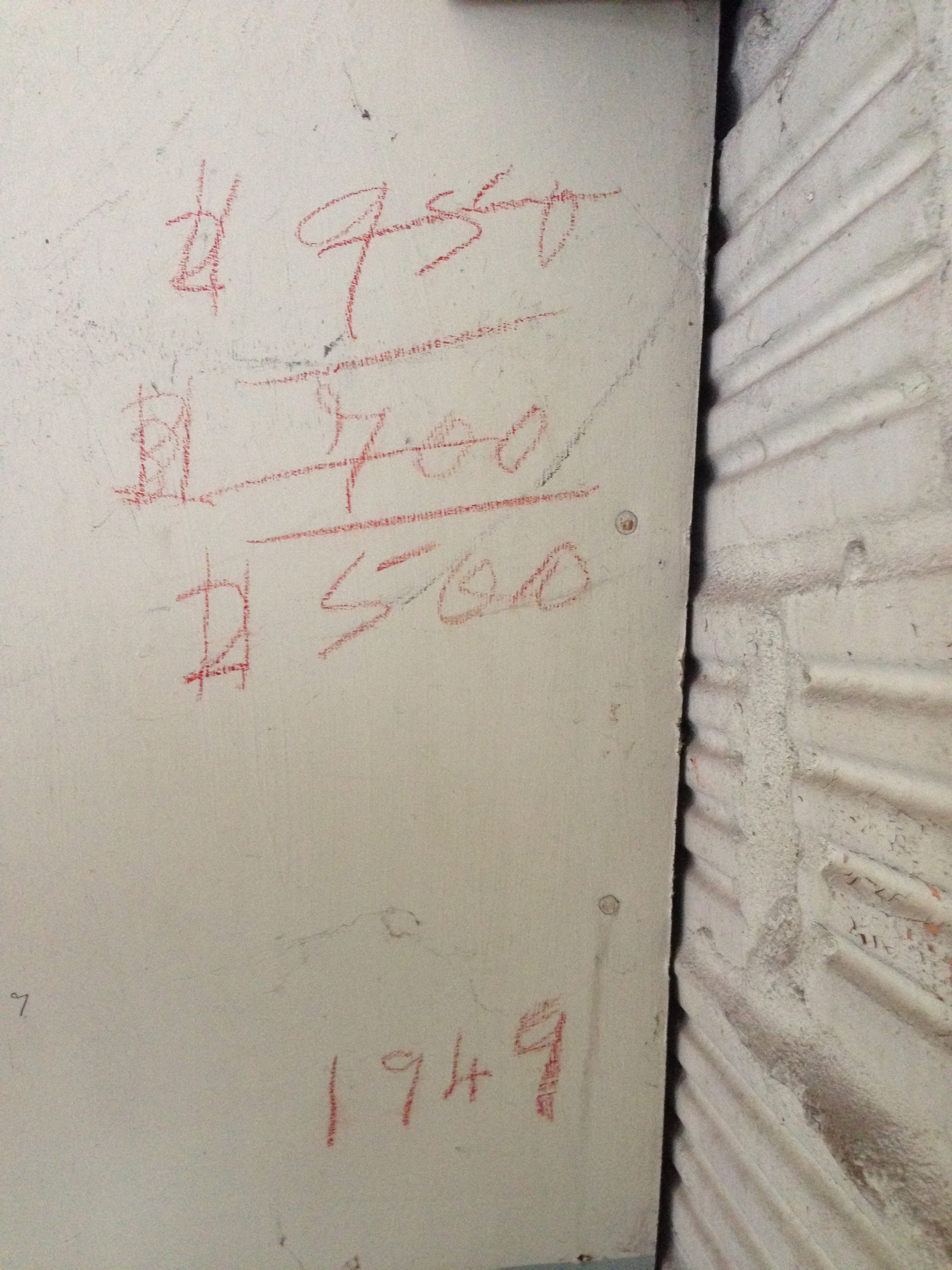
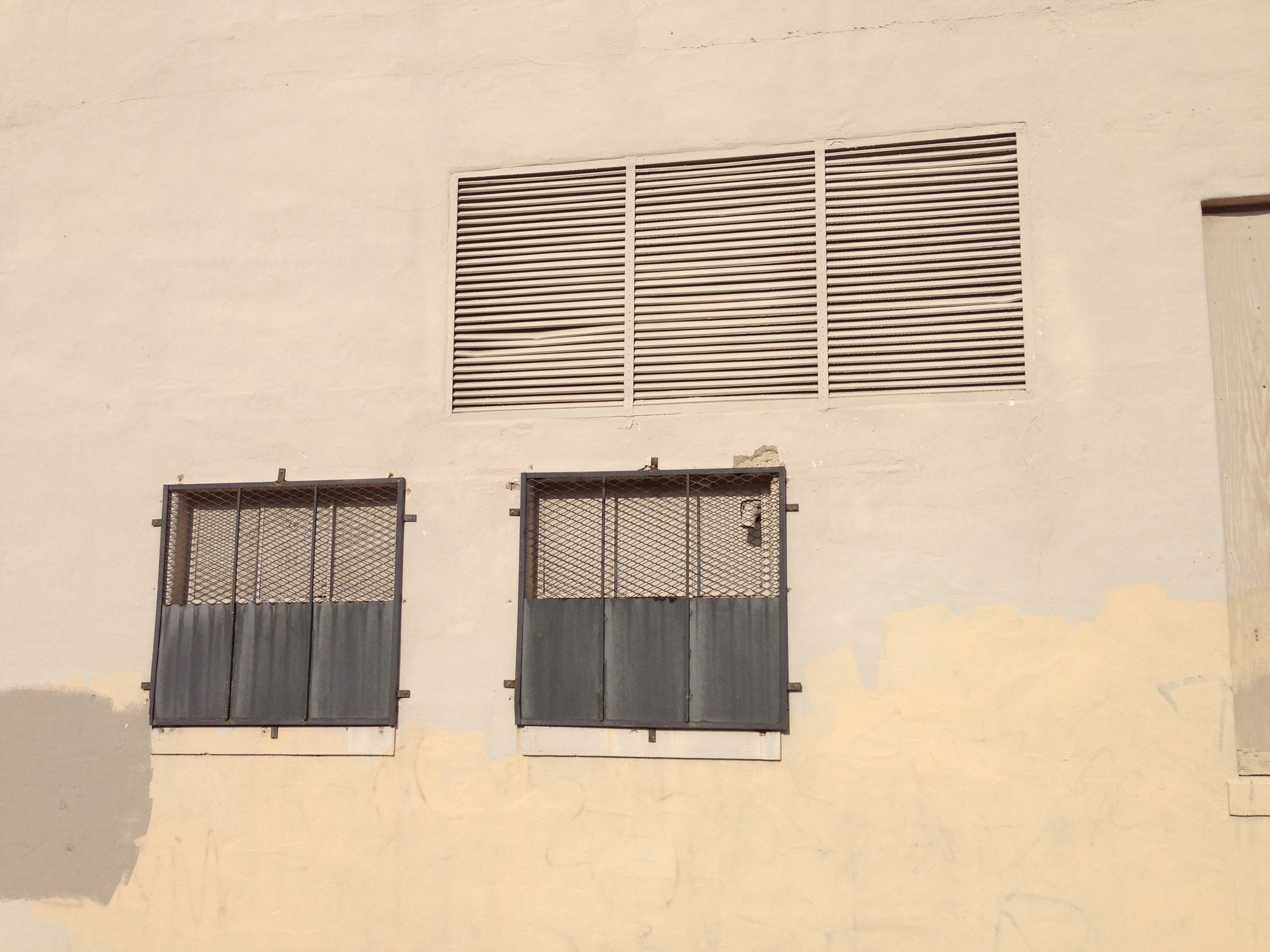
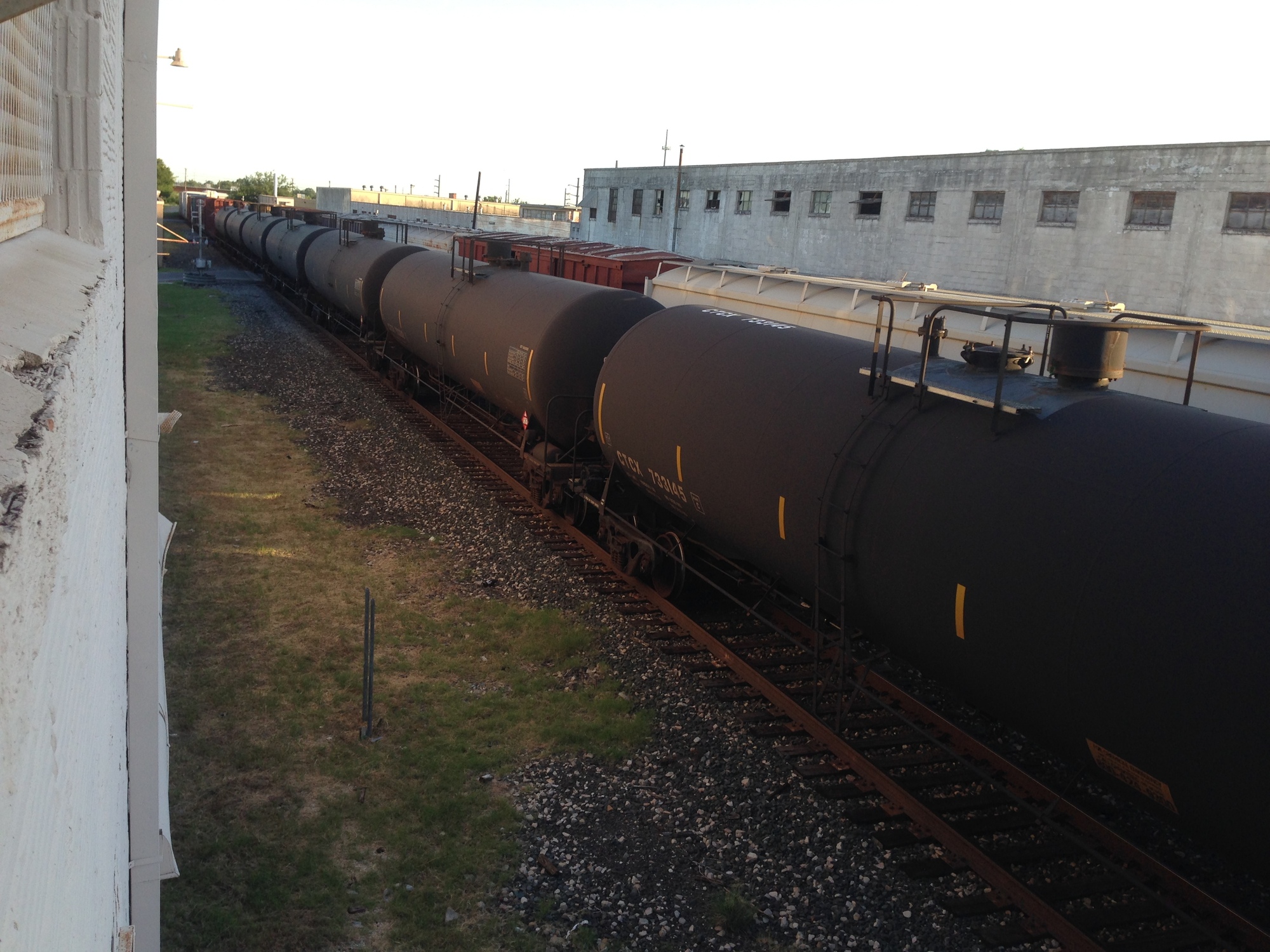
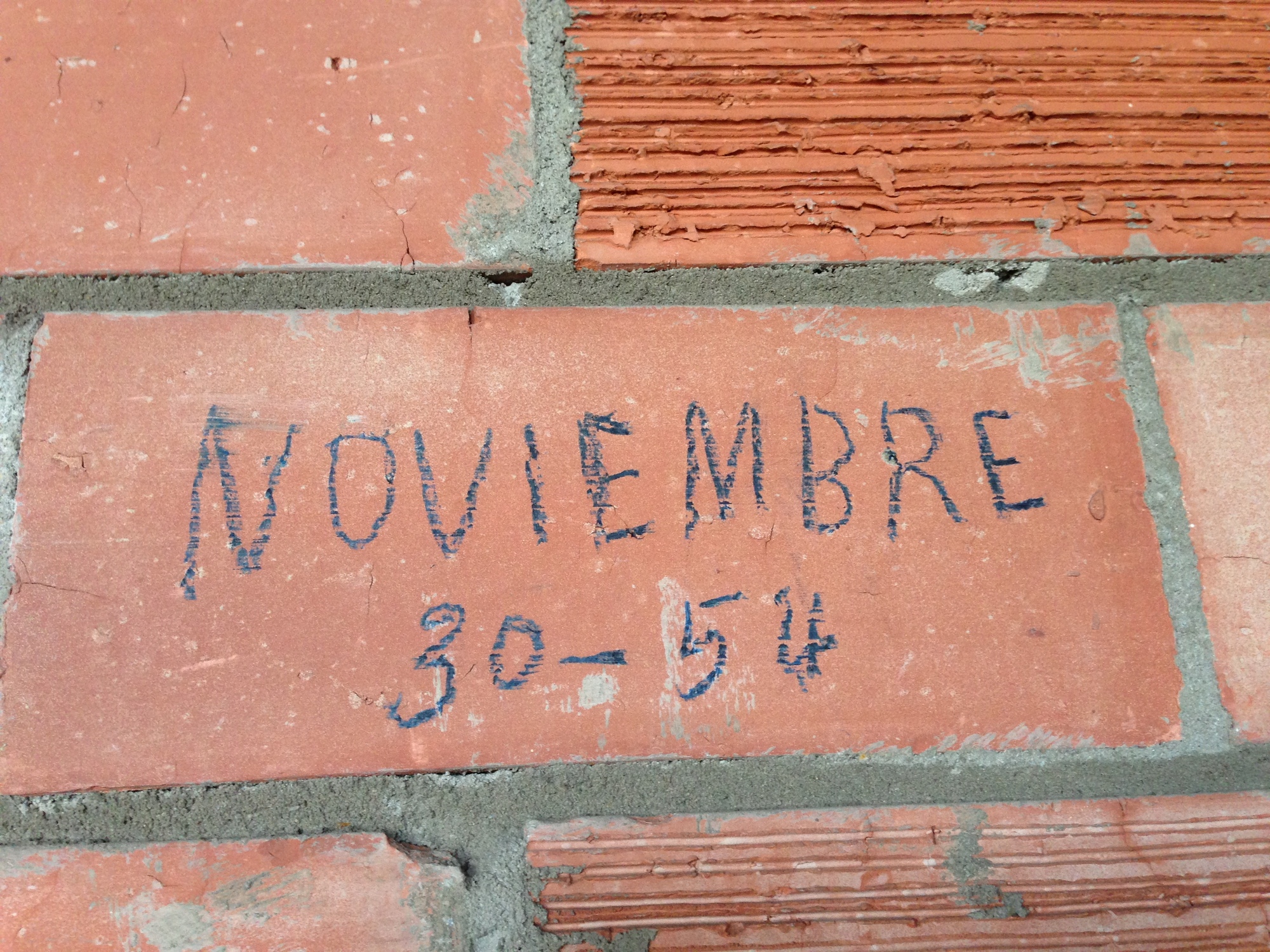
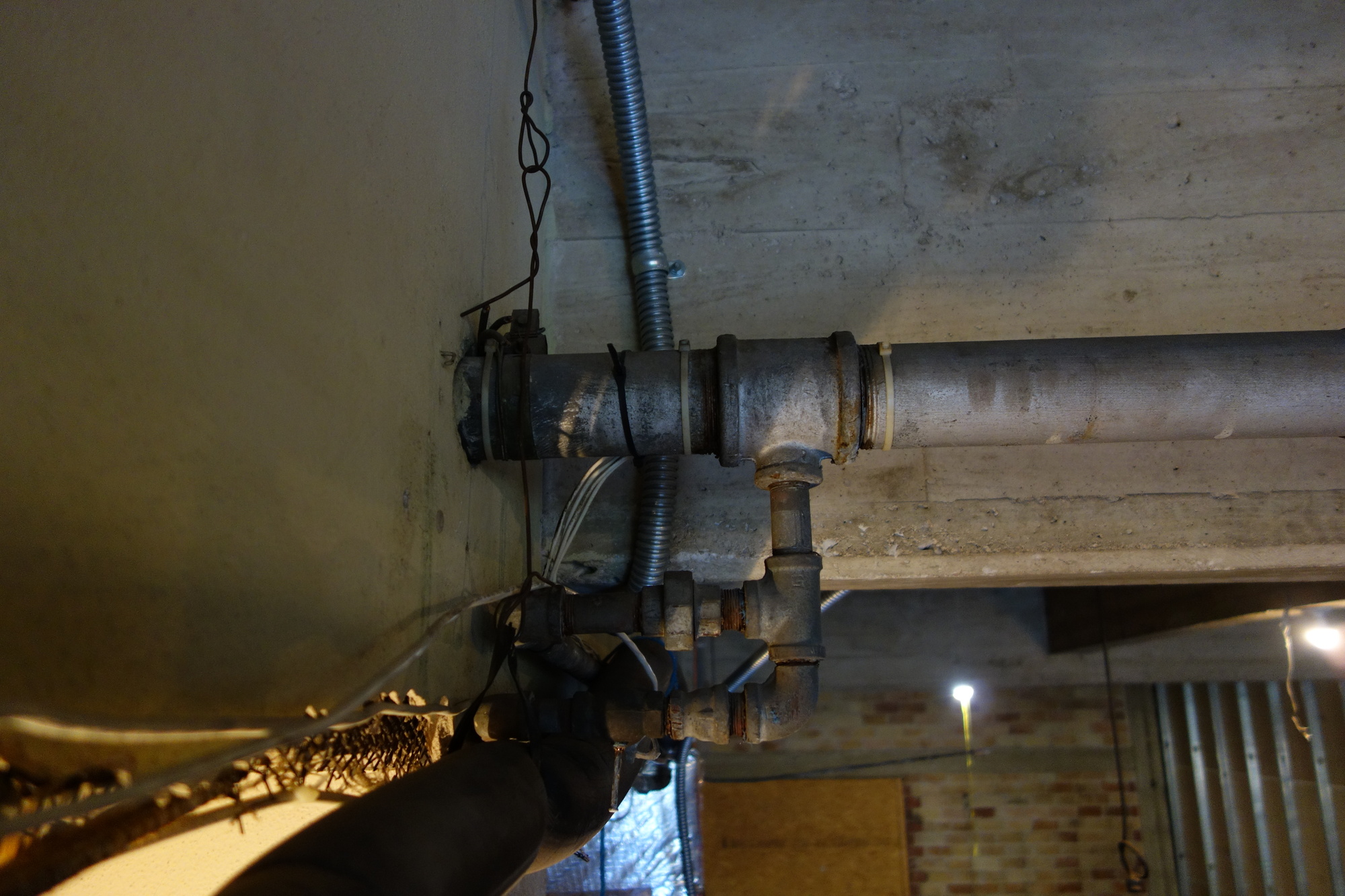
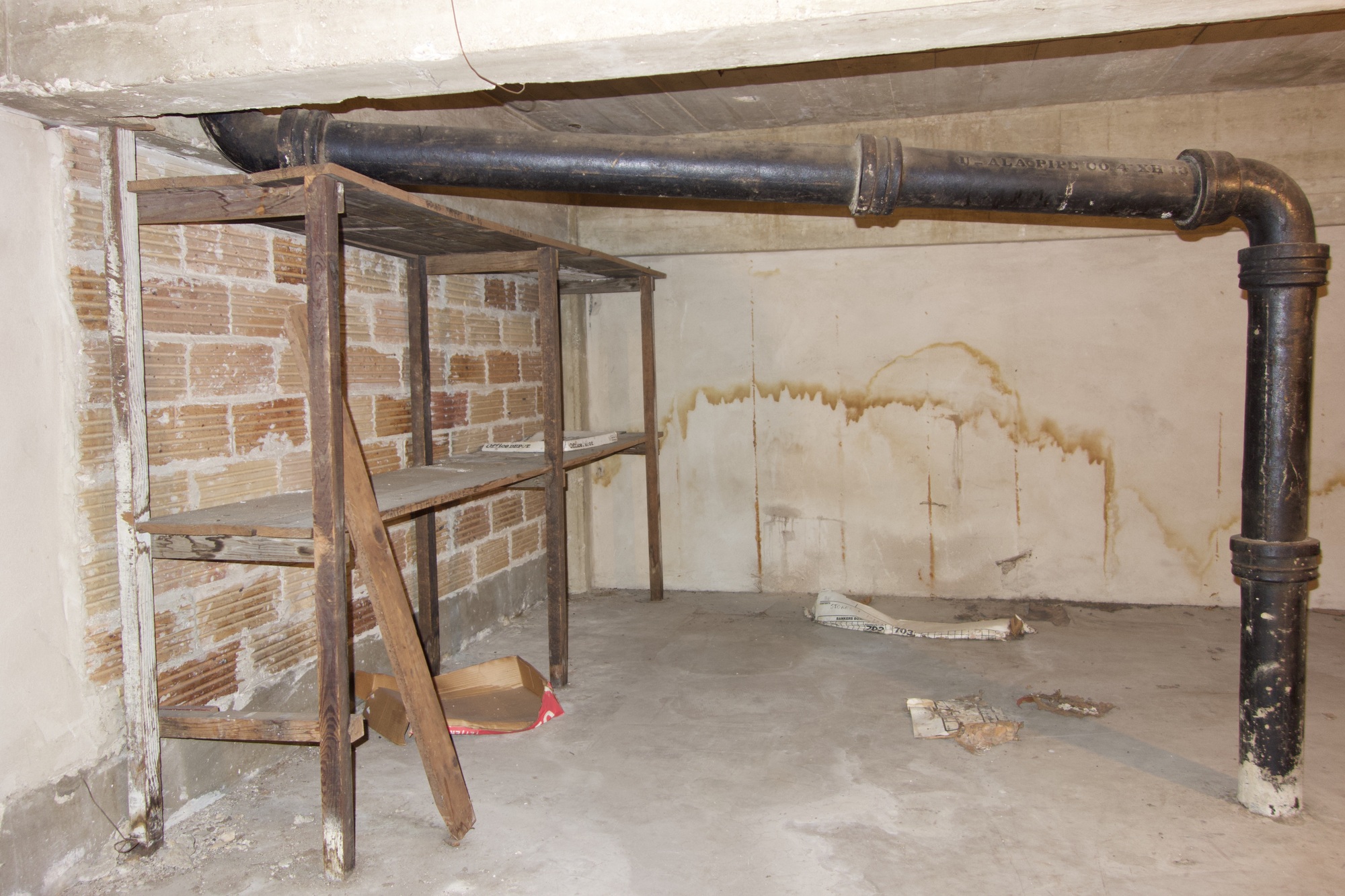
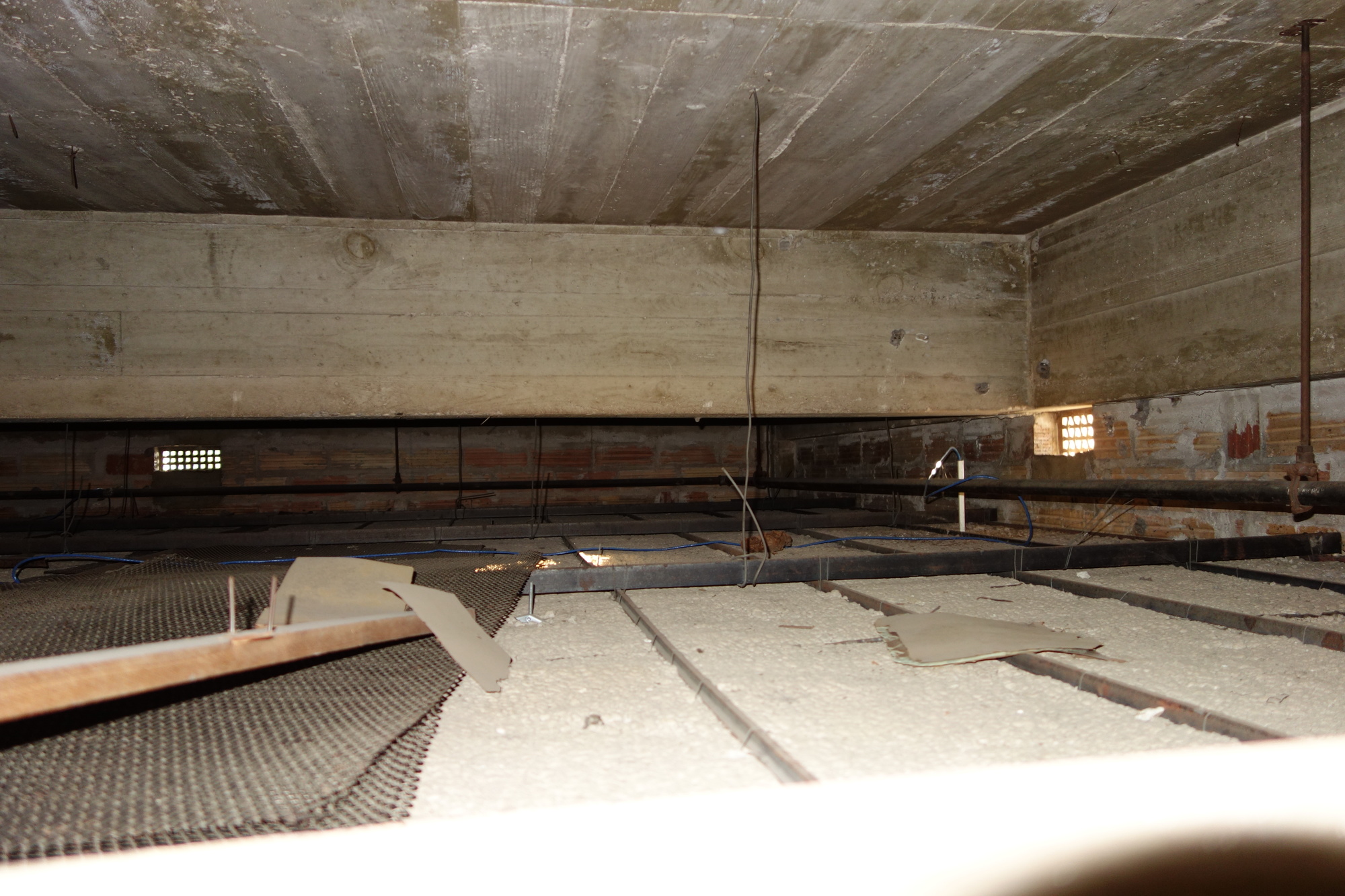
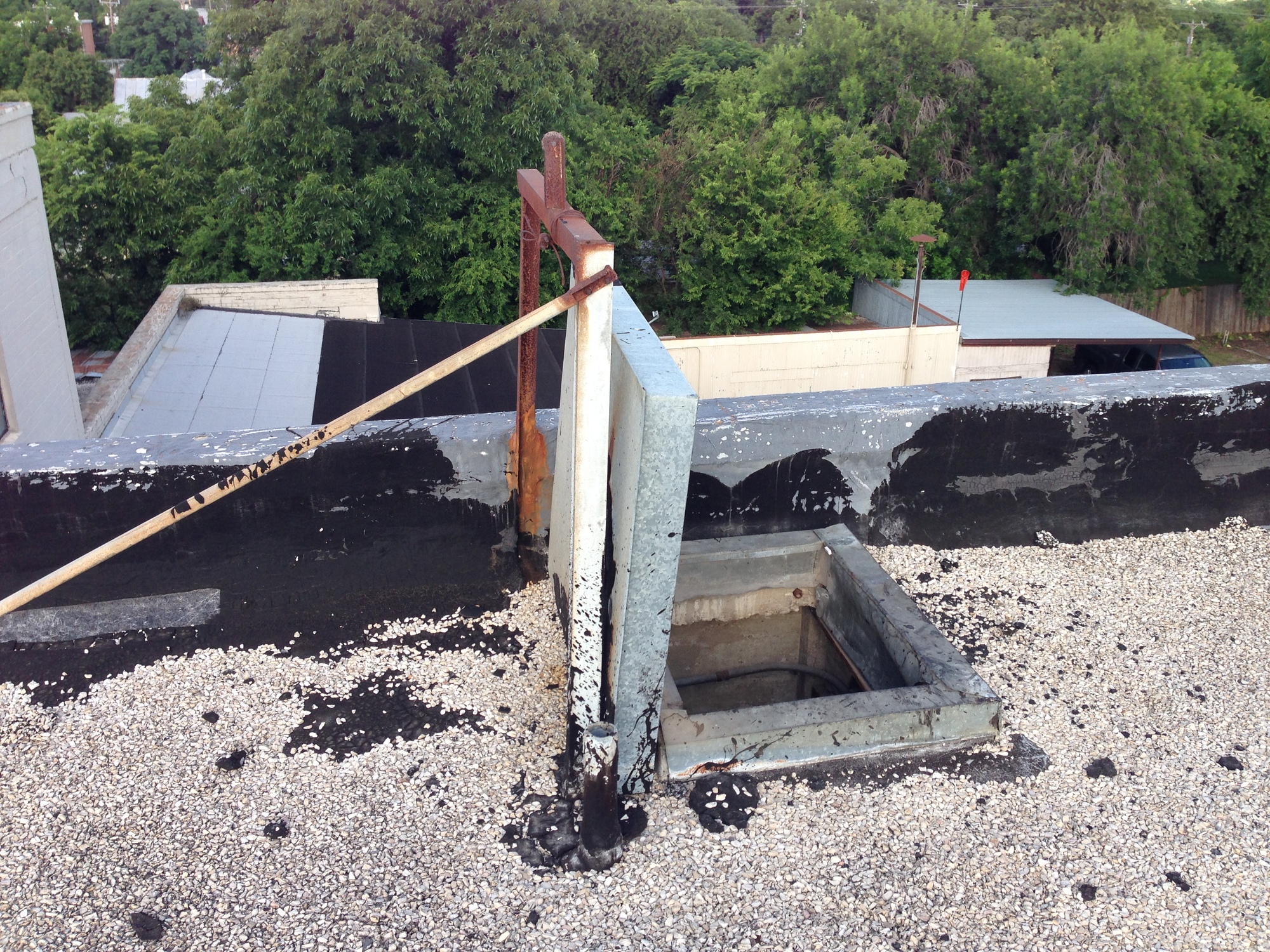
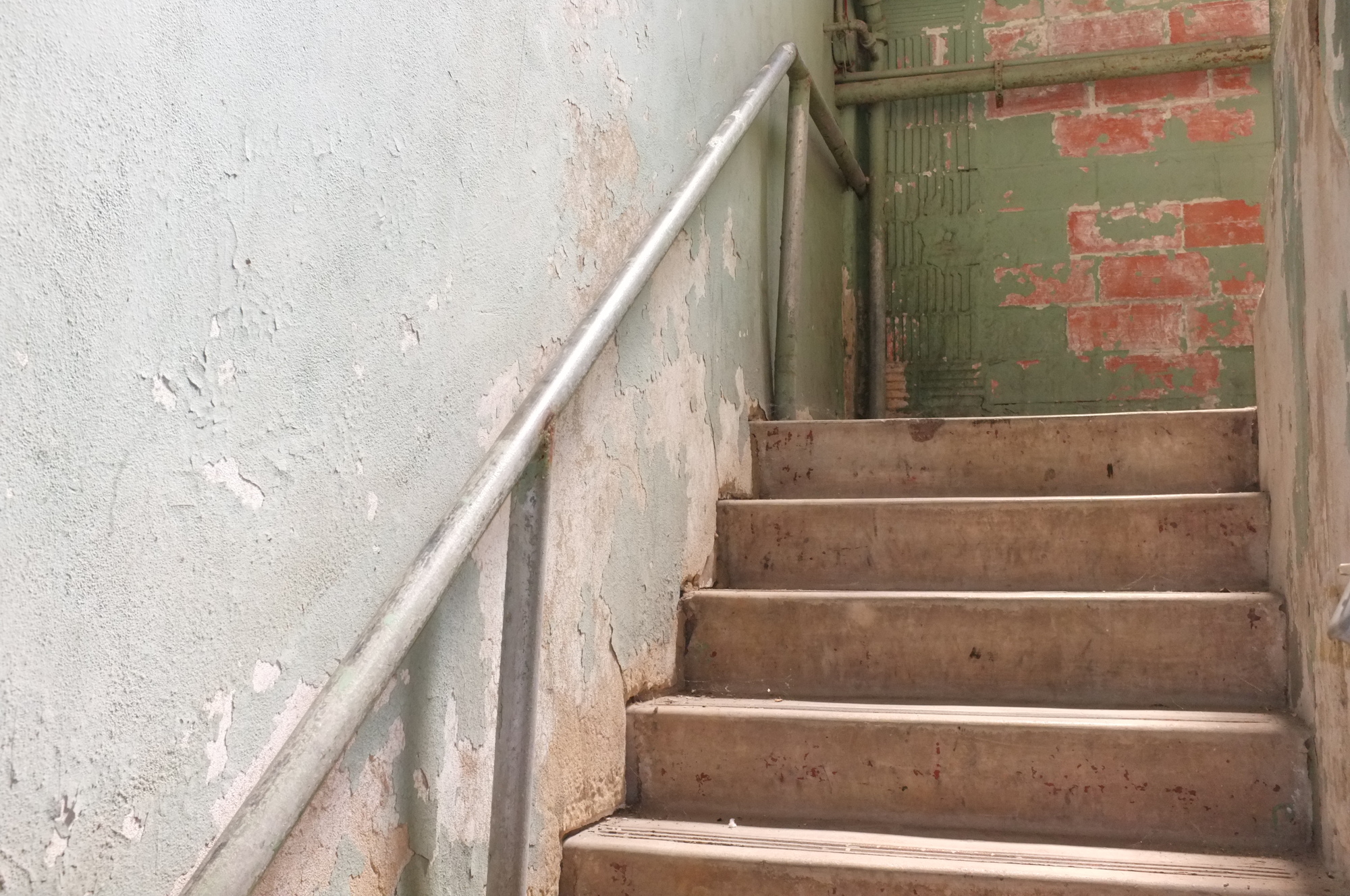
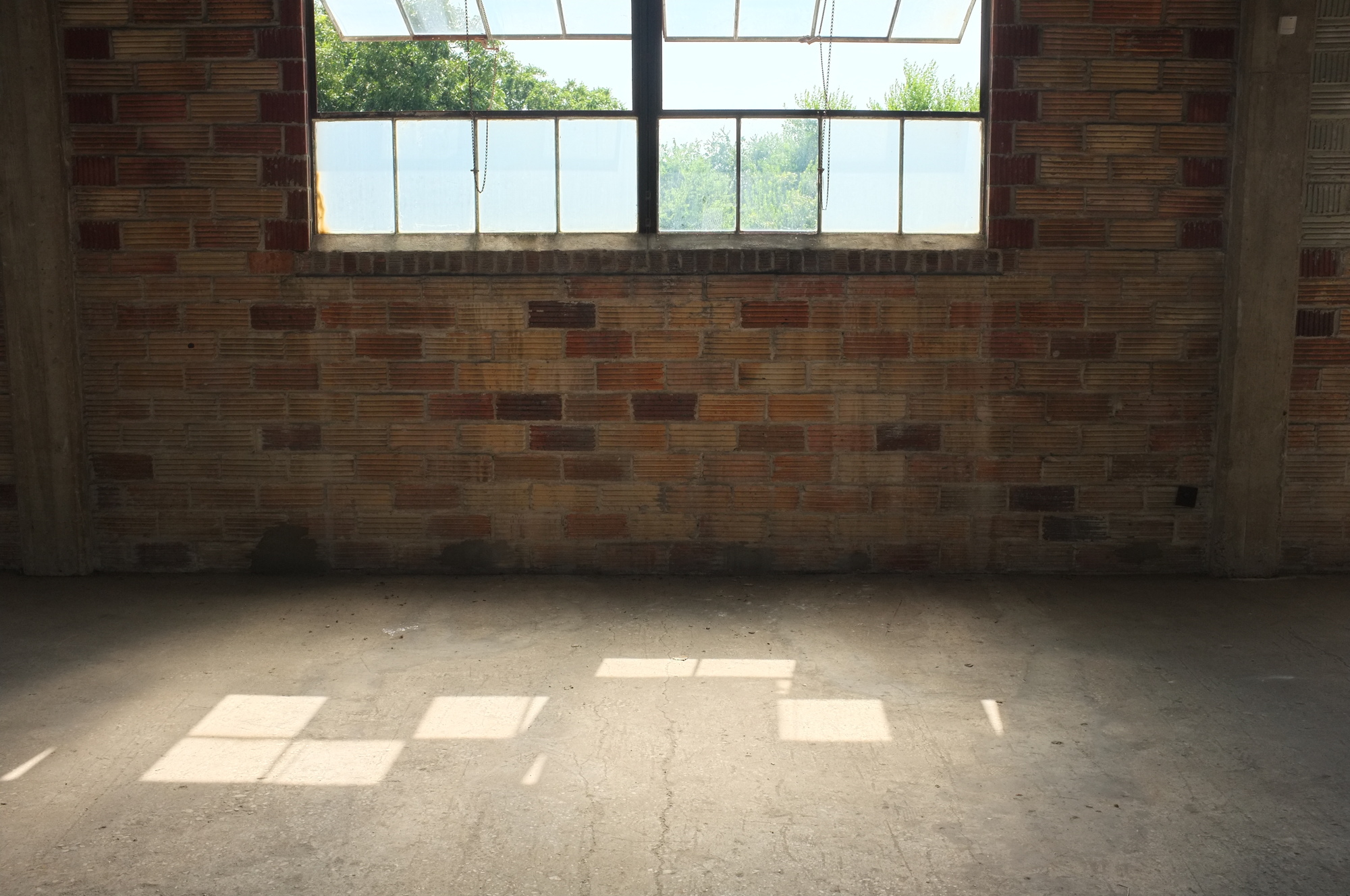
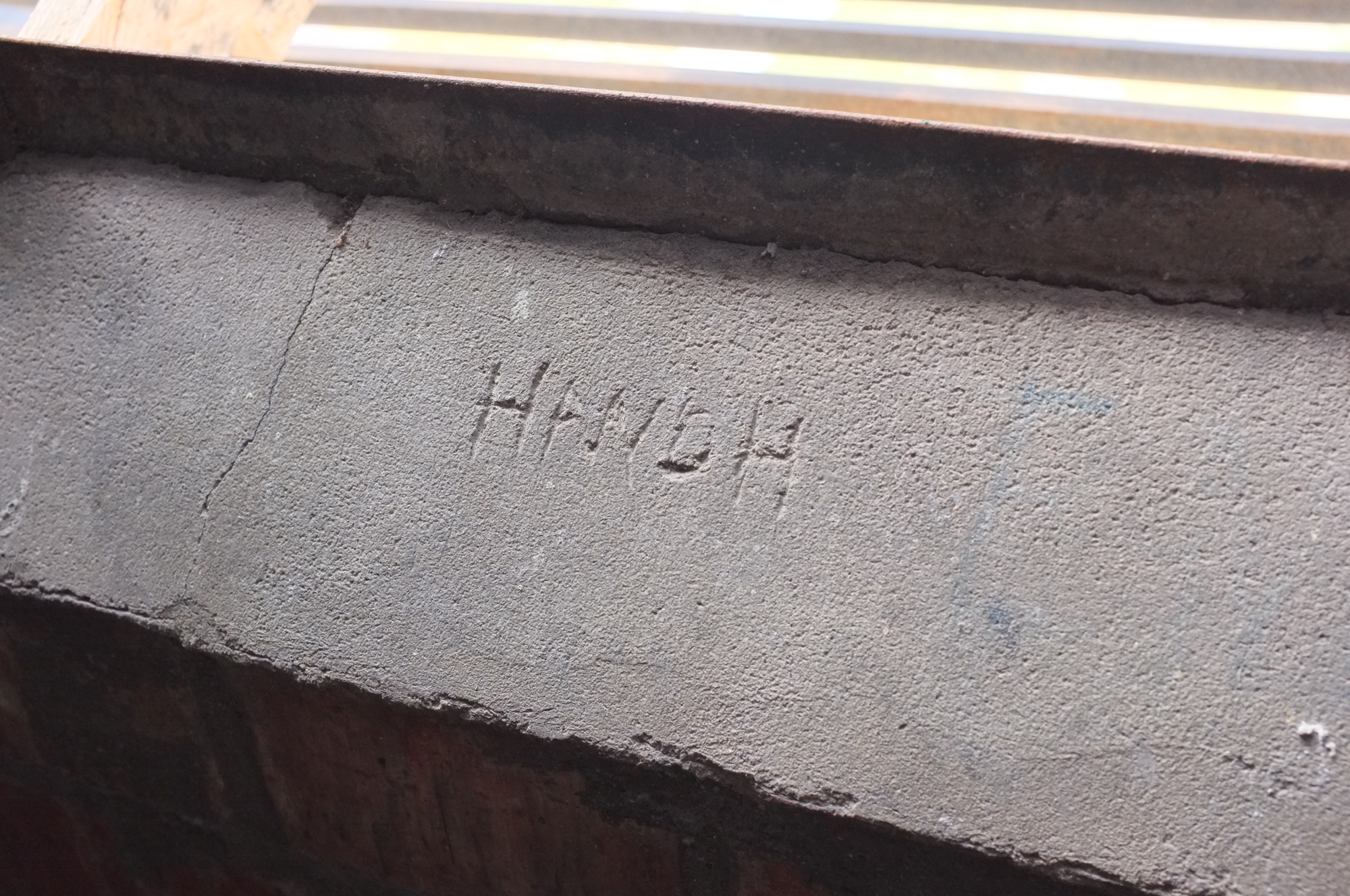
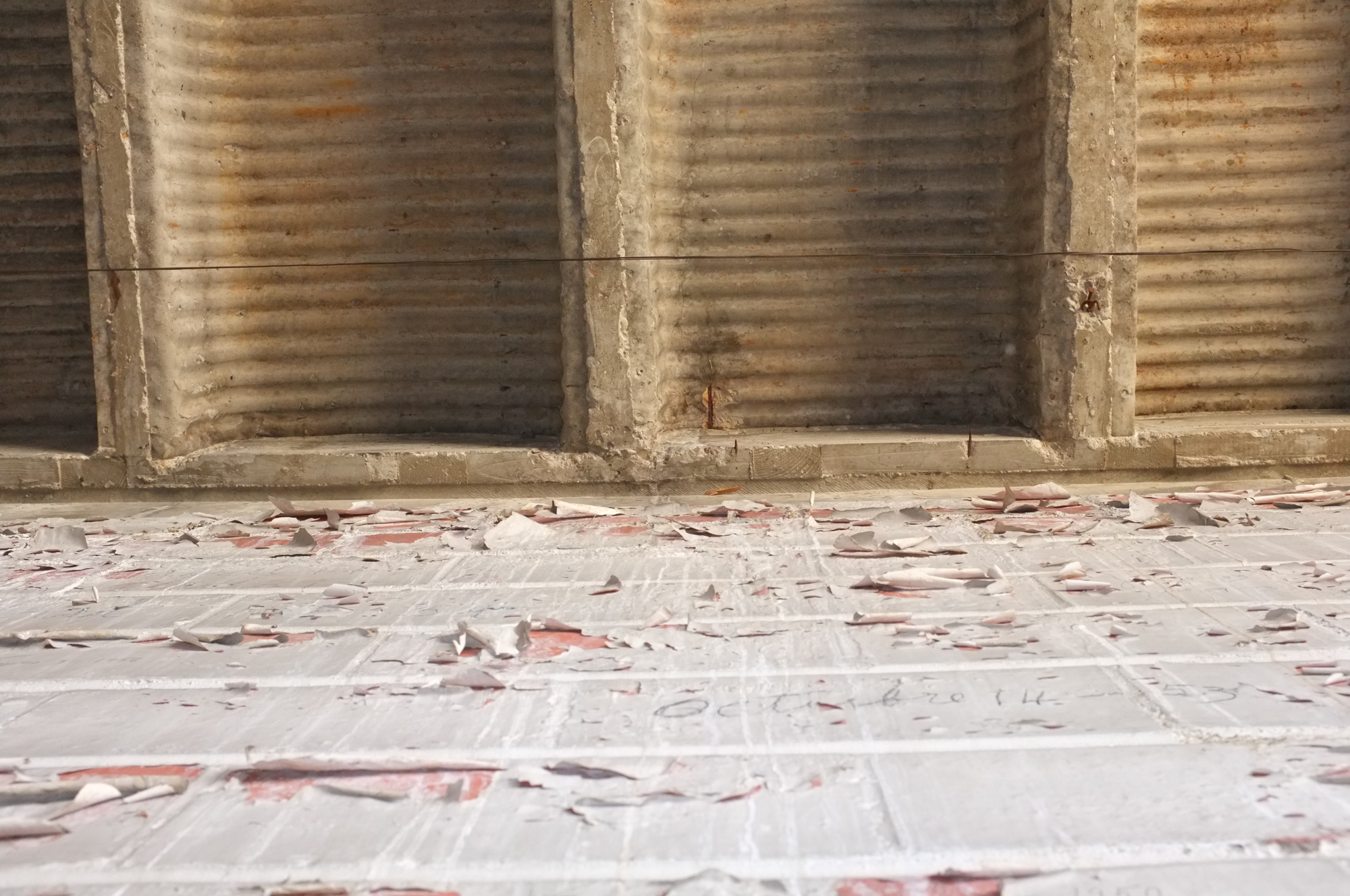
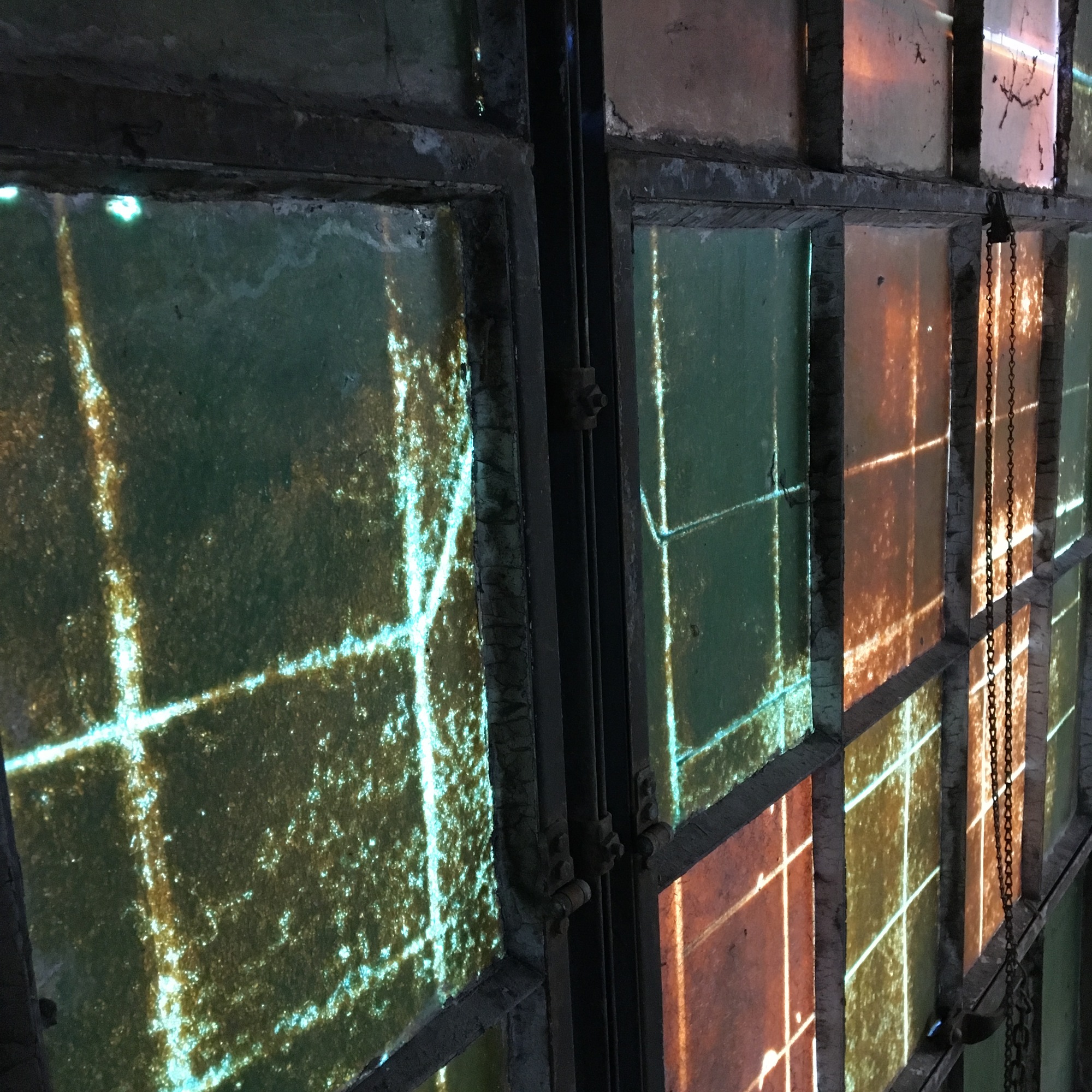
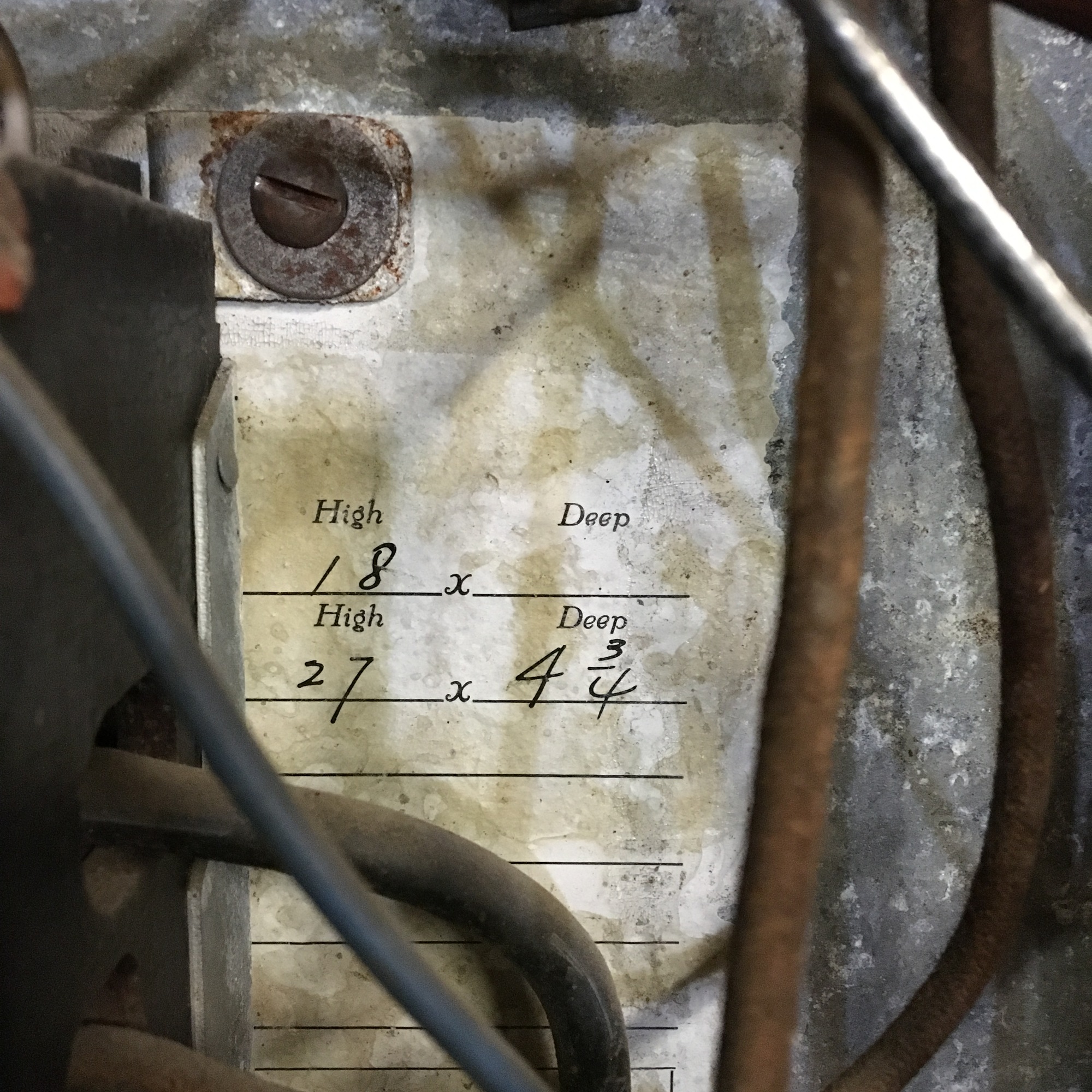
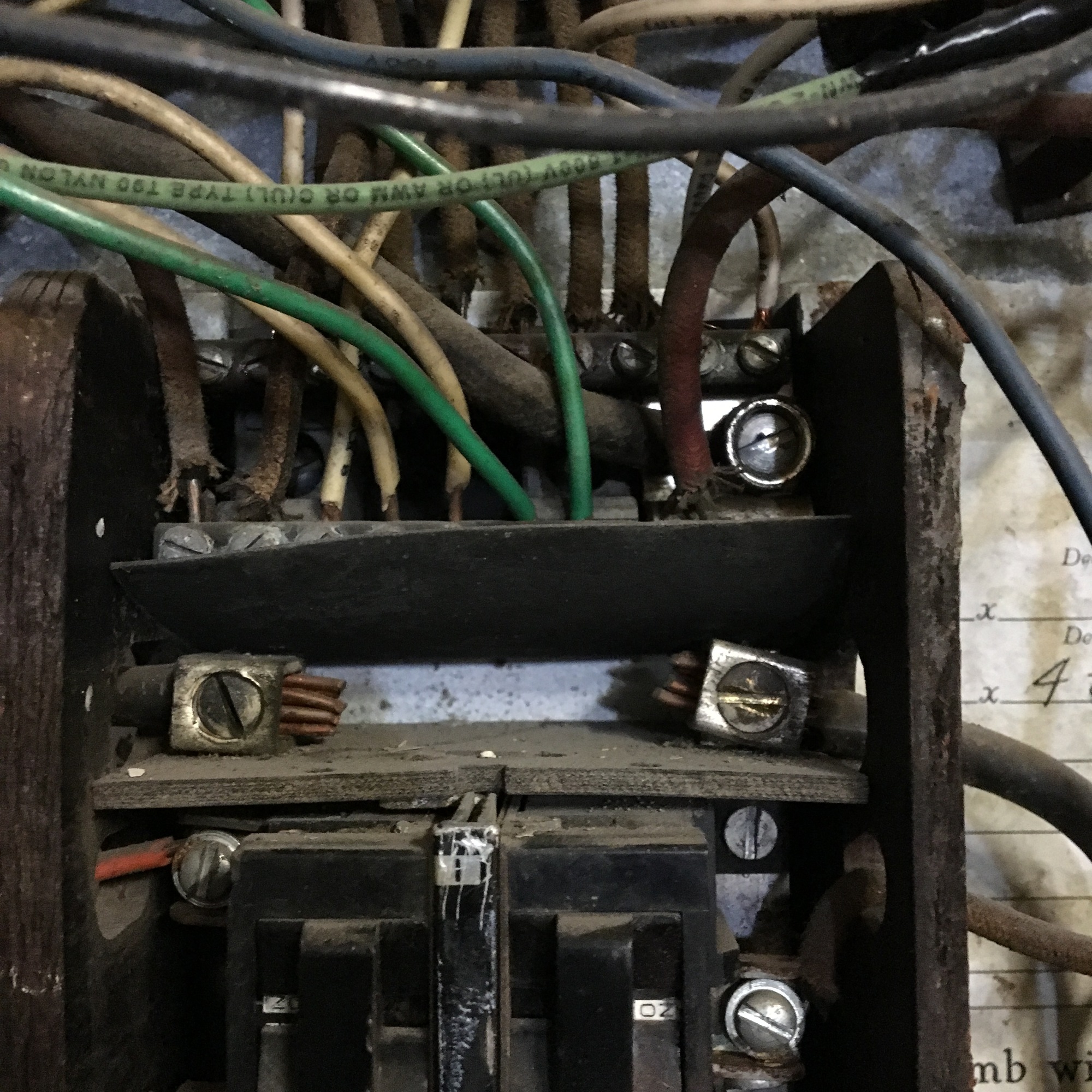
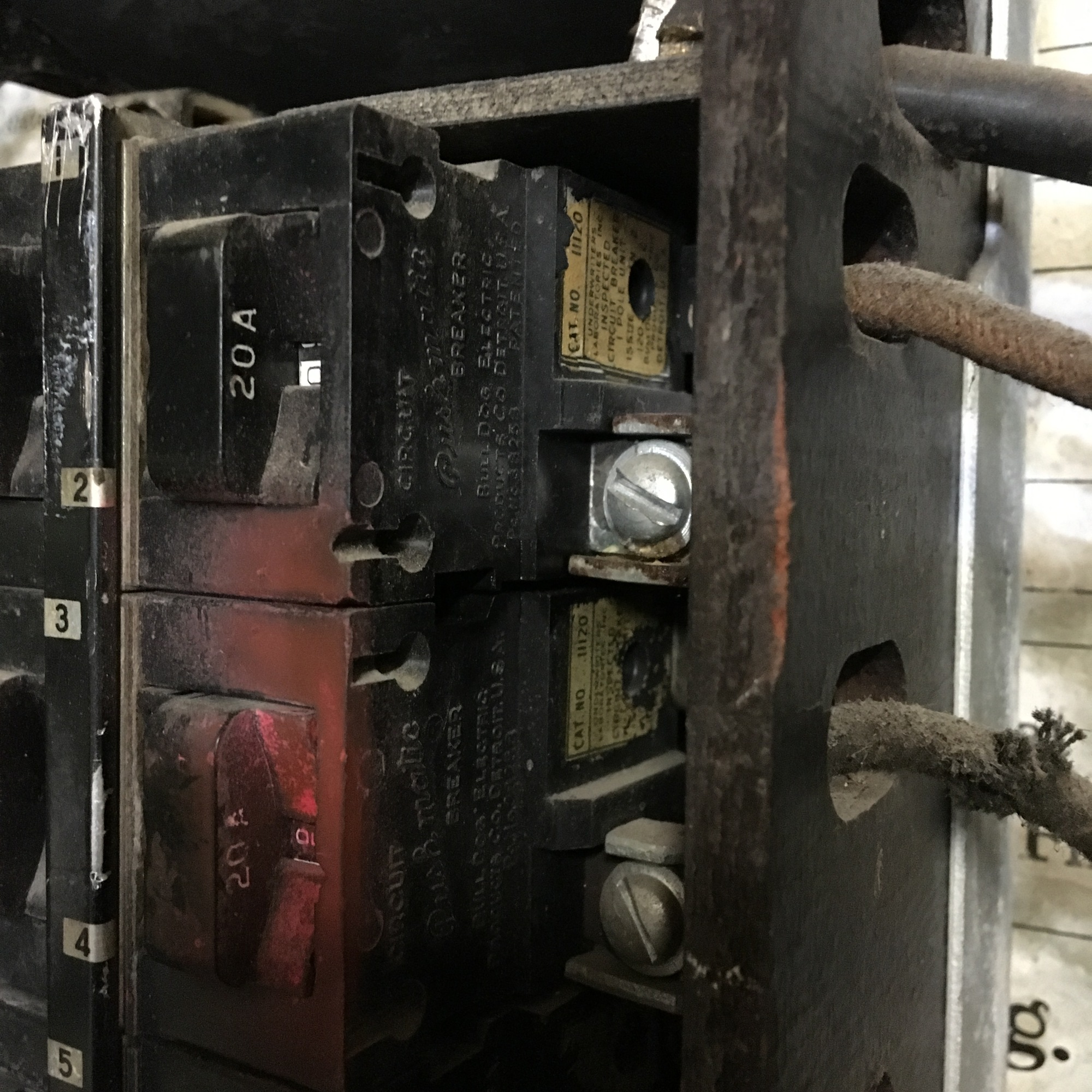
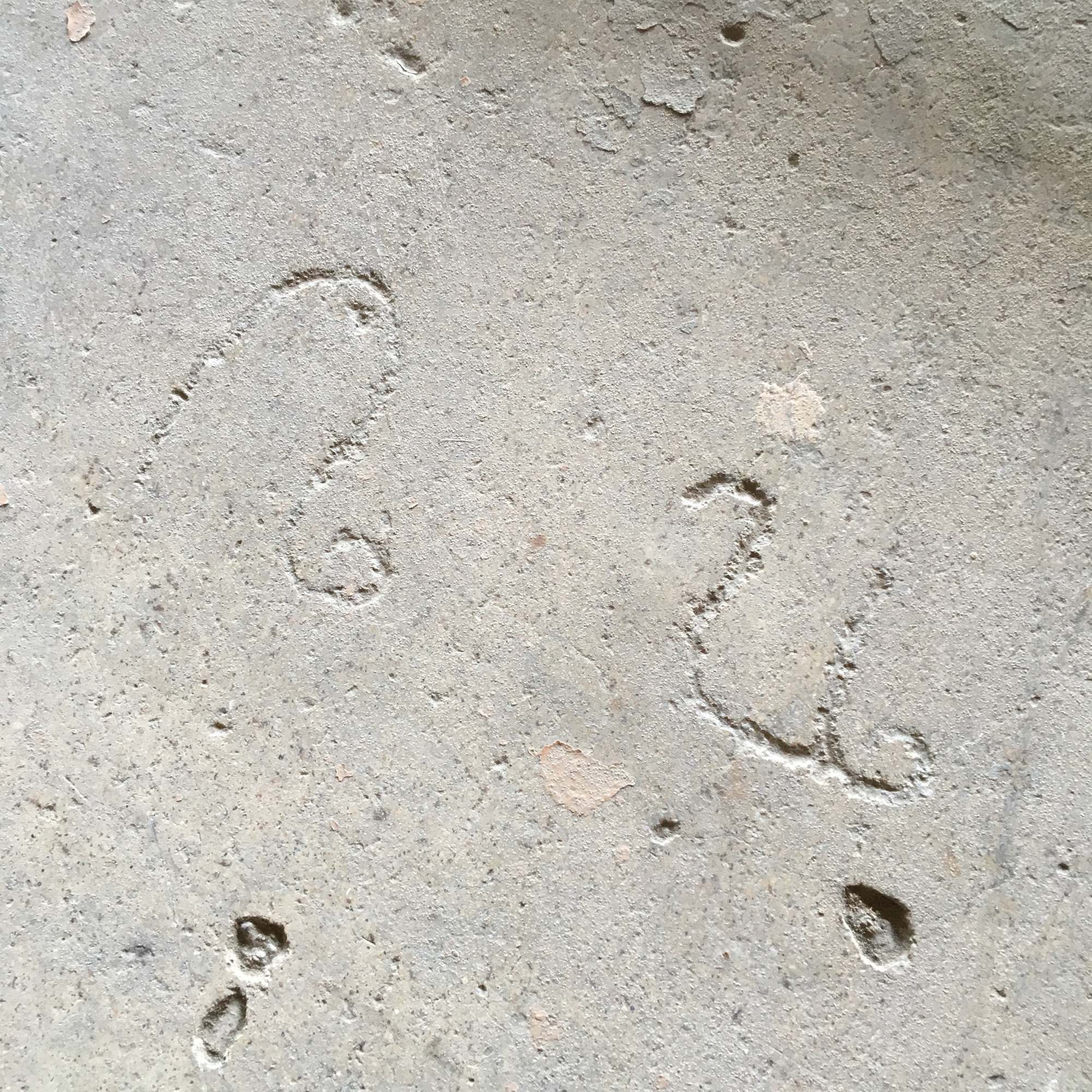
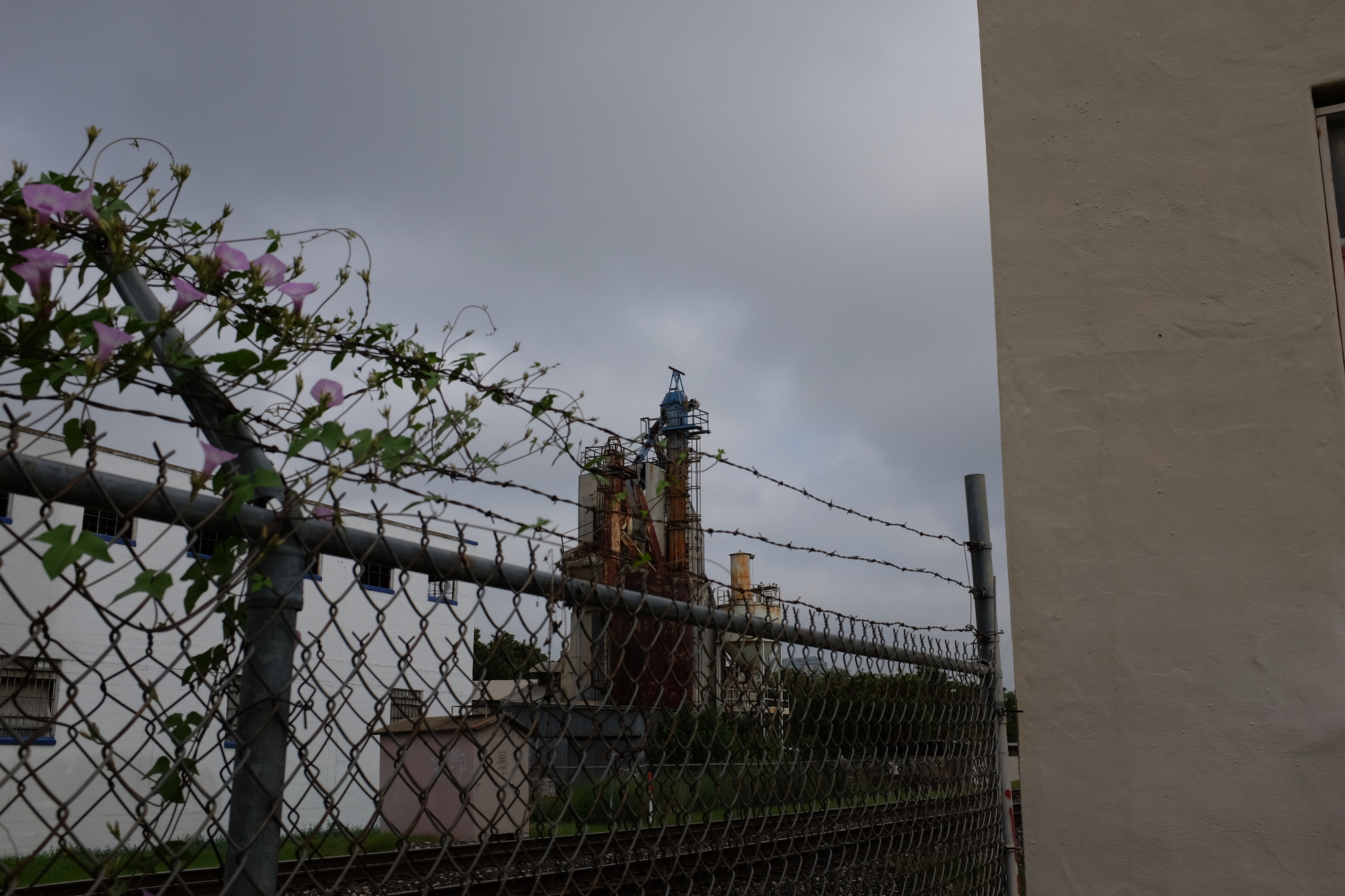
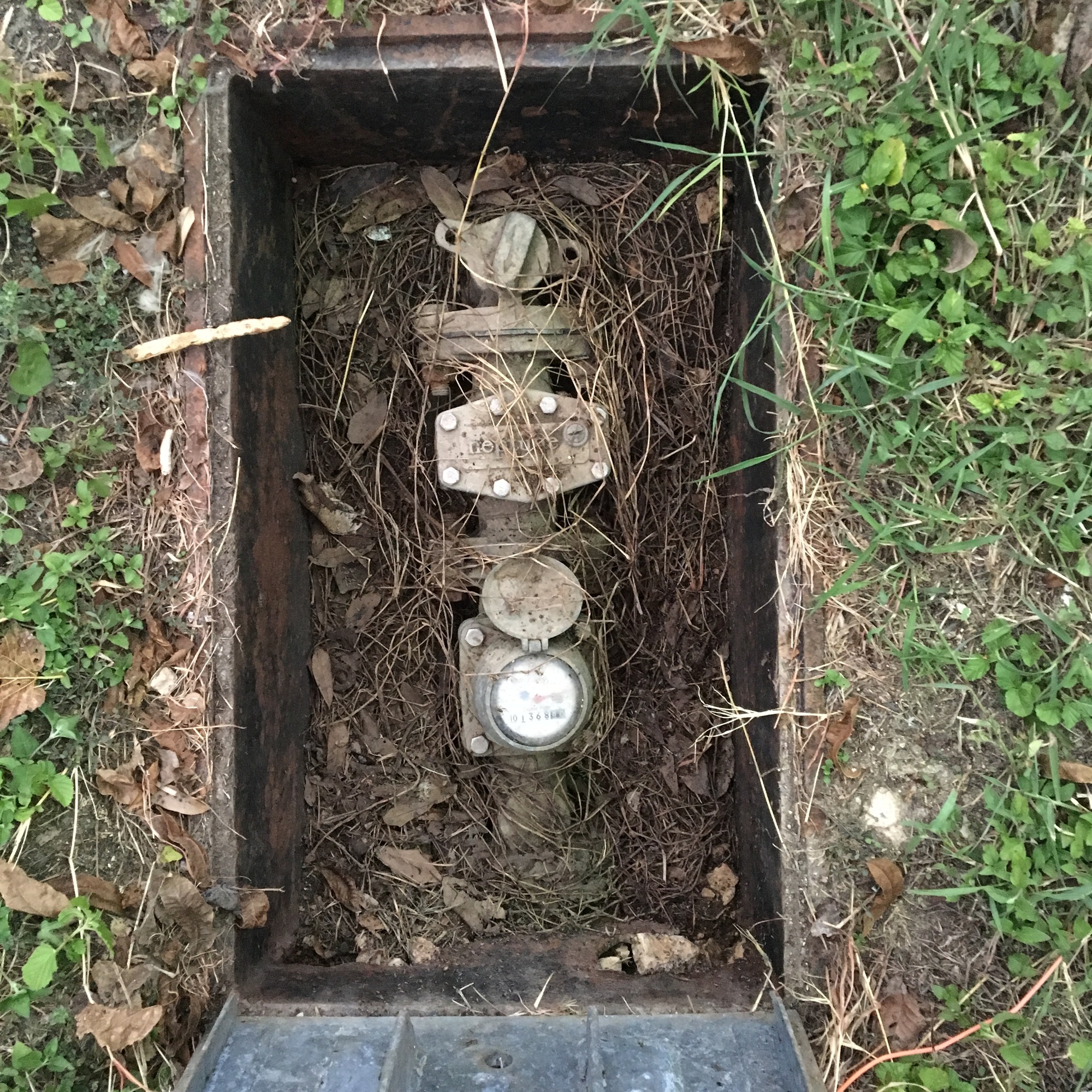
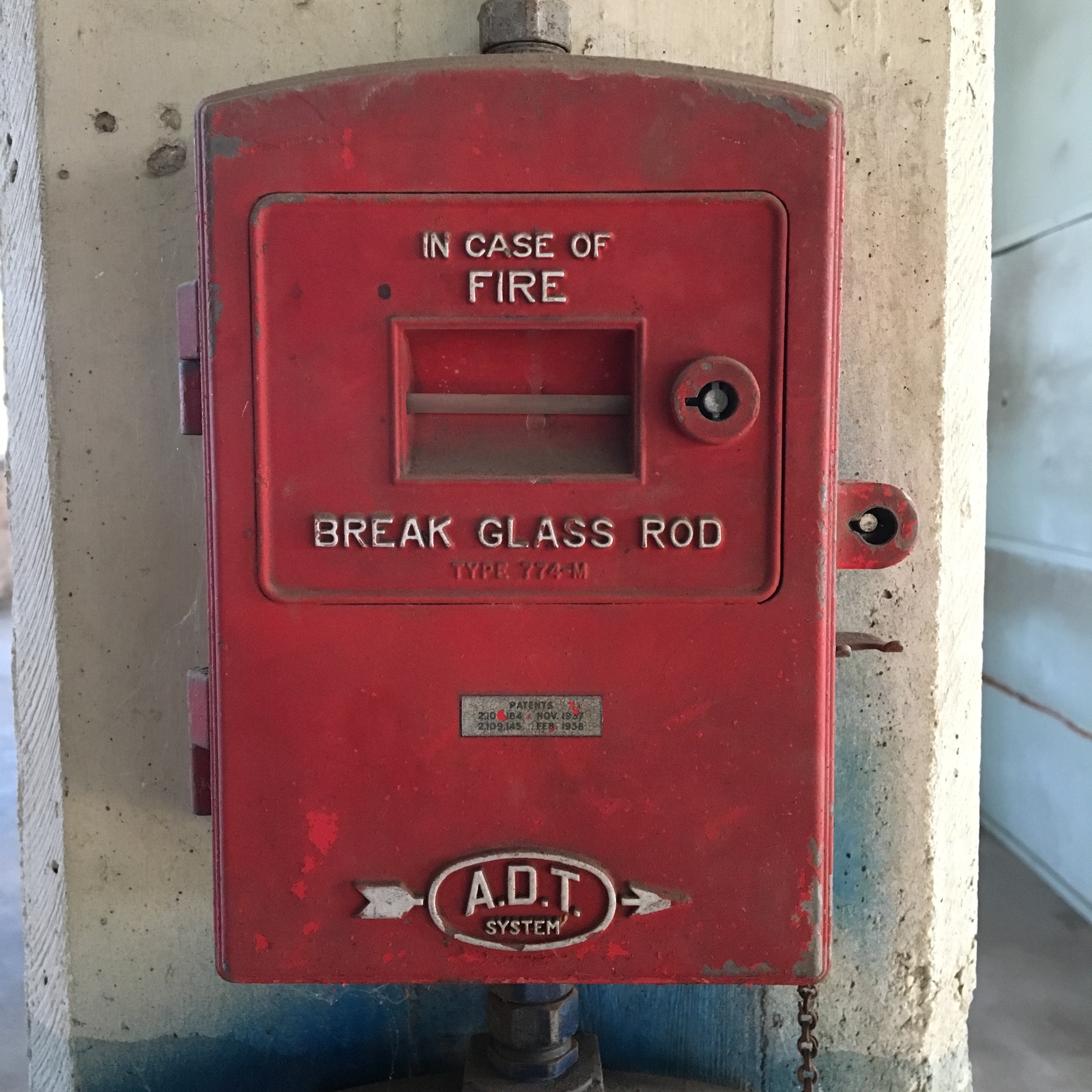
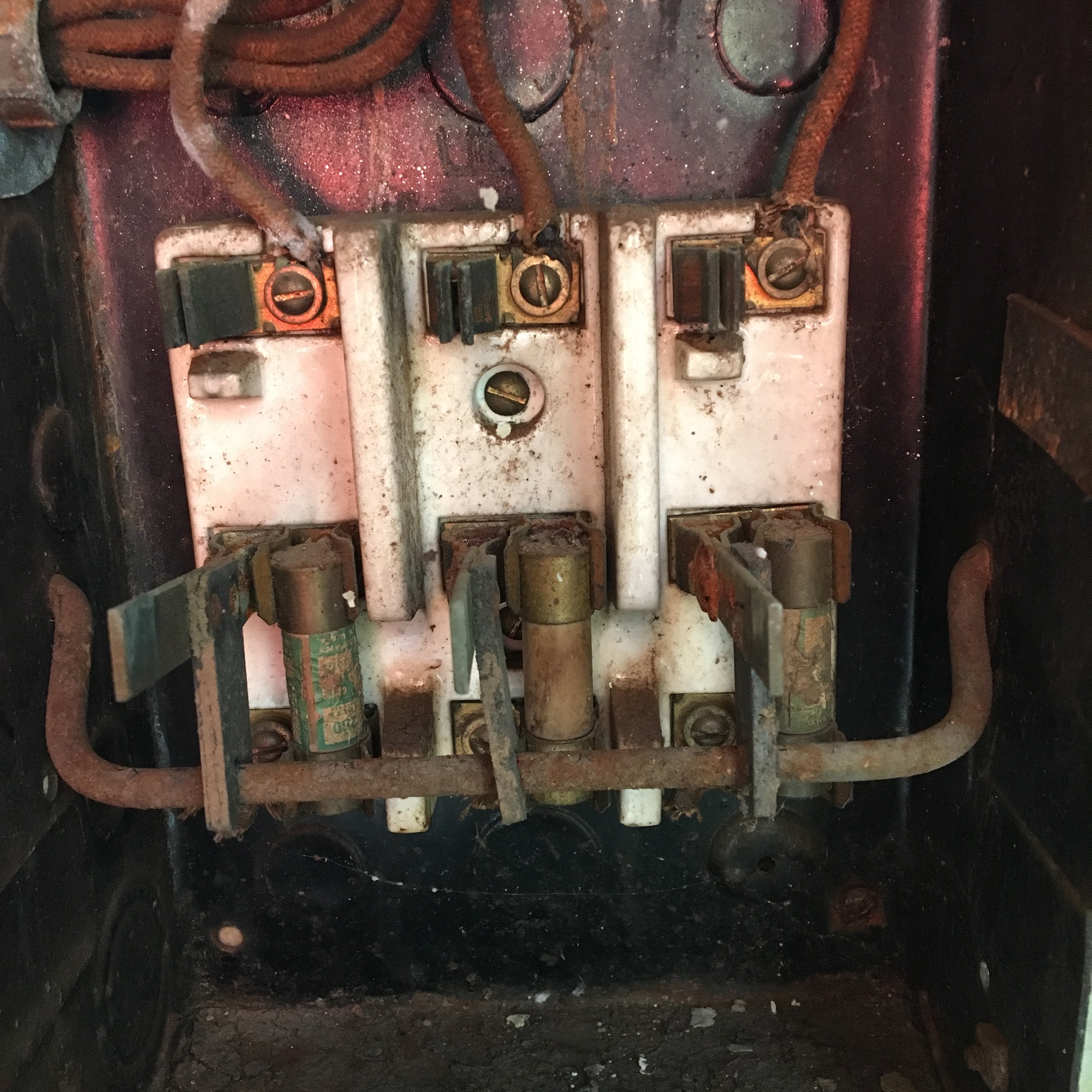
Hoffmann-Hayman Factory, 1932 Hoffmann-Hayman Factory at night, 1932 Historical Photo 1930's Front View 2014 Building facade Dusk exterior of the 1932 Hoffmann-Hayman Coffee Co. factory in San Antonio, photographed in February 2019 from between the parallel rails of the adjacent siding looking north — the south end wall of the two-story white-stucco plant catches the pink sunset on its terracotta-pantile parapet coping and corner finials, and the full length of the west (rail-side) flank recedes into shadow showing the row of tall multi-pane steel-sash industrial windows on the second floor above smaller barred first-floor openings, chain-link fencing, agave plantings, and a red dumpster along the yard Dusk exterior of the Hoffmann-Hayman Coffee Co. factory's south face at 8:16 PM on 14 March 2021, photographed from the south looking north — the south end wall of the two-story cream-stucco plant recedes to the right of the frame in warm ambient shadow (near the spring equinox the sun sets close to due west, so the south face receives only ambient glow at dusk), with the terracotta pantile parapet coping stepping across the top edge, caged second-floor multi-pane steel-sash industrial windows and first-floor openings both covered with bolted-on diamond-mesh security grilles and glowing from within with warm yellow interior light, and a vertical downspout running between the upstairs and downstairs window bays — set against a dramatic pink, coral, and orange sunset sky with wispy cirrus streaks filling the open west side of the frame, a small silhouette element just visible on the horizon at bottom centre Daylight photograph from the **flat gravel ballast roof** of the Hoffmann-Hayman factory, **looking southwest** along the **south parapet** — **terracotta mission / pantile coping** caps a weather-stained **masonry or stucco parapet wall** running obliquely through the frame, **square-based pyramidal finials** stepping at intervals and casting **hard sun shadows** across the pale aggregate; middle ground opens onto the **Southern Pacific siding** (**crossbuck** and signal mast at left), a **tan brick industrial building** with a **segmented roll-up freight door**, and a **white stucco** low structure with a **brilliant blue** storefront or gate; distant **freeway signage**, scattered **trees**, and a **yellow vehicle** on the horizon under a **clear pale sky** — **roof-edge context** for the same **pantile coping** and **finials** already visible in ground-level dusk views **[from the tracks, February 2019](/assets/images/gallery/factory-south-end-from-tracks-2019.jpg)** and **[south face at sunset, March 2021](/assets/images/gallery/factory-south-face-sunset-2021.jpg)**; photographed **1 October 2015** (**Fujifilm X100T**) Bright **mid-morning** daylight photograph (**2 October 2015**, **Fujifilm X100T**) of the **full south elevation** of the Hoffmann-Hayman factory — textured **cream / buff stucco** over two stories under a flat roof with three **terraced parapet bays** capped in **Spanish / mission terracotta pantiles**, each ridge marked with a centred **small white finial**; **three** matching **steel-sash second-floor bays** screened by **welded diamond-mesh exterior security cages**, **nine** tall **segmented first-floor lights** (**three stacks of triple narrow bays**) behind **steel-bar grilles** with small rectangular **metal wall vents** above each stack; vertical **PVC downspout** between bays; foreground **thin grass**, **grey gravel**, and four **silver survey-style pins** punching a crude rectangle toward the façade; camera-right approaches the **Delaware Street entry** — concrete **steps**, pipe handrail, **flat-roof awning/canopy**, and a **white pedestal sign** carrying **601** in **red sans-serif numerals**, the published street-front number at the **Delaware-and-tracks gate** echoed in **[the 1932 *Sunday Light* Delaware plant clip]({{ site.baseurl }}/sunday-light-july-1932-factory-article-reprint/)**; further right clustered **meter socket / conduit penetration** spaghetti; extreme left beyond **chain-link** a wedge of **railroad-yellow rolling stock or maintenance vehicle** parallels the siding; **clear saturated blue sky** with stark **south-face sun shadows** tipping slightly **east** — complements **roof-edge context** **[southwest along the parapet, 1 Oct 2015](/assets/images/gallery/2015-10-01-factory-roof-south-parapet-looking-southwest.jpg)** and dusk ground views **[Feb 2019 trackside](/assets/images/gallery/factory-south-end-from-tracks-2019.jpg)** / **[Mar 2021 sunset](/assets/images/gallery/factory-south-face-sunset-2021.jpg)** on the **same south wall read** **Hoffmann-Hayman plant**, **loading dock / grade-level platform** along the **south façade** near the **Delaware Street front** (per site note: **dock run beside south wall**) — vertical close-up on a **white-painted cast-iron column or standpipe** carrying a **foundry legend** in **raised block sans-serif** reading **UNION FOUNDRY CO.** stacked **down the shaft**; thick **matte enamel** with **fine pitting**, **dust speckle**, and **faint iron stain** weeping from **letter counters**; **hard side light** from **camera-right** models the **emboss** while **camera-left** falls into **deep shade**; beyond the cylinder, **off-white stucco or cement plaster** on **mass wall** — **hardware supplier mark** on **exterior yard iron** in the **same south-elevation read** as **[Delaware 601 daylight overview](/assets/images/gallery/2015-10-02-factory-south-face-daylight-delaware-entry.jpg)** — **Instagram** media export **17902712263035007** **Hoffmann-Hayman factory**, **first floor**, **public entrance / foyer wall** in the **Delaware Street 601 entry zone** (per site note) — vertical photograph of a **heavily textured acoustic or popcorn-finish** plaster / stucco surface being **color-trialed**: **central vertical band** halved **upper pale sage / olive green** over **lower deep forest / teal green**, **narrower off-white / cream** side margins left and right; **utilitarian brush boundaries** between swatches with slight **edge feathering** into the texture; a **continuous horizontal crack** crosses through the **dark green** field and **extends** into the **pale bands**, reading as **substrate movement** under fresh sampling — documents **interior repainting selection** hard by the **street door**, **indoor counter-read** to the **buff stucco south elevation** in **[this gallery's Delaware 601 daylight exterior](/assets/images/gallery/2015-10-02-factory-south-face-daylight-delaware-entry.jpg)** — **Instagram** media export **17866587829121817** Close-up looking straight down at a small zinc/galvanized-steel surveyor's pavement marker driven into the asphalt-and-aggregate pavement of Delaware Street directly in front of the entry gate to the Hoffmann-Hayman factory, photographed on 23 December 2024 — a domed disk roughly the size of a US quarter sitting in a small crater of broken-out concrete and loose gray gravel, set into a pin grouted through the pavement, with a long vertical crack in the pavement running up through the marker's setting and continuing top to bottom through the surrounding aggregate; the face of the cap carries a stamped pattern of short radial tick marks emanating from a central center-punch dimple and three legible stamped letters arranged around the perimeter reading 'M' near the top, an 'A' (rendered as a triangular form, the crossbar faint) on the right, and a 'G' (a curled half-circle character) at the lower-left — most legibly read as 'G — M — A', a surveyor's initials, firm code, or agency stamp whose specific attribution is not yet identified; the marker sits on Delaware Street at the same Delaware-and-Southern-Pacific-tracks address recorded in the 1932 San Antonio Sunday Light feature on the new Hoffmann-Hayman plant ([documented in the Collection gallery](/sunday-light-july-1932-factory-article-reprint/)), a 21st-century property/survey artifact at the same street boundary the 1932 paper named when the factory was being built Steep downward-looking photograph across a weathered pale-grey sidewalk slab on **Delaware Street beside the Hoffmann-Hayman factory entrance gate** — coarse drag **horizontal striations** across the floated concrete lift, lower edge bordering a grassy verge scattered with browned leaves where small yellow composite wildflowers poke through (**17 December 2014**, **iPhone 5**) — inscribed into the hardened surface toward the slab **margin** (wet-concrete handwriting from when the pavement was poured or struck) reads **ADOLPH** then a spaced gap followed by **M.** capped with **serif-ish block capitals**, the letter grooves sunk and edged with grime so the name reads charcoal-dark against smoother paste — read here as **Adolph Menger**, of the **Menger–Hoffmann** family lineage at the center of Hoffmann-Hayman and this plant (see **[People]({{ site.baseurl }}/people/)**); **[Companion JESSE inscription on the same walk](/assets/images/gallery/2014-12-17-delaware-street-sidewalk-jesse-wet-concrete-inscription.jpg)** the same **17 December 2014** outing; **street-front documentation** paired in **this gallery** with the **[G — M — A pavement survey marker](/assets/images/gallery/factory-delaware-street-survey-marker.jpg)** on the **same Delaware curb**, photographed **about a decade later** Straight-down view of the **same Delaware Street sidewalk slab** by the Hoffmann-Hayman **entrance gate** as the **[ADOLPH M. inscription frame](/assets/images/gallery/2014-12-17-delaware-street-sidewalk-adolph-m-concrete-inscription.jpg)** — weathered light-grey concrete with faint **diagonal scratches** across the floated face, stray **dried leaves** skittered onto the upper field, and the lower-left margin meeting **grass and compacted soil** with a thick carpet of oval brown leaf litter — stamped or scribed into the fresh concrete (same **17 December 2014**, **iPhone 5** outing) the given name **JESSE** in block capitals, the two **S** characters drawn with exaggerated **zig-zag / lightning-bolt** angled stems (playful kid-style lettering or a distinctive personal hand); **identity not asserted** in this project (family name or neighborhood mark only) Railroad Crossing Freight Train Star Brick of San Antonio Low-clearance board-formed reinforced-concrete soffit or beam in the vault-adjacent circulation space at the Hoffmann-Hayman factory, photographed 5 October 2014 (Sony DSC-RX100) — horizontal wood-plank formwork grain pressed into the grey-beige concrete face, with the two-line hand lettering 'WATCH YOUR' / 'HEAD' applied in dark charcoal or grease stick; a thin copper wire hangs vertically through the field and a black horizontal pipe crosses the bottom edge, reading as a practical head-strike warning in tight quarters above the vault Close-up of the same board-formed reinforced-concrete surface in the vault-adjacent space at the Hoffmann-Hayman factory, photographed 5 October 2014 (Sony DSC-RX100) — seconds after the WATCH YOUR HEAD frame — showing horizontal formwork grain, light tan-grey paste with fine pitting and white speckle, and a handwritten inscription in dark graphite or ink reading the name **Daniel Ruiz** on a diagonal above a short date line **3-15-01** (most naturally read as 15 March 2001 in U.S. month-day-year order), a worker or visitor mark on the 1930s cast concrete Looking up at the board-formed reinforced-concrete soffit in the space above the vault at the Hoffmann-Hayman factory, photographed 5 October 2014 (Sony DSC-RX100) — same low-clearance vault zone as the WATCH YOUR HEAD frame — horizontal wood-form grain, grey paste with pits and pale efflorescence speckling, and **two thin bare copper wires** entering from the upper left and upper right to meet in a shallow V at a **through-bolt or stud** with hex nut and washer countersunk into the concrete, a simple uninsulated branch or bonding jumper fixed directly to the cast ceiling Large Safe **First floor**, **vault-zone circulation / plant office run** — close straight-on portrait of the **door face** of a **compact floor safe** stationed **outside the main vault enclosure** (**not inside** the large floor-safe chamber whose interior drawer faces are documented **[here](/assets/images/gallery/20150210-factory-vault-large-safe-drawer.jpg)** — distinct also from **[the wide-shot large safe casing](/assets/images/gallery/factory-large-safe.jpg)**), photographed **28 November 2015** (**Fujifilm X100T**) — **medium satin-blue enamel** door with **fine orange-peel** texture scuffed chip-white at flange edges; **rectangular ornate cast-brass manufacturer's tablet** centred high reading **'GUARDED BY THE'**, **'SARGENT AND GREENLEAF'**, **'TIME LOCK.'**, **'MANUFACTURED AT ROCHESTER, N.Y.'** (**Sargent & Greenleaf**) with darkened embossed recess fields; **brushed-metal combination index dial** with **0–100** graduation around the flange and **LEFT**/**RIGHT** inscription with curved directional arrows centred at twelve o'clock; **chrome-plated Tee handle** projecting left mid-field with oxidation pitting; overall reading as auxiliary **jeweller's / office strongbox** securing cash or documents beside heavier vault-rated equipment Close-up of one of the wooden interior drawers of the large floor safe inside the Hoffmann-Hayman factory vault, photographed 10 February 2015 (iPhone 5) — dark reddish finish with decorative gold-line banding, round brass keyhole at center-top, and an aged tan paper label typewritten with two lines reading 'MRS. C. B. MENGER' and 'INSURANCE' Exposed expanded-diamond metal lath underlying the plaster wall treatment in the first-floor bathroom at the Hoffmann-Hayman factory, immediately adjacent to the vault — with patches of plaster fallen away to reveal the lath and the red brick wall behind it Looking up at a first-floor ceiling corner at the Hoffmann-Hayman factory, where a rough board-formed reinforced-concrete beam meets its column and the slab above — the horizontal grain of the 1930s formwork boards is pressed into the beam's vertical face, a galvanized water line runs along the beam at left, and steel electrical conduit is strung along the beam soffit; exposed aggregate is visible where a shoulder of concrete has spalled away at the beam's top edge Standing at the north entry to the freight elevator on the first floor of the Hoffmann-Hayman factory and looking up through the board-formed concrete shaft header into the second floor above — concrete block (CMU) shaft walls, vertical steel elevator guide rails, and electrical conduit run up to the opening, with wood framing and scaffolding visible through the bright daylight at the top Low-light close-up on the **interior north wall** of the **first floor** at the Hoffmann-Hayman factory — a single masonry stretcher bearing the raised embossed legend **STAR BRICK** in serif capitals (the manufacturer's name-mark block), olive-grey porous clay with a faint horizontal frog line bisecting the lettering, seated in granular buff-grey mortar joints; the wythe sits below a coarse dark relieving course at the top edge of frame and drops into badly spalled and missing mortar toward the bottom, revealing rough subsurface masonry and cavities in deep shadow — readable **maker lettering** tying the site's summary language about **star-stamped San Antonio street bricks** to **in situ masonry** inside the factory's north **first-floor** interior (**interior north wall** per site documentation — **this gallery** places the frame immediately **after** the **[north-end freight elevator look-up](/assets/images/gallery/factory-downstairs-elevator-shaft.jpg)** listing); photographed **4 December 2014** (**iPhone 5**) with grain characteristic of handheld low-light capture Freight Elevator Motor Close-up mechanical detail on the **second floor machine level** of the Hoffmann-Hayman factory's **interior freight elevator** (**chain-and-sprocket hoisting**, not the exterior track-side lift documented elsewhere in **this gallery**) — **steel roller chain** drapes vertically into frame and **wraps a cast sprocket** whose teeth visibly **seat between** each link paddle, coaxial steel **journal shaft** passing through greased pillow-housing flange **bolted to a rounded cast bracket** anchored to whitewashed **plaster** / board wall (**left**) with rusty through-bolt heads; cylindrical **oiler / grease nipple boss** perched atop the gearbox half — packing **thick old** black fibrous grease and reddish iron oxide; reddish **expanded-metal or wire-grid veil** behind (**shaft infill**) and upright **dimension-lumber trim** (**right**) with warm grain under dim interior light — **documentation** companion to **[Freight Elevator Motor](/assets/images/gallery/factory-elevator-motor.jpg)** and **[first-floor north-entry shaft look-up](/assets/images/gallery/factory-downstairs-elevator-shaft.jpg)** on **this building's interior freight elevator**; **7 October 2015**, **iPhone 5**, handheld **available-light** (visible **ISO noise**, slightly soft chain) Tight close-up of the UP/DOWN pushbutton station controlling the **smaller second lift** at the Hoffmann-Hayman factory — a separate, smaller mechanism from the building's main interior freight elevator, fitted with an **exterior access door opening to the track side** so loads can be moved directly between the plant and the Southern Pacific siding running along the west flank — a grey-painted cast-iron pushbutton enclosure made by **Square D Company, Milwaukee, Wis., U.S.A.**, brass nameplate stamped 'CLASS 9001 / TYPE B-10 / MAX. V. 600 AC/DC / 218278 GG', two heavy round push buttons each cast with the legends 'UP' (top) and 'DOWN' (bottom), the button faces worn dark and oily from decades of use, mounted by four corner machine screws to a riveted steel angle-iron post behind a heavy diamond chain-link guard mesh — same physical Square D station documented in the wider track-side-lift cage view (matching nameplate and serial 218278 GG) Heavily oxidized **General Electric 'Control'-branded roller-lever travel limit switch** mounted on the riveted steel structural frame of the same smaller second lift at the Hoffmann-Hayman factory — the smaller mechanism (distinct from the main interior freight elevator) fitted with the **exterior access door** opening to the **track side** of the building onto the Southern Pacific siding — photographed on 5 January 2025; a small black-painted cast-metal enclosure carries a brass cover plate embossed in raised lettering with 'GENERAL ELECTRIC' across the top in a banner, a circular red-and-white **GE monogram badge** at center, and 'Control' in flowing italic script below the monogram (the standard pre-1960s GE 'Control' nameplate styling); the cover is held on by four slotted machine screws (one at each corner) with two further visible screws on the body, and out of the top of the case projects a steel **roller-lever actuator arm** pivoting on a hex-cap screw with a brass actuating roller at its outer end (positioned to be physically tripped by an end-of-travel cam or lug on the moving lift platform when the lift reaches the top or bottom of its travel, breaking the contacts inside the case and cutting power to the lift motor — a standard travel/end-of-travel limit switch); the bottom of the case is fitted with a threaded conduit hub feeding a length of **white/grey-jacketed flexible BX-style armored power cable** that loops down past additional wire mesh visible at lower-right, and the whole assembly is bolted to a heavy structural steel angle/channel post that's part of the lift's frame, with weathered tongue-and-groove vertical wood siding visible through the gap on the right of the frame and bright sunlight breaking through behind — most likely from the **trackside exterior access door** itself standing open at the moment of the photograph Fire Hose Mfg The second of two W. D. Allen Mfg. Co. fire-hose stations documented on the second floor of the Hoffmann-Hayman factory — a cast-iron swing bracket bolted to a white-painted structural column, maker's plate reading 'W. D. ALLEN MFG. CO. — CHICAGO, NEW YORK — PATENTED AUG. 1924', with a threaded elbow feeding a galvanized standpipe running down beside the column and a red painted band on the adjacent column marking the fire-equipment station Cast-iron handwheel gas-line shutoff valve in the northwest corner of the second floor of the Hoffmann-Hayman factory, photographed on 5 January 2025 — a heavily oxidized vertical iron riser pipe runs floor-to-ceiling against the wall corner, and a horizontal valve body is clamped to the riser by a bolted bracket (two visible through-bolts gripping the riser) projecting a short horizontal stub out into the room and terminating in a polished brass/bronze hex union nut and a four-spoke cast-iron round handwheel painted rust-red, the union nut sitting between the valve body and the handwheel-side connection so the valve can be unscrewed for service; the assembly is a typical period plant-services branch shutoff sitting in the corner where two whitewashed plaster-over-masonry walls meet, both wall faces carrying a fine, regular horizontal ribbing/banding texture (consistent with either scored scratch-coat plaster or impressions of underlying lath showing through thin whitewash) with a patch of bare red-brick masonry exposed in the upper right corner where the whitewash has worn or fallen away — same kind of whitewashed-brick second-floor interior surface that surrounds the building's other upstairs plant-services hardware Upward-angled photograph on the **second floor** of the Hoffmann-Hayman factory — **gas piping** run **against the underside of the ceiling** (paired large **circular cast-iron gate-valve handwheels** bolted onto flanges on a horizontal galvanized or black iron header that Tee-branches upward to a capped vertical stub alongside elbows and screwed couplings); the metal carries decades of oxidation, flaky old paint residue, and plant grime typical of untouched upstairs mains; the upper field reads as rough dark plank or board ceiling soffit and the lateral wall backdrop shows corrugated or rib-pattern industrial cladding, with thin flexible cabling crossing behind mid-frame above a ribbed masonry or block-face lower wall — photographed **1 December 2014** (iPhone 5); **companions** elsewhere on second-floor plant services include the separately documented **[northwest-corner gas shutoff on a vertical riser](/assets/images/gallery/factory-upstairs-northwest-corner-gas-valve.jpg)** (5 January 2025), a physically different vantage on the upstairs gas installation **Second floor**, **plant-gas service zone** at the Hoffmann-Hayman factory (per site note: **on the walk** near documented **upstairs gas valves**) — tight frontal photograph of a **wall-mounted sheet-steel enclosure** (**motor starter**, **disconnect**, or **junction** cabinet) in **advanced corrosion**: **alligatoring off-white enamel** lifting in **broad curls** over **burnt-orange rust**; **small screwed nameplate** across the upper field reading **OLD ROASTER** in **machine lettering** (**sans-serif caps**), a plant id tying the box to retired **coffee-roast** equipment on a circuit already summarized on the **[first-floor Trumbull panel directory](/assets/images/gallery/breaker-panel-labels.jpg)** under **'1 ROASTER MOTOR'** / **'3 GAS-AIR FAN'**; **rigid conduit** nipple enters the **roof** of the box; **deeper lower rebate** or **pulled weldment** in the **fascia**; **oxidized door-pull / latch iron** at **camera-right**; backdrop **pale green-grey painted masonry** with a **dark unstopped opening** **right** of frame — **spatial companions** in **this gallery** include the **[ceiling gas handwheels](/assets/images/gallery/2014-12-01-factory-second-floor-ceiling-gas-valves-handwheels.jpg)** and **[northwest-corner riser shutoff](/assets/images/gallery/factory-upstairs-northwest-corner-gas-valve.jpg)** — **Instagram** media export **18022184360636032** Inside-of-door circuit directory of the older **Trumbull Electric Mfg. Co.** breaker panel at the Hoffmann-Hayman factory (Plainville, Conn., USA — pre-1950 vintage, with a yellow Underwriters Laboratories 'INSPECTED ELECTRIC CABINET FRONT' approval label visible at the upper right) — a typed/printed paper directory taped inside the panel door listing the **primary process-equipment circuits** in numbered order, with a mix of pre-printed typewriter labels and later pen/marker corrections: '1 ROASTER MOTOR', '2 [ ] MOTOR / IN [BACK?]', '3 GAS-AIR FAN', '4 ELEVATOR-AT ROASTER', '5 COOLER / Box', '6 SIFTER - 1ST FLOOR', '7 7-1/2 H.P. ON ROOF', '8 7-1/2 H.P. COOLING FAN ON COOLER', '9 1 - #12 MILL', '10 4 GOVT. MILLS' — the panel covering the building's main coffee-process line on the first floor (roaster, cooler, sifter, mills, elevator at the roaster) and rooftop HVAC, distinct from the later second-floor Federal Pacific panel that covers the Tea Machine, air conditioning, and a separate second-floor sifter circuit **First floor** electrical **switchgear / breaker-bay run** — extreme close-up of a **yellowed**, **water-and-rust stained** paper slip (likely a shipping or reorder tab) taped or tucked **inside a power-panel enclosure**, photographed **25 November 2015** (**iPhone 5**) — printed form rules read **'Your Order No.'** with handwritten **'44.'**, **'Customer'** with inked cursive **partially obscured** behind a thick **horizontal black insulated service conductor**, **'For'** with clear inked **‘H & H’** tying the paperwork to Hoffmann‑Hayman, blank **Ship to** / **Address** lines beneath; peeling paper and granular grey residue occupy the margins; foreground **conductors** (heavy **black**, bright **orange** thermoplastic, finer **cream** wire crossing upper-left) run across shallow depth consistent with cabling inside cabinet — **companion paperwork** rooted in the same **plant main-line bay** summarized on the **[Trumbull Electric inside-of-door circuit directory](/assets/images/gallery/breaker-panel-labels.jpg)** listing roaster/cooler/mill circuits Sheet-metal enclosure on the **first floor** of the Hoffmann-Hayman factory near the older **main-line breaker panels** (the same electrical run documented on the first-floor **[Trumbull Electric breaker-panel circuit directory](/assets/images/gallery/breaker-panel-labels.jpg)**) — angled close-up of the manufacturer nameplate bolted to a grey painted steel knockout box: the circular **Westinghouse** 'W' logo at top (with a small blue rectangular sticker reading **SHOP** in white capitals affixed across the logo), embossed lines reading **GENERAL DUTY SAFETY SWITCH**, stamped catalog **cat. GF323N**, stamped **amps 100**, printed **volts 240**, a molded horsepower rating table (**std.** and **max.** horsepower for single- and three-phase service), tiny line reading **SEE LABEL INSIDE**, and a bottom black banner with white lettering **Westinghouse Electric Corporation** and **MADE IN U. S. A.** at the lower right — surface rust ringing the mounting screws on the brushed-grey housing; photographed **1 December 2014** (iPhone 5) Dim **first-floor**, **north-side** plant-services wall at the Hoffmann-Hayman factory — **gas-fired sectional cabinet heater** (**unit heater**) mounted **high** on vertically coursed **hollow clay tile or structural tile** masonry (regular horizontal recessed rib shadowing typical of glazed structural block), with a plaster-smooth structural **concrete pier** at extreme left intercepting grazing light; the heater's beige/grey **sheet-steel casing** carries a **louver-grille** front (**one bent slat hung down**) over visible **parallel vertical heat-exchanger flues or tubes**, heavy **rust blistering** the lower fascia and sill, service piping or conduit dropping along the masonry below the burner box; darker right field resolves to bolted diamond **steel security grille** across an opening (**daylight-blue** specks visible through gaps); **spatial context**: same **main-line electrical bay** documented on **[Trumbull Electric](/assets/images/gallery/breaker-panel-labels.jpg)** and the **[Westinghouse GF323N safety-switch nameplate](/assets/images/gallery/2014-12-01-factory-first-floor-westinghouse-gf323n-safety-switch-nameplate.jpg)** on the north run — photographed **19 February 2015** (**Sony DSC-RX100**) in high-contrast available light (**strong side falloff**, deep shadow wrapping the masonry field) Inside-of-door **circuit directory** of a later **Federal Pacific Electric Company** breaker panel on the **second floor** of the Hoffmann-Hayman factory, photographed on 5 January 2025 — a grey speckle-finish panel door printed in black with a 'CIRCUIT DIRECTORY' header above two columns of numbered circuit-label lines (1, 3, 5, 7, … on the left for odd circuits and 2, 4, 6, … on the right for even circuits, running 1 through 24), small wiring schematics at the top showing the SUBFEED block (left) and LINE block (right) with circuits 19/21/23 labeled, and below them a printed paragraph reading 'Suitable for use as service equipment when wired in accordance with the above wiring diagram (attach adhesive 'MAIN' marker). The number of branch circuits per leg must not exceed one-tenth of the current rating of the 'main' breaker.', a horizontal rule, and 'WIRE ALL BREAKERS PER TYPICAL WIRING DIAGRAM'; the manufacturer's masthead at the bottom reads '**FEDERAL PACIFIC ELECTRIC COMPANY · NEWARK, NEW JERSEY**' (the mid-twentieth-century FPE breaker panel — a major American panel/breaker maker from roughly the late 1950s through the 1980s) above a small catalog/serial line beginning 'Y31…' and a printed safety paragraph headed 'WARNING:' about not replacing breakers with higher-rated ones; **handwritten in pencil** across the directory in capital block letters by plant staff are three labels on three separate odd-circuit lines on the left column — '**TEA MACHINE**' on the line for circuit 3, '**AIR COND.**' on the line for circuit 7, and '**SIFTER**' on the line for circuit 17 — the rest of the circuit slots (5, 9, 11, 13, 15, 19, 21, 23, and the entire even column 2–24) left unlabeled; the **TEA MACHINE** circuit ties this second-floor panel directly to the firm's documented [H and H Tea]({{ site.baseurl }}/brands/h_and_h_tea/) line (a non-coffee grocery-staple line that ran across the firm's history, including paper-label tea tins, Orange Pekoe cartons, and the 1950s Master Chef tea-bag program), and the **SIFTER** circuit (with no floor designation here) is a **distinct second-floor sifter** from the 'SIFTER - 1ST FLOOR' circuit on the older [first-floor Trumbull Electric panel](/assets/images/gallery/breaker-panel-labels.jpg) — i.e. the plant ran sifting operations on both floors with separate electrical circuits in separate panels Painted D Hanis Bricks Close-up of structural clay tile or hollow-tile coursework in the Hoffmann-Hayman factory masonry, photographed 24 October 2014 (iPhone 5) — terracotta-red extruded units bedded in coarse buff-grey mortar, one vertical tile face carrying a raised manufacturer stamp reading **FRASER CLAY** in vertical capitals, with horizontal ribbing visible on an adjoining unit — the same hollow structural clay tile family already visible in cross-section in the [second-floor expansion hole through the 1932 exterior wall](/assets/images/gallery/factory-upstairs-expansion-hole-through-original-exterior.jpg), here documented in situ with a readable supplier mark Close-up oblique photograph of structural clay tile or glazed hollow structural block in Hoffmann-Hayman factory masonry, **23 April 2015** (iPhone 5) — **light-grey** extruded ceramic face carved with parallel **deep vertical flutes** (narrow shadowed grooves alternating with pillow faces), **raised sans-serif stamping** spelling **FRASER CLAY CO.** (**CO.** abbreviated) reading **bottom-to-top** along one flute land; stray **blood-red aerosol/primer splatters** bead across ridges and grout lines; coarse **tan fibrous sheath** (**wood-fiber insulating board** or corrugated cover strip) kisses the unit at frame-right beside a pencil-thin mortar shadow gap — complements **[Fraser Clay terracotta block face photographed 24 October 2014](/assets/images/gallery/20141024-factory-fraser-clay-structural-tile.jpg)** in **this gallery** and ties to the hollow-tile masonry cross-section in **[the expansion hole](/assets/images/gallery/factory-upstairs-expansion-hole-through-original-exterior.jpg)** Power Box Crate piece from shed wall Weathered honey-colored wood crate board stencil-lettered 'SWEET DARLING' in black block caps, resting on a stack of reclaimed pallet and crate wood at the Hoffmann-Hayman factory — Sweet Darling was a mid-twentieth-century produce/fruit shipping brand, and this board is one of the reclaimed pieces kept on the property Window sill date of 2nd Floor expansion **Second floor**, **northeast wing** (post–1932 **expansion envelope**), Hoffmann-Hayman factory — wide room shot **looking southeast** toward a **tall glazed steel-sash bay** that throws hard **backlit daylight**, leaving **deep shadow** fill on the nearer **warm orange brick wythe** (vertical corner junction at camera-left climbing up to the slab line) while the farther wall washes out silhouette; overhead, **parallel pan-formed reinforced-concrete joist ribs** march across (**corrugated steel-pan bays** readable between them), framing the unfinished **cold shell**; **smooth grey concrete slab** runs underfoot bearing **neon green aerosol/construction-marker** layout arcs and tic marks (**future partition staking**) and a sizable dark **wet pool** pooled mid-slab (**water ingress or condensation**); photographed **13 April 2015** (**iPhone 5**) in the **same upstairs expansion archaeology** corpus as **[Marzo pencil dates](/assets/images/gallery/factory-upstairs-east-wall-marzo-dates.jpg)** **on the expansion east wall**, the **[junction of joist ceiling and original 1932 exterior face](/assets/images/gallery/factory-upstairs-ceiling-febrero-date.jpg)**, **[hole through masonry](/assets/images/gallery/factory-upstairs-expansion-hole-through-original-exterior.jpg)**; related **[Delaware-Street factory profile](/{{ site.baseurl }}/sunday-light-july-1932-factory-article-reprint/)** (**1932** *Sunday Light*, same footprint) Low-angle view looking up at the junction of a **red brick** wall and a **grey reinforced-concrete beam or slab edge** inside the second-floor **expansion room above the office** at the Hoffmann-Hayman factory, photographed **10 November 2016** (source iPhone 6s) — the brick in the lower field is relatively clean, with light mortar joints; the concrete soffit or beam above carries rough cast texture, board-form grain, and weathering; on the **vertical face of the concrete** directly over the brick, a **handwritten dark marker or pencil inscription in Spanish** reads **'12 de 1949 FEBRERO'** (12 February 1949), with a second smaller line **'21-52'** partly visible beneath; this **1949** mark on the structure predates the **cursive pencil** Spanish dates elsewhere in the same expansion space grouped in the 1950s (the **'Marzo' 1952–1954** sequence on the east wall, the **'FEBRERO 11 – 53'** joist, and the **'AGOSTO 8 – 56'** joist) and is consistent with a separate early construction note or roofer’s phase mark at the ceiling line, though the hand and exact intent are not yet tied to a single work crew Close-up, roughly top-down photograph of **one face of a reddish masonry brick** in **grey mortar** on an **interior wall of the second floor** at the Hoffmann-Hayman factory, documented **24 October 2014** (source **iPhone 5**) — the brick carries a **personal graffito** in dark ink or ballpoint: **'Henry + Rosa'** at center (with **'+'** joining the names), **'Aug 8, 1949'** filed in the upper right, and **'San Antonio, Texas'** centered below the names, all loosely enclosed inside a **dashed-line heart** outline drawn on the glazed brick face with a curved **arrow** running from lower-left toward the bottom of the heart; fine light **scratches** cross the brick face — a **six months later** doodle-on-the-wall **counterpoint** in English to the **February 1949 Spanish** tradesmen’s marks elsewhere in the same **upstairs expansion** chronology, but here reading as a **couple’s** hand rather than a crew date; joints to neighboring bricks visible at lower and right edges Close-up of the east interior wall of the second-floor expansion room above the office at the Hoffmann-Hayman factory, photographed on 1 February 2023 — scored plaster/render finished in white paint that imitates brick coursing (raised mortar-joint lines running horizontal and vertical across the surface), the paint delaminating and peeling extensively in irregular sheets and a large T-shaped spall at center-left revealing the warm red-brown substrate underneath; three cursive graphite-pencil inscriptions centered in the upper field, written in the same hand in Spanish — 'Marzo 5 - 1952', 'Marzo 25 - 1953', and 'Marzo 18 - 1954' — three mid-March dates one per year across three consecutive years, someone returning to this wall each March; additional red crayon / lumber-keel markings in the lower half including large peaked/triangular shapes on the right and partial red letterforms (an 'R' and the start of another character) at the bottom edge Upward view showing the junction between the pan-formed reinforced-concrete joist ceiling of the second-floor expansion room above the office at the Hoffmann-Hayman factory and what was originally a 1932 exterior masonry face of the plant (now an interior wall enclosed by the expansion), photographed on 1 February 2023 — in the upper two-thirds, parallel flat-sided concrete joists run across the frame with board-formwork grain and round knot-hole imprints pressed into their sides, and the bays between them carry the characteristic ribbed soffit pattern left by removable corrugated-steel pan forms; on the flat face of one central joist a cursive graphite-pencil inscription reads 'FEBRERO - 11 - 53' (February 11, 1953), a second pencil date by the same hand or cohort as the three 'Marzo' 1952–54 dates on the east wall of the room and the later 'Agosto 8 – 56' mark on the adjacent ceiling joist; below the ceiling, the top of the former exterior masonry face of the original 1932 plant meets the expansion soffit, its painted surface streaked with long vertical whitewash drip-runs from when the new interior ceiling above was painted, and a wooden jamb is visible at lower-right in what appears to be a post-expansion cut opening in the old exterior wall; a thin black signal cable runs horizontally below the inscribed joist A roughly oval, rounded-irregular **hole punched through the original 1932 exterior face of the plant** as it stands today inside the second-floor expansion room above the office at the Hoffmann-Hayman factory, photographed on 5 January 2025 — the wall in question being the **same exterior masonry face documented in the [adjacent ceiling-junction frame](/assets/images/gallery/factory-upstairs-ceiling-febrero-date.jpg)** with the 'FEBRERO 11 – 53' pencilled joist, now reading as an interior wall because the post-1932 second-floor expansion was built over and beside it; the camera-facing surface is a smooth grey **stucco / cement-render interior finish** with hairline shrinkage cracks tracing through the field and a faint **red crayon / lumber-keel scribble** in the upper right (matching in material and hand the same red crayon marks already documented on the [east wall of this room beside the 1952–54 'Marzo' pencil dates](/assets/images/gallery/factory-upstairs-east-wall-marzo-dates.jpg)); the broken edges of the hole expose the wall in cross-section, revealing what reads as a textbook **early-1930s fire-resistant industrial wall buildup** — a course of warm orange-clay **fired brick veneer** visible at the upper margin of the cut, behind it a stack of three to four characteristic curved/lobed cell profiles consistent with the broken interior webs of **hollow structural clay tile** (terra-cotta hollow tile blocks) used as backup masonry behind the brick veneer, and the smooth grey stucco render skinning the interior face — the kind of brick-veneer-over-hollow-tile composition consistent with the *San Antonio Sunday Light*'s [July 1932 description of the new plant as 'fireproof reinforced-concrete' construction](/sunday-light-july-1932-factory-article-reprint/) (concrete frame plus fireproof masonry infill); through the hole the room beyond is visible — a clear gridded blue-and-silver field reading as one of the building's industrial windows with security mesh / wire-grid in front of it, daylight coming through, the same kind of caged-window run already documented on the [west flank from the rail siding at dusk in February 2019](/assets/images/gallery/factory-south-end-from-tracks-2019.jpg) Second-floor **post-1932 expansion inventory** bay at the Hoffmann-Hayman factory — **west interior wall** of the **first expansion** shell (per site note: loading / storage zone), photographed **24 November 2015** (**iPhone 5**) — straight-on view of **painted concrete-masonry-unit (CMU) blockwork** with **two parallel horizontal ragged punctures** roughly **one block course high** and **two cells apart on center**, a damage pattern consistent with **lift-truck / forklift fork tines** having been driven through the wythe — distinct from the **deliberate oval exploratory hole** through the **original 1932 exterior leaf** documented **[in the adjacent frame](/assets/images/gallery/factory-upstairs-expansion-hole-through-original-exterior.jpg)**; the upper field shows **whitewash drip streaks** over grey block, a **rough mortar relieving band** below, and **exposed red perforated brick** with a **dark-stained** base course — **accidental equipment damage** to expansion-period interior masonry rather than a cut sample opening **Second-floor post-1932 expansion inventory** room — oblique photograph of **red clay brick wall** with **grey cement-lime mortar** joints (**24 November 2015**, **iPhone 5**), taken in the **same storage / loading bay** where **[fork-tip damage to CMU](/assets/images/gallery/2015-11-24-factory-second-floor-expansion-west-wall-forklift-fork-punctures.jpg)** is documented earlier in this gallery sequence — handwritten **coffee stock tally** scratched in **blue pencil** (with occasional strike-through corrections) straight on **brick bedding**: vertically stacked captions left of the tally read **‘Brazils / Bags.’** grouped lines show **Brazil Santos** and **Colombian** sack figures (with **comma-grouped totals** summed mid-field and a **revised figure** carried to the bracket foot), tying the architectural fabric to everyday **incoming green-coffee bookkeeping** beside the forklift-scarred masonry of the opposite wall. **Second-floor post-1932 expansion inventory** bay at the Hoffmann-Hayman factory (per site note: same **storage / loading** zone as the **November 2015** **[fork punctures](/assets/images/gallery/2015-11-24-factory-second-floor-expansion-west-wall-forklift-fork-punctures.jpg)** and **brick tally** frames) — close-up of a **vertical-grain wood** face (**door or partition**) under **aged off-white / beige paint** with flecked grime and soft wear — **graphite pencil** exercise scratched on the boards: stacked numerals **16** above **27**, **sum line**, total **43**; at **right** a flowing inked or pencil **cursive** personal name read here as **Donje** — **idle arithmetic and signature** left on **millwork** beside the **trades’ stock math** already documented on **[exposed brick](/assets/images/gallery/2015-11-24-factory-second-floor-inventory-room-brick-stock-tally.jpg)** in this room — **Instagram** media export **17975885107093877** **Hoffmann-Hayman factory**, **first floor**, **bay one** beside the **office** — **column encasement** opened for investigation or repair (per site note; same **first-floor** **column** session as **[companion lath-tear frame](/assets/images/gallery/2026-04-24-factory-first-floor-bay-one-office-column-expanded-metal-lath-protruding.jpg)**) — upright tight photograph of **multi-layer vertical strata** at a **ragged vertical break**, documented **24 April 2026** (**Apple iPhone 17 Pro Max**) — reading left to right: narrow **tan oriented-strand-board (OSB)** edge showing **pressed wood strands**; flat **off-white paint-finish** gypsum or plasterboard skim; jagged **tear** through a **light porous mortar / patch fill** exposing coarse aggregate; adjacent **diagonal-grooved plaster scratch coat** mechanically keyed for bonding; right **massive grey masonry or cast core** with pitted irregular face; **thin steel wall tie** (masonry connector wire) projects horizontally from the textured intermediate zone into the grey mass with a **slightly curved tip** — **contemporary column-wrap forensic** complement to the **January 2025** deliberately opened **[1932 exterior-face cross-section](/assets/images/gallery/factory-upstairs-expansion-hole-through-original-exterior.jpg)** but here foregrounding **modern sheathing and interior finish buildup** over historic mass **Hoffmann-Hayman factory**, **first floor**, **bay one** beside the **office** — oblique close-up on the **same column** as the **[stratified encasement opening](/assets/images/gallery/2026-04-24-factory-wall-section-mortar-fill-scratch-coat-osb-masonry-wall-tie.jpg)** — **24 April 2026** (**Apple iPhone 17 Pro Max**) — **off-white cement plaster or stucco skin** spalled and broken back to expose **dark expanded-diamond metal lath** embedded in the buildup; **several lath strips** **bent outward** like fingers and projecting from the void, casting **hard shadow** on the **rough pitted** remaining face; crumbly **aggregate** and **fine fiber** at the fracture lip — damage pattern consistent with **impact or prying** through the **column finish**, left **unrepaired** in the **office-adjacent** **first-floor** bay Upward view of the ceiling soffit in the second-floor expansion room above the office at the Hoffmann-Hayman factory, photographed on 1 February 2023 — the building's 1930s pan-formed reinforced-concrete joist floor system shown left honestly exposed with no suspended ceiling: flat-soffit concrete joists (ribs) run in parallel across the room with board-formwork grain pressed into their vertical sides from the wood-plank forms they were cast against, and the bays between the joists carry the characteristic ribbed soffit pattern left by removable corrugated-steel pan forms that were set between the joist forms, poured over, and stripped out after curing; on the flat face of the nearest joist a cursive graphite-pencil inscription reads 'AGOSTO 8 - 56' (August 8, 1956), a fourth dated pencil mark by the same hand or cohort as the three 'Marzo' 1952–54 dates on the east wall of the same room, and a thin black signal cable runs horizontally across just below the joist Pencil figure study drawn directly on the troweled stucco of an interior second-floor wall at the Hoffmann-Hayman factory — an informal mark left by an occupant of the building Close-up of an informal pencil sketch drawn in graphite directly on a troweled white-stucco interior wall on the first floor of the Hoffmann-Hayman factory, photographed on 11 March 2022 — at the foot of the stairs up to the second floor, right at the edge of a later-cut secondary doorway into a first-floor bathroom, where the wood jamb and a brass door hinge are visible at the right edge of the frame (with a section of twisted-fibre rope running through the gap at mid-height) and a thickened projecting stucco ledge crosses the top of the frame; the sketch itself is a schematic composition of an irregular pointed shape above a small rectangle with a horizontal line extending right (ending in a short vertical tick) and a vertical line descending below, reading loosely as a rough elevation-style diagram, and a torn-piece-shaped yellow-amber residue of aged masking-tape adhesive is soaked into the plaster at lower-left — a second human trace beside the pencil mark itself **May 2014** (**iPhone 5**) — **metal-roofed east-wing shed** at Hoffmann-Hayman: **printed Master Chef** plywood used as **interior sheathing**, **upside down** under joists — **COFFEE** / **MASTER CHEF** and **H AND H**-style **red** and **black** art still legible. Documented in [East-wing shed — Master Chef plywood and shipping-crate boards in the walls](/east-wing-shed-salvaged-crate-wood-in-walls/). Tight close-up, top-down view of a **ribbed metal stair tread** (cast **iron** or steel) on the **stair flight to the second floor** at the Hoffmann-Hayman factory, photographed **24 October 2014** (source **iPhone 5**) — the tread face shows fine speckled texture in the upper field and **horizontal raised safety ribs** below; embossed in raised **sans-serif capitals** along one rib line: **'AMERICAN MASON SAFETY TREAD CO.'** and, on the same run, visible letters **'LO'** before the crop (the full foundry line often carried a **city** such as **St. Louis** on period castings — not fully legible in this frame); the metal carries a brown-grey patina with rust speckling in the grooves and **letter counters** — same **industrial stair** family already visible in wide shot in [the stair-down frame](/assets/images/gallery/factory-upstairs-stair-down.jpg) (ribbed treads and pipe handrail at the floor opening) Top of the stair leading down from the second floor at the Hoffmann-Hayman factory, guarded by a galvanized-steel pipe handrail assembled from threaded elbow and tee fittings; ribbed cast-iron treads descend through the concrete floor slab, with a teal-painted wall and exposed brick visible behind Master Chef Sign from shed wall **First-floor** interior — **western (rail-side) wall** at the Hoffmann-Hayman factory (**northernmost** ground-floor sash in that curtain wall bay per site notation), photographed **15 October 2015** (**Fujifilm X100T**) — wide **wired / textured multi-pane glazing** (**amber–green tarnish**) in paired **steel sash** units above faux-brick **scored plaster** finish split **cream upper** / **moss-grey lower**, sunlight washing through onto the sill; leaned against the sill on **dusty grey concrete slab** rests a horizontal **café-trade** **Master Chef Coffee** fascia sign: glossy **red enamel field**, small white caps **WE SERVE** across the crest, centred **Master Chef** in white **roman / slab serif**, cheek **cartoon chef toque mascot** (**left flank**); **yellow scalloped medallion lockup** hugs **COFFEE** bold black condensed sans tucked below; angled black ribbon across the **capital M** proclaims stacked yellow **H AND H** — the **coffee / grocery-crossover** line tied historically to Hoffmann-Hayman (see firm's **[H and H Tea]({{ site.baseurl }}/brands/h_and_h_tea/)** grocery line tie-ins); complements **[salvaged shed fascia pull](/assets/images/gallery/factory-master-chef-sign.jpg)** here shown **inside the shell** under daylight glaze Two Trains Pass Covered hopper car on the siding behind the factory, 2019 Roof View July 4th at Dusk View from the Hoffmann-Hayman factory roof on 13 May 2020, looking north across San Antonio as the USAF Thunderbirds perform their 'America Strong' COVID-era salute flyover — the rust-brown tops of the factory coffee silos and a catwalked headhouse fill the lower-left foreground, green tree canopy stretches across the middle distance, and the downtown skyline rises through the trees with the Tower of the Americas at center, the Alamodome's tiered fabric roof at far right, and a civic dome peeking above the trees on the left; six F-16s stream contrails in a tight delta formation above and just right of the Tower of the Americas, with the Thunderbirds solo ship running independently higher and to the upper-left, all set against a brilliant blue partly-cloudy sky Wide interior of the Hoffmann-Hayman factory — **3 February 2014** (**Apple iPhone 5**) — empty concrete slab floor, square columns (one banded in **red**), green-painted lower wall with pale upper, and tall multi-pane industrial windows including a few **colored** replacement panes; dim available light from the window wall. **19 February 2014** (**Sony Cyber-shot DSC-RX100**) — interior along an **exposed brick** wall of the Hoffmann-Hayman plant: two tall **steel-sash** window banks with **chain-and-lever** vent operators, strong backlight through wire or textured glass, board-formed concrete sill. **22 February 2014** (**Sony DSC-RX100**) — upright metal ladder leaning through a **ragged breach** in a **pale green** painted **hollow structural tile** wall at the Hoffmann-Hayman factory, exposing **terracotta** cell faces and debris on the ledge; daylight from an upper opening. **2 May 2014** (**Sony DSC-RX100**) — companion view: grey **metal ladder** rising into a **rectangular opening** in **ribbed / fluted green** glazed or structural tile, adjoining wall with **peeled paint** exposing red brick; concrete slab floor — Hoffmann-Hayman interior exploration. **8 May 2014** (**Apple iPhone 5**) — elevated view from the Hoffmann-Hayman **Delaware Street** context: **Union Pacific** road power (**8809** visible) with **tank cars** on the **industrial lead** beside long **concrete** warehouse façades; flat overcast light, gravel and weeds at grade. **13 May 2014** (**Sony DSC-RX100**) — low-angle look at a **board-formed or paneled grey concrete ceiling** in the Hoffmann-Hayman plant with **regular dark bitumen / tar patches**, hanging wires, and a prominent **white plastic riser**; bright window band at the bottom edge. **2 June 2014** (**Apple iPhone 5**) — weathered **Aero Automatic Fire Alarm** cast enclosure on **stucco** at the Hoffmann-Hayman site: embossed **AFA / AERO / AUTOMATIC FIRE ALARM** lettering, twin rows of circular indicator ports, crazed paint; **vines** framing the box. **8 June 2014** (**Apple iPhone 5**) — flat panel beside **scored** wall at the Hoffmann-Hayman factory: **red grease-pencil** tally marks **# 950**, **# 700** (struck through), **# 500**, and the year **1949**; two fasteners through the board — informal stock or pricing note on the fabric. **9 June 2014** (**Apple iPhone 5**) — **south- or side-elevation** detail at Hoffmann-Hayman: wide **horizontal louver**, two **small square** windows with **barred** upper lights and ribbed metal lower closures; stucco **patching** in warm tan on the lower wall, hard sun from camera-right. **10 June 2014** (**Apple iPhone 5**) — oblique **high view** along the **siding**: string of black **GTCX** tank cars (**733145** visible), parallel grey **concrete** industrial block, ballast and grass; long shadows — same **rail context** as other gallery trackside frames. **29 August 2014** (**Apple iPhone 5**) — close-up on **interior brick** at Hoffmann-Hayman: ink or ballpoint **NOVIEMBRE** and **30–54** on a stretcher beside **ridged** neighbor units — read here as **30 November 1954** trades documentation or graffito in the expansion chronology corpus. **5 October 2014** (**Sony DSC-RX100**) — **galvanized steel** pipe run with **tee** and drops, **flexible metal conduit (BX)**, and loose white conductors against **board-grained concrete** vault-zone soffit at Hoffmann-Hayman — **mechanical companion** to other **same-date vault** documentation in this gallery. **5 October 2014** (**Sony DSC-RX100**) — low **basement or service** corner at Hoffmann-Hayman: rough **concrete** floor and slab ceiling, **light brick** on one return, **water-streaked** plaster on the back wall, weathered **wood shelving** with a **cardboard** sheet beneath, and a heavy **black cast-iron** building drain or waste line with **PIPE CO** legend on the barrel, elbowing down toward the floor — **same-date** companion to other **vault-zone** infrastructure frames in this gallery. **5 October 2014** (**Sony DSC-RX100**) — confined **plenum or ceiling void**: heavy **concrete slab** above, **brick end wall** with small **glass block / vent** penetrations, **black** service pipe, **suspended** grid with **fibrous panels**, **diamond mesh** scrap — flash-lit interstitial at Hoffmann-Hayman. **8 June 2015** (**Apple iPhone 5**) — **ballasted flat roof** at Hoffmann-Hayman: open **roof hatch** with cover propped, rusted frame, pole and parapet; **white gravel** over black bitumen, treetops beyond — **roof access** documentation paired with other **parapet** frames. **1 August 2015** (**Fujifilm FinePix X100**) — service **concrete stair** with **galvanized pipe** handrail: peeling **mint-green** paint on plaster, **exposed red brick** on the landing wall, small pipes in the head — Hoffmann-Hayman circulation core. **1 August 2015** (**Fujifilm FinePix X100**) — empty bay: **variegated brick** wall centered on a **twelve-pane steel sash** with **awning** top row open; hard **sun rectangles** on **concrete slab** — quiet interior daylight study at Hoffmann-Hayman. **1 August 2015** (**Fujifilm FinePix X100**) — **hand-scratched H AND H** in a **grey concrete sill** or cap above **dark brick** at Hoffmann-Hayman — informal **company initials** in the architectural fabric. **1 August 2015** (**Fujifilm FinePix X100**) — tight view: **corrugated-pan concrete ceiling** bays meeting a **peeling white** wall with red brick showing through; faint **October 14** pencil graffito — **pan-formed floor/ceiling** finish consistent with the **1930s expansion** shell. **25 February 2016** (**Apple iPhone 6s**) — abstract tight frame on **aged wire-laminated or heavy-rolled** glass in **steel-sash** factory windows, **chain** hardware at margin; green-amber patina and backlight — Hoffmann-Hayman **industrial glazing** documentation. **8 March 2016** (**Apple iPhone 6s**) — oil-stained **paper chart** on **galvanized** machinery at Hoffmann-Hayman: printed columns **High** / **Deep**, pencilled **18**, **27×4¾**; heavy cables in frame — **shop measurement** retained on **process equipment**. **8 March 2016** (**Apple iPhone 6s**) — open **industrial panel** interior: **terminal strips**, **green** equipment-ground conductors, **black/red/tan** branch wiring, tops of **snap** breakers — dusty **first-generation thermoplastic** install at Hoffmann-Hayman. **8 March 2016** (**Apple iPhone 6s**) — **Bull Dog Electric Products Co. (Detroit)** **Pushmatic** **20 A** single-pole breakers with **UL** inspection labels and **CAT. NO. 11120** — companion to the wider **breaker documentation** elsewhere in this gallery. **12 June 2016** (**Apple iPhone 6s**) — top-down on **grey pitted concrete** at Hoffmann-Hayman: shallow **etched or scribed** figures reading loosely as **22** or similar pair of numerals — **floor or deck marking** in the shell. **8 September 2016** (**Fujifilm X100T**) — **chain-link** with **barbed wire** and morning-glory vine; **rusted vertical process tower** with **blue** headworks, **rails** in middle ground, cream Hoffmann-Hayman mass at frame edge — **perimeter** context under **overcast**. **1 October 2016** (**Apple iPhone 6s**) — open **in-grade utility box** at Hoffmann-Hayman: **Neptune** brand **meter** and **valve tree** in a rusted frame, pine needles and silt, grass at rim — **site water service** documentation. **17 November 2016** (**Apple iPhone 6s**) — red **A.D.T. System** manual station: **IN CASE OF FIRE / BREAK GLASS ROD**, **TYPE 774-M**, patent plaques **1937–1938**, conduit entries — vintage **central-station fire alarm** hardware on Hoffmann-Hayman plaster. **17 November 2016** (**Apple iPhone 6s**) — obsolete **three-pole knife switch** or **fusible disconnect** with **white ceramic insulators**, **fabric-rubber** phase leads, heavy **rust** and dust in a dark hinged enclosure — **pre-breaker** plant distribution at Hoffmann-Hayman. Hoffmann-Hayman factory building, 1932 (Minnie Hoffmann context) Office, sales, and plant employees — Hoffmann-Hayman, Sept. 14, 1934 (Jas. W. Zintgraff) In Step with N.R.A. — employees on factory steps, 1934 Zintgraff studio stamp on reverse of 1934 prints
A gallery of the factory