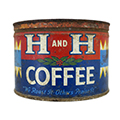
Things found in the factory — it doesn’t smell like coffee
Working draft in _drafts/ (no date in filename — preview with jekyll serve --drafts). To publish, move to _posts/ as YYYY-MM-DD-things-found-in-factory-doesnt-smell-like-coffee.md and set date in front matter if needed.
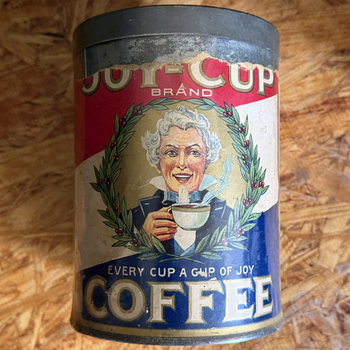
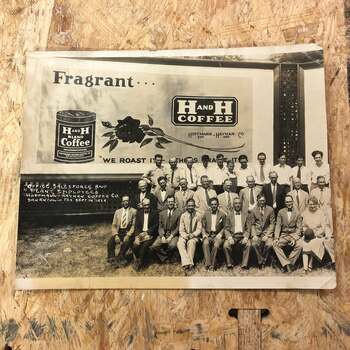
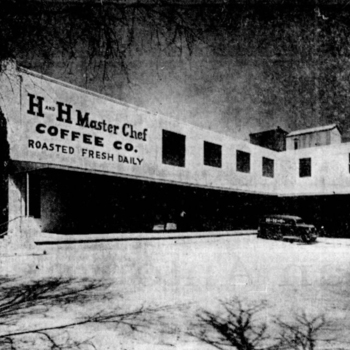
The Hoffmann-Hayman plant at 601 Delaware is easy to read as a coffee story: rusted roaster hardware, keywind tins, newspaper ads. On a walk-through today, what hits the nose is often not fresh roast—humidity, empty shell, later construction, or simply time—while the paper, wood, and metal we pull out of walls and outbuildings still advertise tea, spices, and the full brand grid the office once wrote up. This note strings together a few of those objects so the sensory mismatch (no coffee smell) does not get mistaken for “no coffee past.”
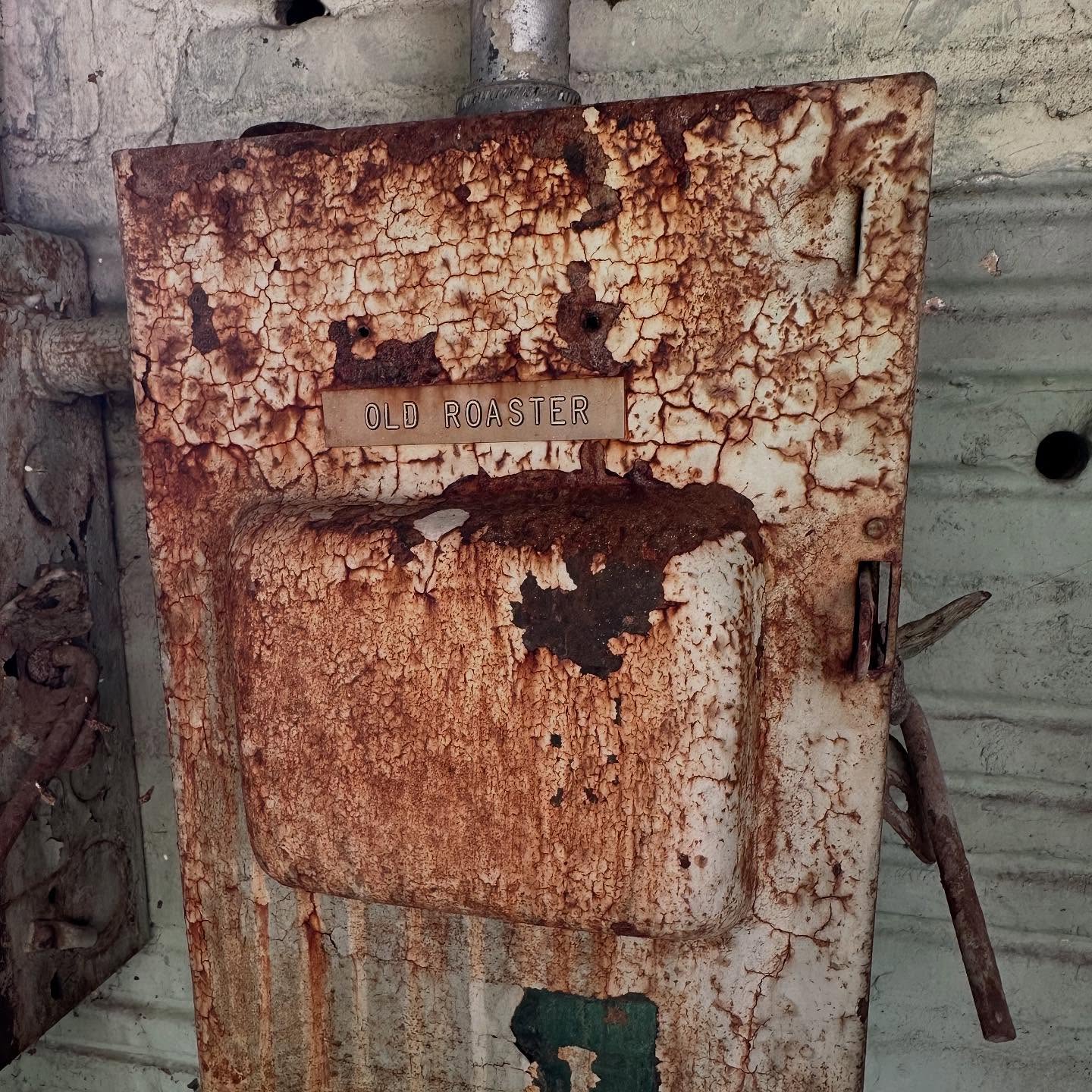
The frame below is the same Old Roaster door and power box we document in Old Roaster switch at the H and H Coffee Factory: cream enamel in alligatored cracks, rust streaks, and the embossed OLD ROASTER Dymo-style label on the enclosure—visible proof of roasting infrastructure even when the air reads neutral.
Sales forms
The interwar sales report books—pulled from above the office ceiling during a cable run—are line-by-line proof of what the sales desk actually booked: tea, house blends, Sam Houston, Broncho, Texas Girl, and the rest of the marks that turn up on tins and ads. They are site-recovered, not dealer stock; the full write-up and photos are in Sales report books from the office ceiling. They neither smell like coffee nor lie about what the company sold beside it.
Master Chef sign
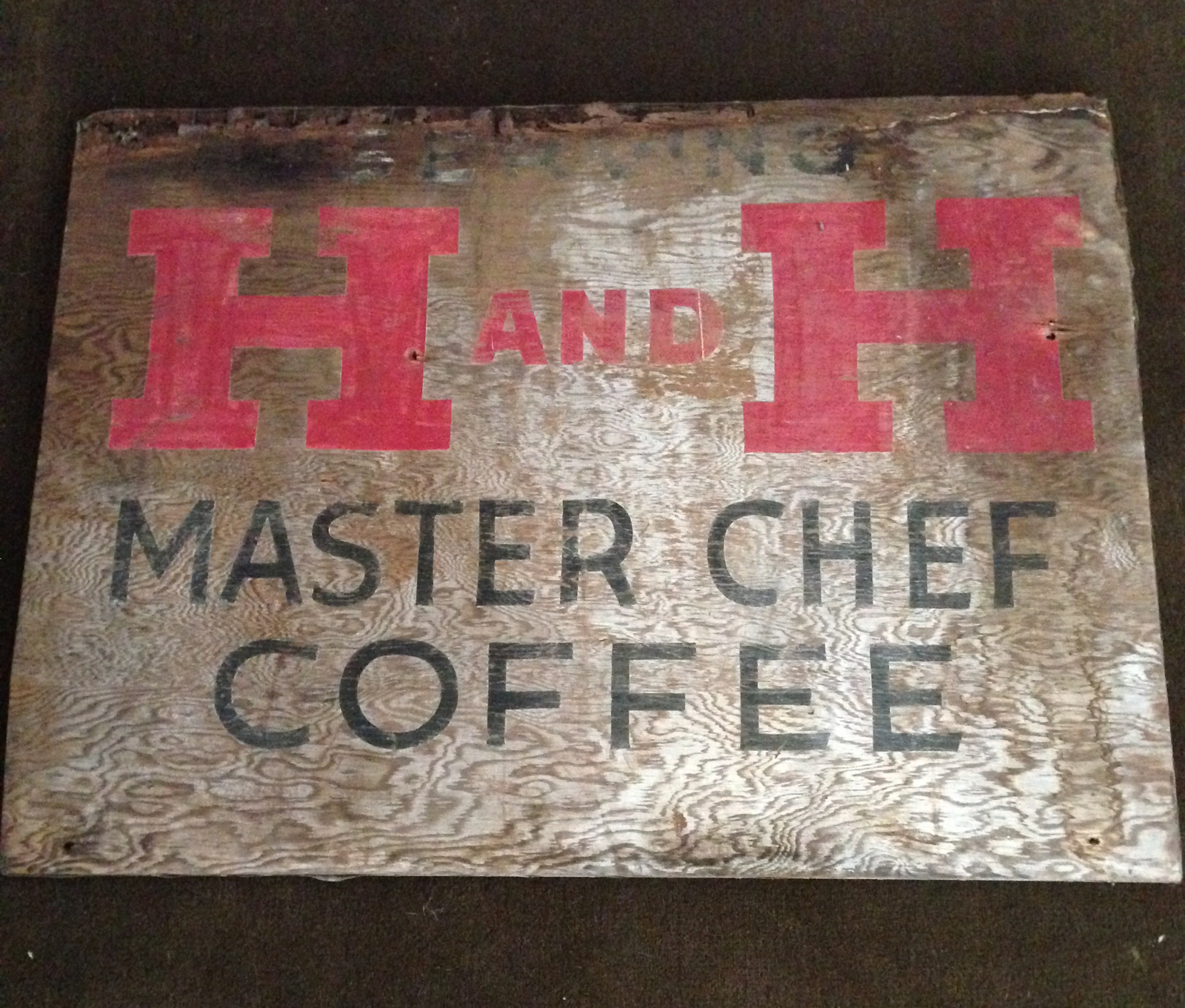
A painted plywood sign for H and H / Master Chef Coffee turned up in situ at the plant—rough board, large red H AND H slab-serif lettering, MASTER CHEF and COFFEE in black block type below, nail holes and weathering from real use. It is wood-and-paint evidence of the retail line on the factory footprint, not dealer stock.
Separately, the large unfolded H and H price sign in the collection is another Master Chef piece—heavy paper, red ink, never marked for the shelf—picked up in New Braunfels. Same mid-century Master Chef line as the one-pound tins, but as printed counter placard, not the field-shot wooden board above.
Crate piece (Hoffmann–Hayman address)
A fragment of shipping crate turned up in a small outbuilding on the property—field notes use the irreverent local nickname “murder shed.” The board still carries stenciled shipping identity tied to Hoffmann–Hayman and the Delaware Street works, the kind of wood-and-ink evidence that travels with burlap and nails when coffee and collateral products left the plant. (When we add a dedicated post, it should carry its own figure set; for now this draft names the find so the address line is not lost to memory.)
Paprika barrel lid
H and H Brand Spices included paprika in the published flavor list on H and H Spices; a paprika barrel lid in the collection is a bulk-format sibling to the small upright tins—metal that speaks to grocery scale and spice rather than the roast room. The Wanted list still calls out a paprika tin for the range; a lid documents the line even when a full barrel pack is not yet in hand.
Cross-links and honesty about “no smell”
- On-site equipment cues: Old Roaster switch at the H and H Coffee Factory — the weathered OLD ROASTER label on the door power box.
- Post-roasting reuse of plant hardware (reported): Bolner’s Fiesta and H and H — grinder hand-off.
- History hub: History.
We keep the absence of coffee aroma in the present as an impression—interesting as atmosphere—without claiming the plant never smelled of roast in operation. The archive and the objects still carry H and H across coffee, Master Chef signage, spices, and factory paperwork; the mismatch is between nose and evidence, not between memory and fact.
Pitch (retained from editorial outline)
Blog post about artifacts, ephemera, or finds tied to the factory site or building, framed around the idea that the place doesn’t smell like coffee — other products, later uses, decay, non-coffee inventory, or the visitor experience (sensory mismatch as the hook).
What to gather
- Photos: collection items or field shots as available; tie each object to place or era where possible.
- Sources: cite where any “no coffee smell” (or equivalent) claim comes from — personal visit, article, oral history — and avoid presenting impression as fact without that anchor.
- Cross-links: Old Roaster switch / factory door, History, Bolner grinder / closing plant if the thread is post-roasting reuse of equipment or space.
Editorial guardrails
- Distinguish the building today from period roasting — humidity, oil, and residue vs empty shell or later tenants.
- If the piece runs on absence (no smell), balance with what the archive does document (brands, ads, packaging) so the site doesn’t imply the plant was never aromatic in operation.
Still to decide
- Scope: 601 Delaware only vs any “factory” address in the timeline.
- Tone: humorous observation vs essay on industrial heritage and sensory memory.
Notes for final pass
- Add a lead sentence that names the site walk-through and the sensory mismatch.
- Add captions or figure refs for the factory finds so each object can stand alone.
- Verify which finds are in hand versus only documented in photos or notes.
- End by linking the “no smell” idea back to the archive evidence, not the other way around.