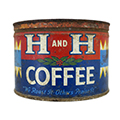
San Antonio Light, 14 February 1930, p. 32 — ‘Clip This Coupon’ Hoffmann-Hayman 5¢ advertising coupon (H and H Blend, Sam Houston, Menger Brand Peaberry)

- Catalog ID
HH-CLIP-1930-0008- Gallery
- Newspaper
Hoffmann-Hayman “Clip This Coupon” three-brand 5¢ ad — SA Light, 14 February 1930
Large half-column Hoffmann-Hayman display ad in the San Antonio Light promoting three of the firm’s coffee lines simultaneously:
- H and H Blend Coffee — 1-lb can carries a Cash Coupon good for 2¢; 3-lb can a Cash Coupon good for 6¢ (redeemed by the grocer).
- Sam Houston Coffee — every 1-lb can packs a beautiful water glass; 3-lb can three are an imported cup and saucer.
- Menger Brand Coffee — every 1-lb can carries a Cash Coupon good for dishes and other valuable premiums; the assortment lists oatmeal bowl, pie plate, and fruit dish.
The clipped coupon (Advertising Coupon, 5¢ value, with the diamond mark “It’s Roasted Better in San Antonio”) was accepted by any grocer at its face value of five cents on the purchase of any one can of H and H Blend, Sam Houston, or Menger Brand Coffee. Note to grocer printed at the bottom: “We will redeem this Coupon from you for 5¢ in Cash. Only ONE Coupon accepted on each can of above Coffees.” Attribution line: “HOFFMANN-HAYMAN COFFEE CO. — San Antonio, Texas.” The slogan headline above the giant arrow loops over the coupon area: “We roast it, others praise it” with the underlying call-to-action “CLIP THIS COUPON / Try any of these 3 famous Coffees / At a Saving… / Today or Saturday!”.
Coupon expiration: NOT GOOD AFTER MIDNIGHT / FEBRUARY 15th, 1930 — a 24-to-48-hour window, dating this clip to a Friday “today or Saturday” weekend-grocery push.
The ad documents Hoffmann-Hayman’s pre-Crystalvac (1932) three-brand portfolio structure at a single retail price point: H and H Blend as the flagship blend, Sam Houston Coffee with packaged-glassware premium, and Menger Brand Finest Peaberry Coffee with a coupon-redeemed dish-premium program. By 1930 the in-can premium/coupon mechanic is already firmly established years before the 1961 appreciation-certificate / trading-stamp program rollout.