Large-Format Reprint of the 24 July 1932 San Antonio Sunday Light — “Hoffmann-Hayman Plant Modern Throughout”

A large-format modern reprint of a page from the San Antonio Sunday Light of Sunday, 24 July 1932 — photographed lying flat on 19 February 2023. The sheet is clearly a reproduction and not an original newsprint copy: the paper is bright, uniform, and unfolded, and at this scale the halftone screen and type are printed on modern stock rather than on 1932 newsprint. But the content is the single most important primary source document we have about the building itself. In one page it establishes, contemporaneously, who designed the factory, what it was designed to be, who ran the company at the moment it was built, and where the firm had been before.
SAN ANTONIO SUNDAY LIGHT Sunday, July 24, 1932 CLASSIFIED ADVERTIS
N-HAYMAN PLANT + + + MODERN THROUGHOUT
Hoffmann-Hayman Coffee Co.
Hoffmann-Hayman Coffee Plant Under Construction
Declaring the present time to be the best time to build and having as their purpose to build, the Hoffmann-Hayman Coffee company has announced a new plant now under construction at Delaware street and Southern Pacific tracks. Designed by Morris, Nooran and Wilson, architects and engineers in the Western National building, the structure will provide 16,000 square feet of floor space and will be one of the most modern plants in the state.
Of fireproof construction, the building faces on Delaware for additional provisions have been made for additional fire protection. The new plant is to be built on the site of the old plant. The Hoffmann-Hayman Coffee Company’s new plant will have a modern refrigeration system, including a large cold storage room. The plant will be built on the site of the old plant, which has been in operation for several years. The new plant is designed to be built on the site of the old plant. The Hoffmann-Hayman Coffee Company’s new plant will have a modern refrigeration system, including a large cold storage room.
SEARS PLANS EXPANSION
Plans for an extensive expansion program was announced by Sears, Roebuck and company of San Antonio at a meeting of local and visiting executives last week, according to G. W. Bryan, manager of the firm’s retail administration, and C. B. Roberts, manager of the Texas district.
In reviewing the expansion program, Mr. Barker said: ‘Our San Antonio store reflects the progressive spirit of the community and we are pleased to have it steadily growth and feel that the expansion movement will continue. Mr. Bryan said: “We are pleased to have the expansion program continue.”
Continental National Is Merged in Great American
President Charles E. Booker announced the consideration of Continental National Life Insurance Company of Denver and Continental National Life Insurance Company of San Antonio with the Continental National Life Insurance Company of San Antonio, controlled by the same management. The Continental National Life Insurance Company of San Antonio has been organized under the management of the Continental National Life Insurance Company of Denver, and the Continental National Life Insurance Company of San Antonio is the result of the merger.
What’s on the page
Across the top, the paper’s masthead reads “SUNDAY LIGHT / Sunday, July 24, 1932” with “CLASSIFIED ADVERTISING” on the right — this is a page from that Sunday edition’s classified / business-development supplement. Immediately below it, a banner headline spans the page:
HOFFMANN-HAYMAN PLANT · · · MODERN THROUGHOUT
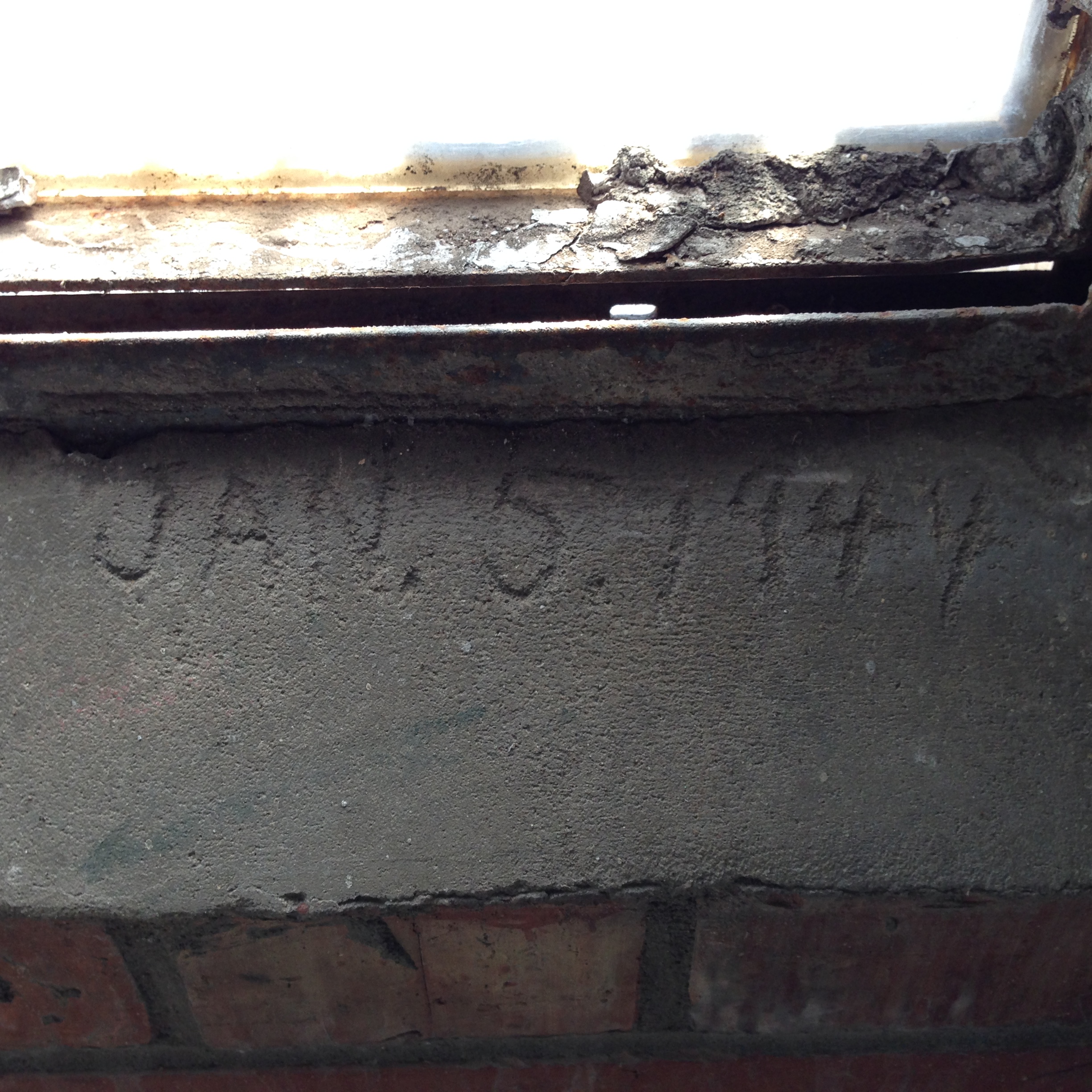
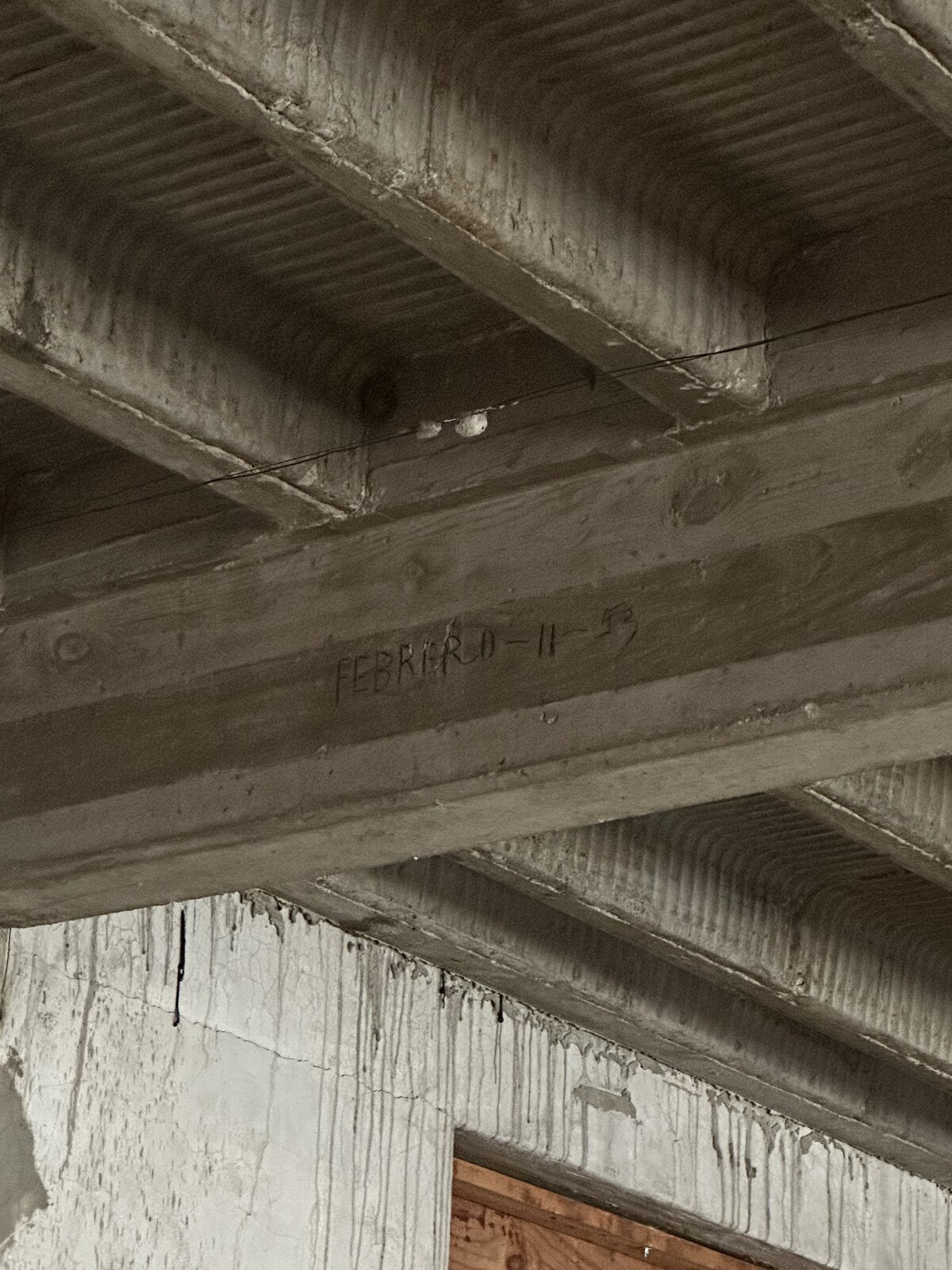
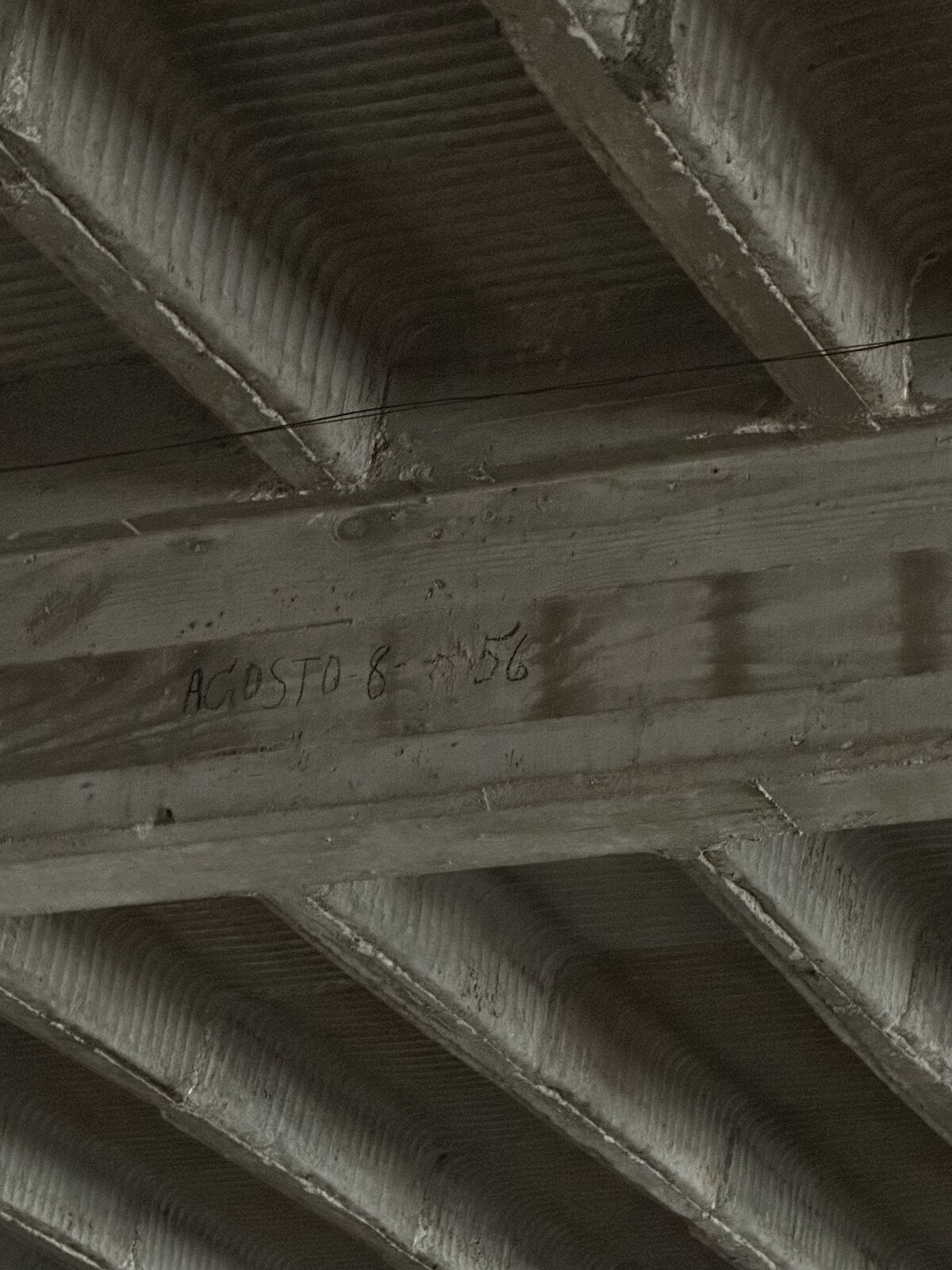
Beneath the banner is a large halftone architectural illustration of the new factory. The building signage on the drawing’s facade reads “HOFFMANN-HAYMAN COFFEE CO.”, and the elevation shows the plant’s full length: the row of tall steel-sash industrial windows, the prominent central coffee-silo headhouse tower that still dominates the building’s profile today, and street-side trees and landscaping. Crucially, this is the building as originally designed in 1932 — before the second-floor expansion over the office that’s dated on the upstairs window sill and that frames the pencilled pan-formed-concrete joist ceiling with the ‘Febrero 11 – 53’ and ‘Agosto 8 – 56’ dates. The illustration is therefore a pre-expansion elevation of the plant and a useful baseline for reading later construction history in the building.
What the article records
Below the illustration runs the feature article, “Hoffmann-Hayman Coffee Plant Under Construction”, plus a caption beneath the drawing. Between them they record:
- Architects / engineers: Morris, Noonan and Wilson, in the Western National (Builders Exchange) building in San Antonio.
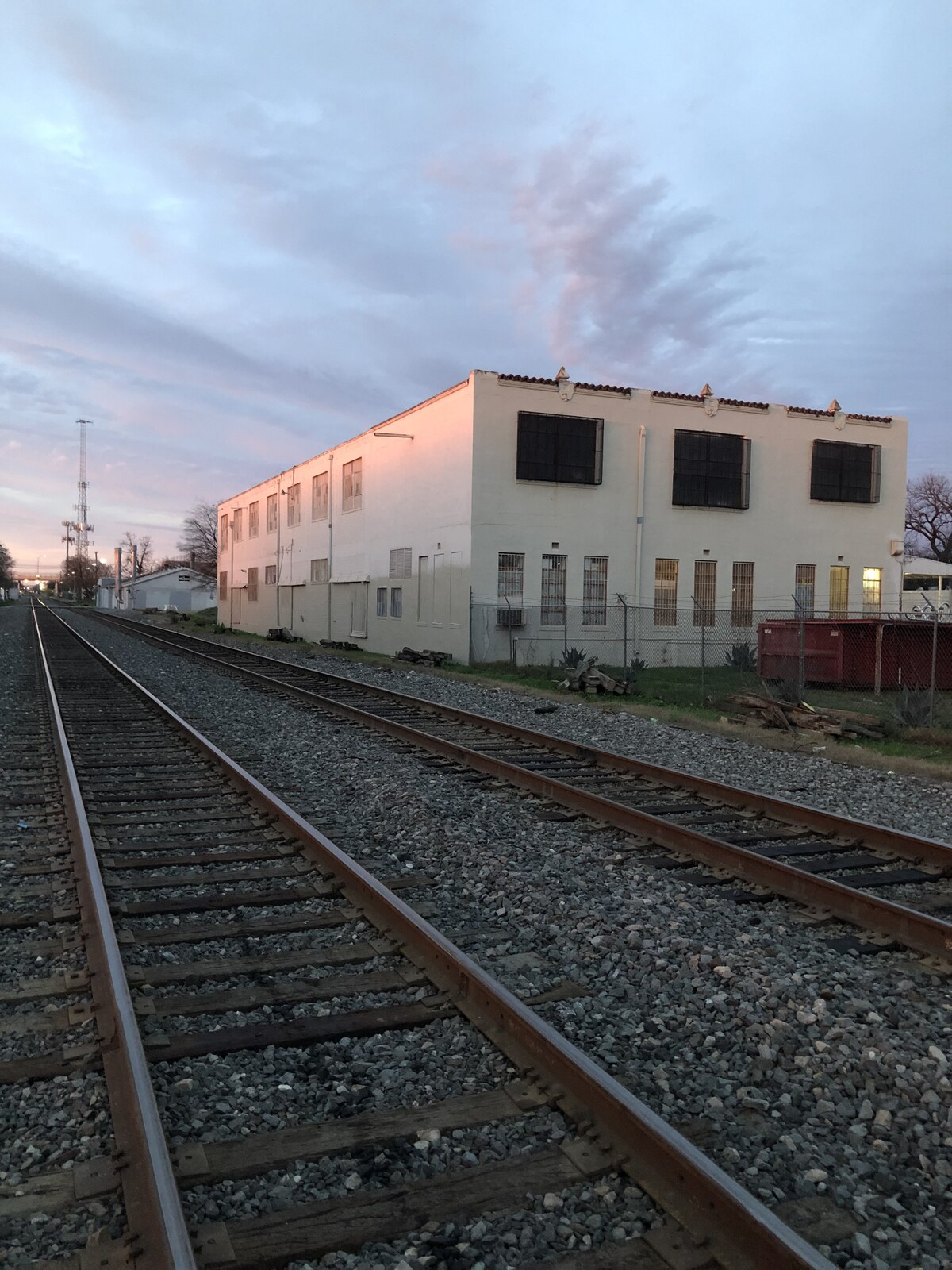
- Site: Delaware Street and the Southern Pacific tracks — the same location as the current building, against the same rail siding visible in the 22 February 2019 dusk shot from the tracks.
- Size: 16,000 square feet of floor space.
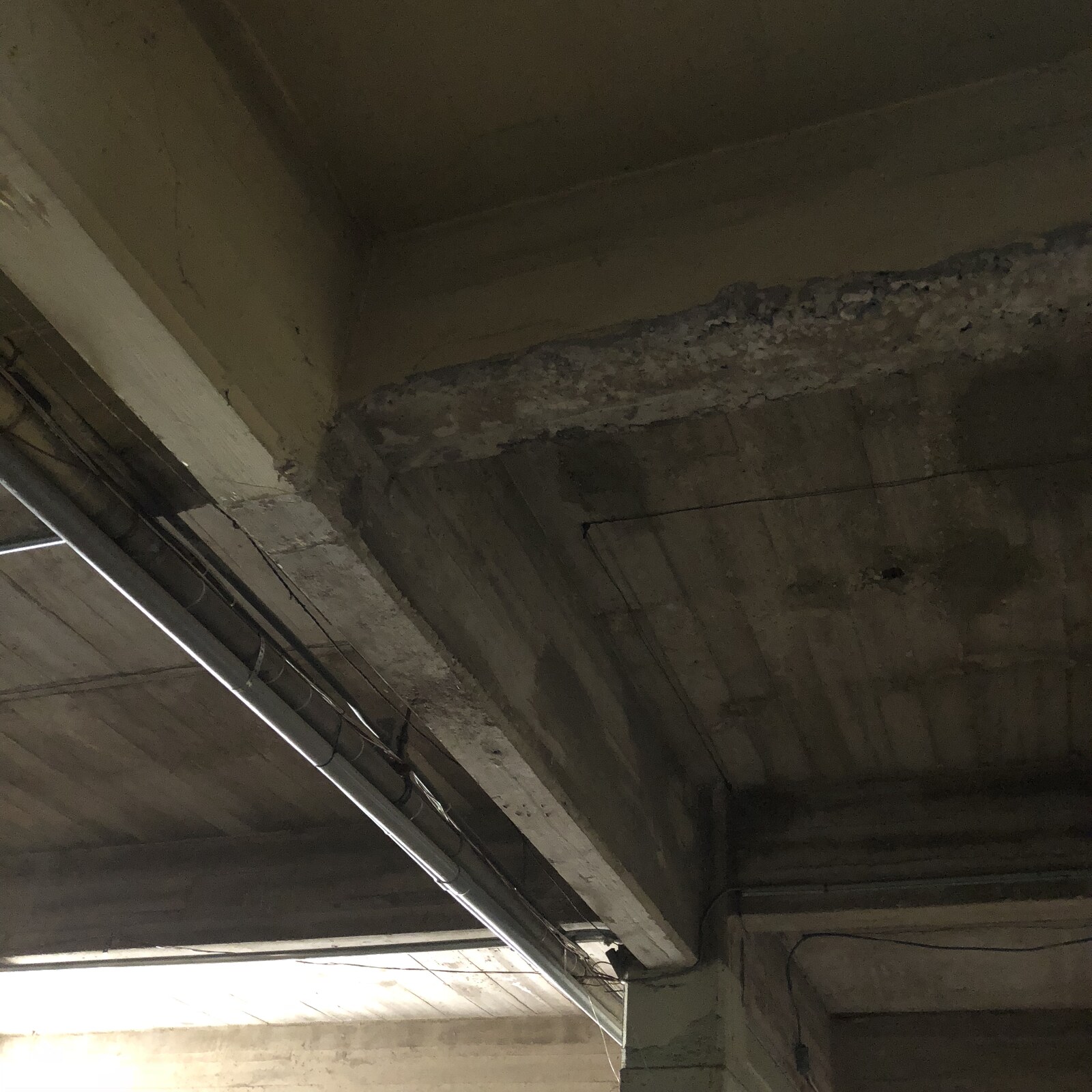
- Construction: fireproof reinforced-concrete — explicitly as-built evidence for the board-formed concrete beams, columns, and the pan-formed concrete joist floor system documented elsewhere in the gallery.
- “Provisions for future additions” — the article explicitly anticipates that the plant will grow beyond its original footprint, which is exactly what happened with the second-floor office expansion.
- Company address before the move: 331 Burnett Street, where the firm had been for 10 years (i.e. since ~1922) — placing Hoffmann-Hayman Coffee Co. on Burnett Street across the 1920s before the new plant.
- Move-in target: occupancy by October 15, 1932.
- Company officers as of mid-1932:
- G. P. Menger — president
- Mrs. William J. Schlosser — vice president
- R. W. Menger — secretary
- T. J. Menger — treasurer
- Sourcing policy: favoring local San Antonio products in the construction of the building.
- Planned rooftop sign: “one of the attractive features of the new building will be a large sign on the roof…” — this is the Fragrant rooftop billboard that shows up later in the 1934 N.R.A. employee photo taken in front of it.
- A reference to the Crystalvac jar in which the firm packed coffee under vacuum — documenting the Crystalvac brand in contemporaneous use at the moment the new plant was being built.
Two unrelated articles — “SEARS PLANS EXPANSION” and “Continental National Is Merged in Great American” — share the page as surrounding context but aren’t the subject of the reprint.
Why it matters for the project
This single page is the documentary spine for a lot of what the rest of the gallery shows. Reading across the site:
- Building: the article’s “fireproof reinforced-concrete construction” and “provisions for future additions” are the textual counterparts to the board-formed concrete beams and columns, the pan-formed reinforced-concrete joist ceiling of the expansion room, and the expansion-to-original-face junction documented in the Factory gallery.
- Architects: Morris, Noonan and Wilson are named here in print in 1932; future research on the firm and on the Builders Exchange / Western National building addresses starts from this citation.
- Predecessor address: 331 Burnett Street, ~1922–1932, is a concrete earlier-address lead for finding Hoffmann-Hayman material from the 1920s.
- Leadership at the moment the plant was built: the officers list names G. P. Menger as president, which strengthens the tentative identification of the framed coffee-cupping portrait as Gus P. Menger in later life and connects to the earlier Gus Menger photo already in the site. It also names Mrs. William J. Schlosser, R. W. Menger, and T. J. Menger — a family-and-company leadership snapshot from July 1932 to follow up on.
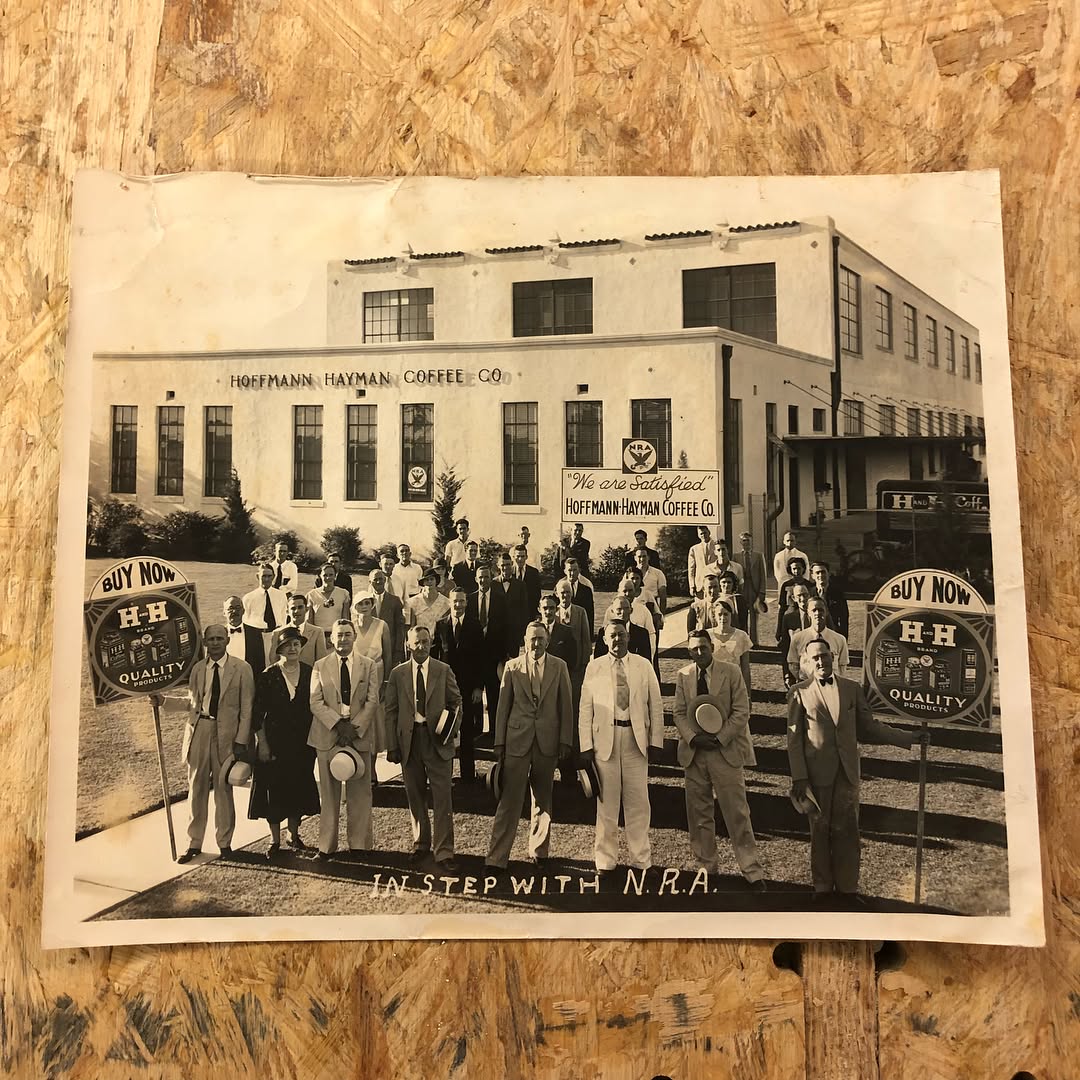
- Fragrant billboard: the rooftop sign mentioned in the article is the one standing behind the 1934 N.R.A. employee photo — the article is the paper trail for why that billboard was there in the first place.
- Crystalvac: the mention of the Crystalvac jar ties the Crystalvac brand to the firm’s packaging practice at the very moment of the move to the new plant.
Everything else in the collection is an object. This is the paper that tells you what the objects mean.
Update (2024-12-23): A small piece of the Delaware Street site referenced here surfaced in physical form as a galvanized surveyor’s pavement marker stamped ‘G — M — A’ driven into the asphalt of Delaware Street directly in front of the factory’s entry gate — a 21st-century property/survey artifact at the same Delaware-and-Southern-Pacific-tracks address the Sunday Light recorded for the new plant in July 1932. The specific surveyor or agency the GMA stamping belongs to is not yet identified.