“Agosto 8 – 56” — A Fourth Pencil Date, on a Pan-Formed Concrete Ceiling Joist
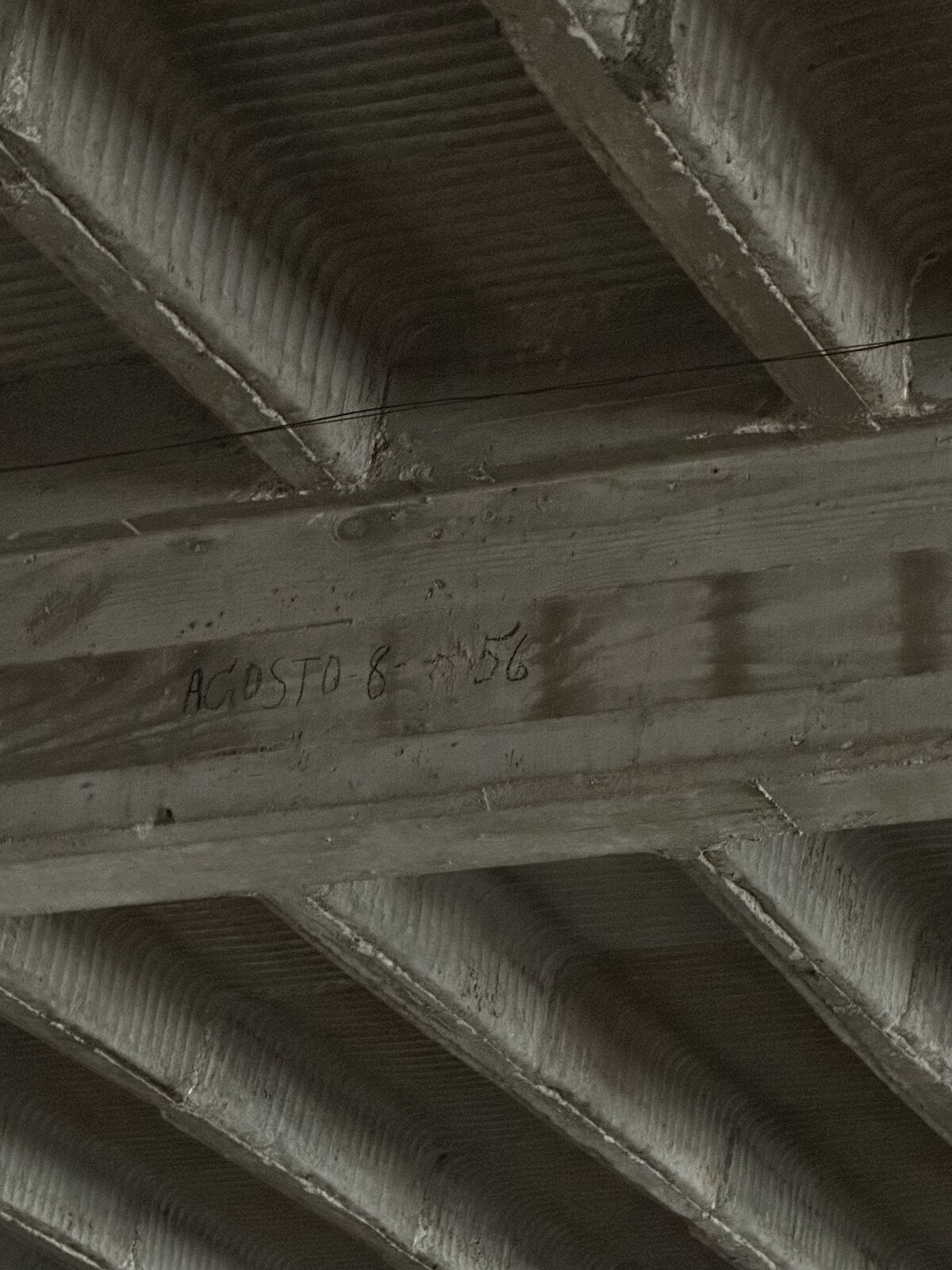
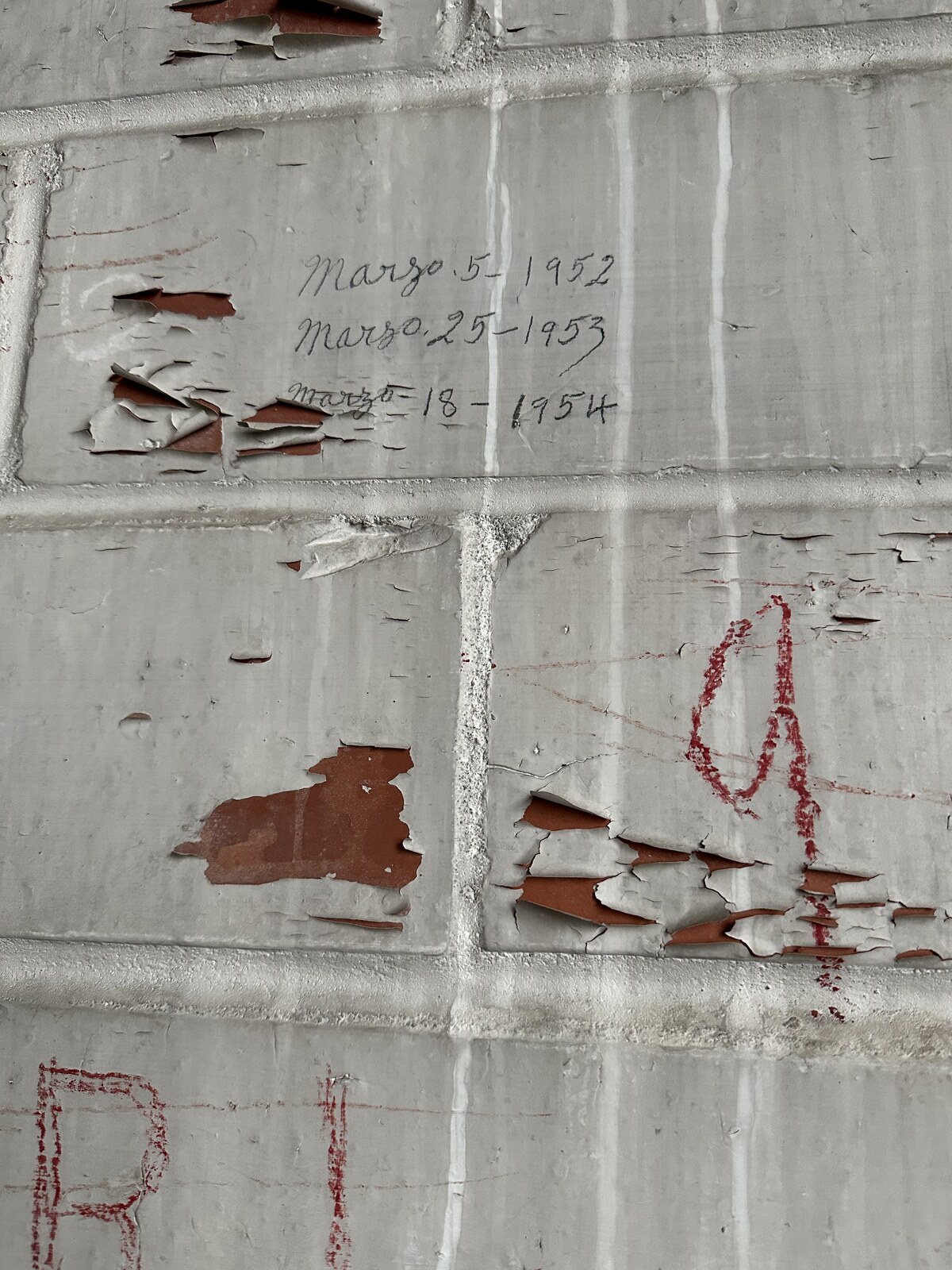
Two minutes after photographing the ‘Marzo’ pencil dates on the east wall of the second-floor expansion room above the office on 1 February 2023, I looked up. On the flat face of a concrete ceiling joist — in the same cursive graphite, in the same language, written on a different surface of the same small room — someone had pencilled:
AGOSTO 8 – 56
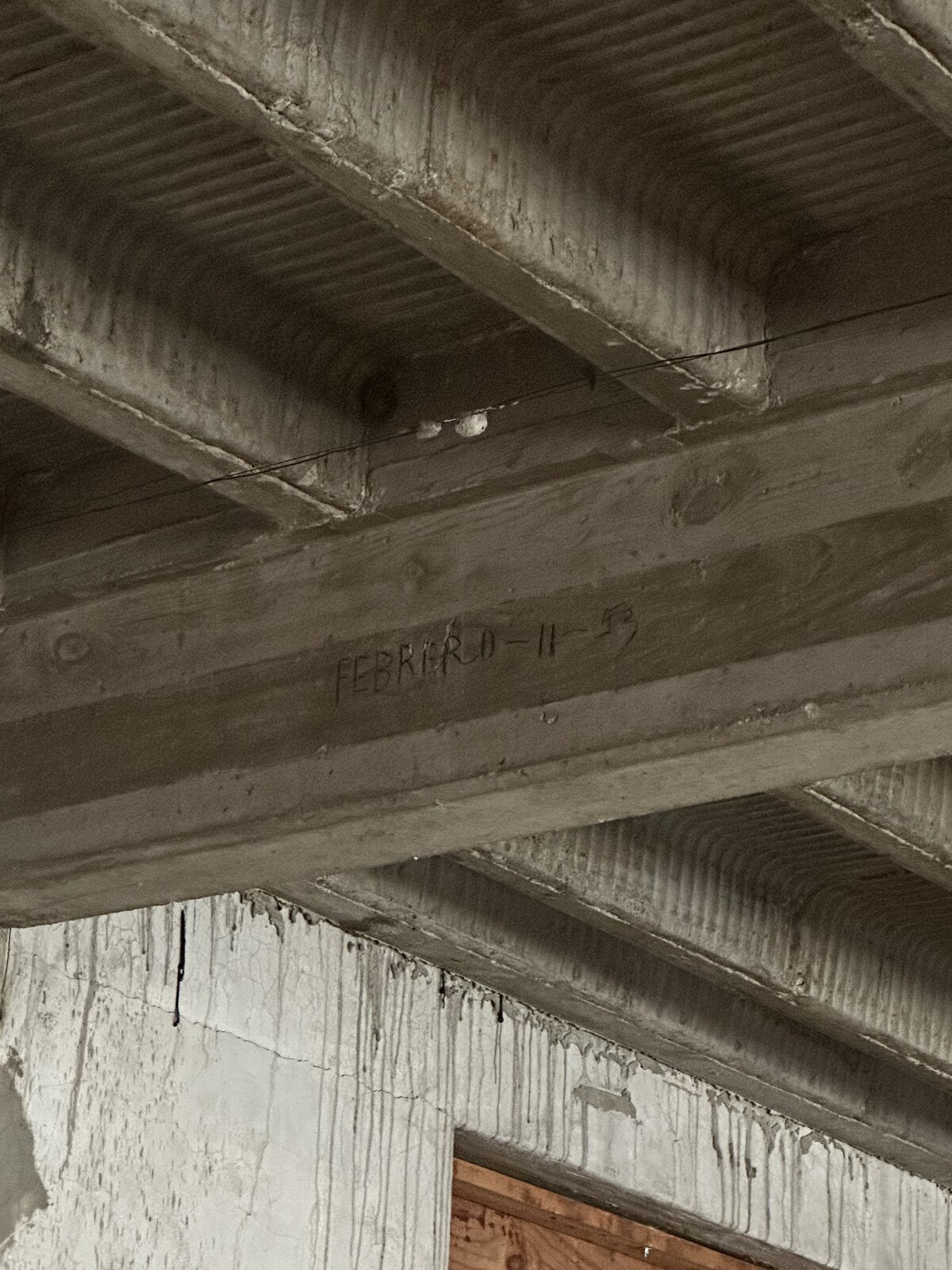
August 8, 1956. The latest of five Spanish-language pencil dates now known in this one small room. Moments later on the same afternoon a second ceiling-joist date turned up a few feet away — “Febrero 11 – 53”, 11 February 1953 — which slots inside the Marzo run on the east wall rather than after it. With that frame added, the running sequence in this room is:
Marzo 5 – 1952 (east wall) · Febrero 11 – 53 (ceiling joist) · Marzo 25 – 1953 (east wall) · Marzo 18 – 1954 (east wall) · Agosto 8 – 56 (ceiling joist)
“Agosto 8 – 56” is the last of those, two years and five months after the final Marzo on the wall, and the first of the two on the ceiling. It’s written in the same cursive graphite, in the same language, as the rest of the cluster — just carried through a change of surface (plaster wall → concrete ceiling joist). Whether a single person wrote all five across those five years or whether later marks were by a second worker picking up the habit they’d seen already on the wall isn’t something I can confirm from the photographs alone; what’s clear is that this specific room — the back upstairs room above the office — kept being the place the marks were left.
The ceiling is evidence too
The inscription sits on one of the most characteristic pieces of 1930s American industrial construction visible anywhere in the plant: the room’s pan-formed reinforced-concrete joist floor/ceiling system.
Looking up from the floor, three things are present in the frame:
- The concrete joists themselves — flat-sided, flat-soffit ribs running in parallel across the room, with board-formwork grain pressed into their vertical sides from the wood-plank forms they were cast against in 1932. They’re the load-carrying T-beams of the slab above.
- The ribbed soffit between the joists — the bays carry a regular pattern of narrow parallel ridges and valleys running perpendicular to the joists. This is the impression left by removable corrugated-steel pan forms that were set between the joist forms, reinforcing bars and mesh laid on top, concrete poured over the whole assembly, and then, after cure, the pans stripped out. What you see on the ceiling is, effectively, a cast of the inside of the pan.
- Very little else — no suspended ceiling, no dropped grid, no plaster coffers. The structural system is left honestly exposed exactly as it came off the forms in the early 1930s, blackened slightly by nine decades of use.
For a 1932 coffee-roasting plant, pan-formed concrete joist construction was state-of-the-art fire-resistant industrial framing. It gave longer clear spans, lighter dead loads, and better fire performance than solid one-way slabs or timber-and-joist systems, and it was the framing of choice for warehouses, factories, and department stores through the 1920s–1940s. Seeing it left exposed over an occupied working room — and then finding that a worker has pencilled a date on one of the joists — ties the room’s structural history and its occupancy history to the exact same surface.
This frame in the chronology of inscriptions
Combined with the other pencilled and carved marks we’ve found in the building, the running chronology reads:
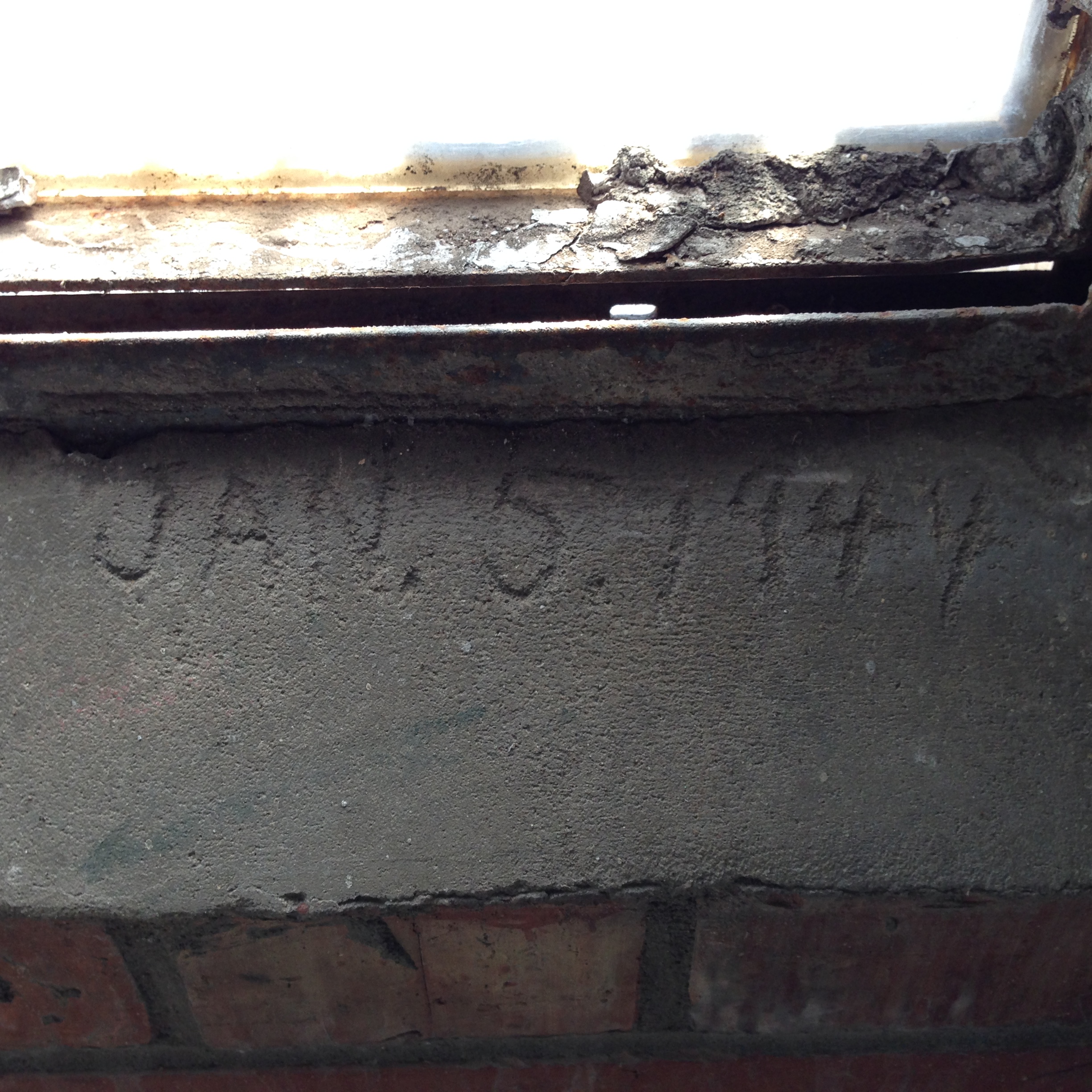
- The second-floor expansion date carved into a window sill — 1930s construction itself.
- The three 1952–1954 “Marzo” pencil dates on the upstairs east wall — mid-twentieth-century occupancy marks, same hand, three consecutive Marches.
- A 1953 “Febrero 11 – 53” pencil date on a ceiling joist of the same room — in sequence between the first and second Marzo dates, found on a joist above the junction of the expansion ceiling with the original 1932 exterior face of the plant.
- This “Agosto 8 – 56” pencil date on a different ceiling joist of the same room — two years after the last Marzo, closing the 1952–1956 cluster.
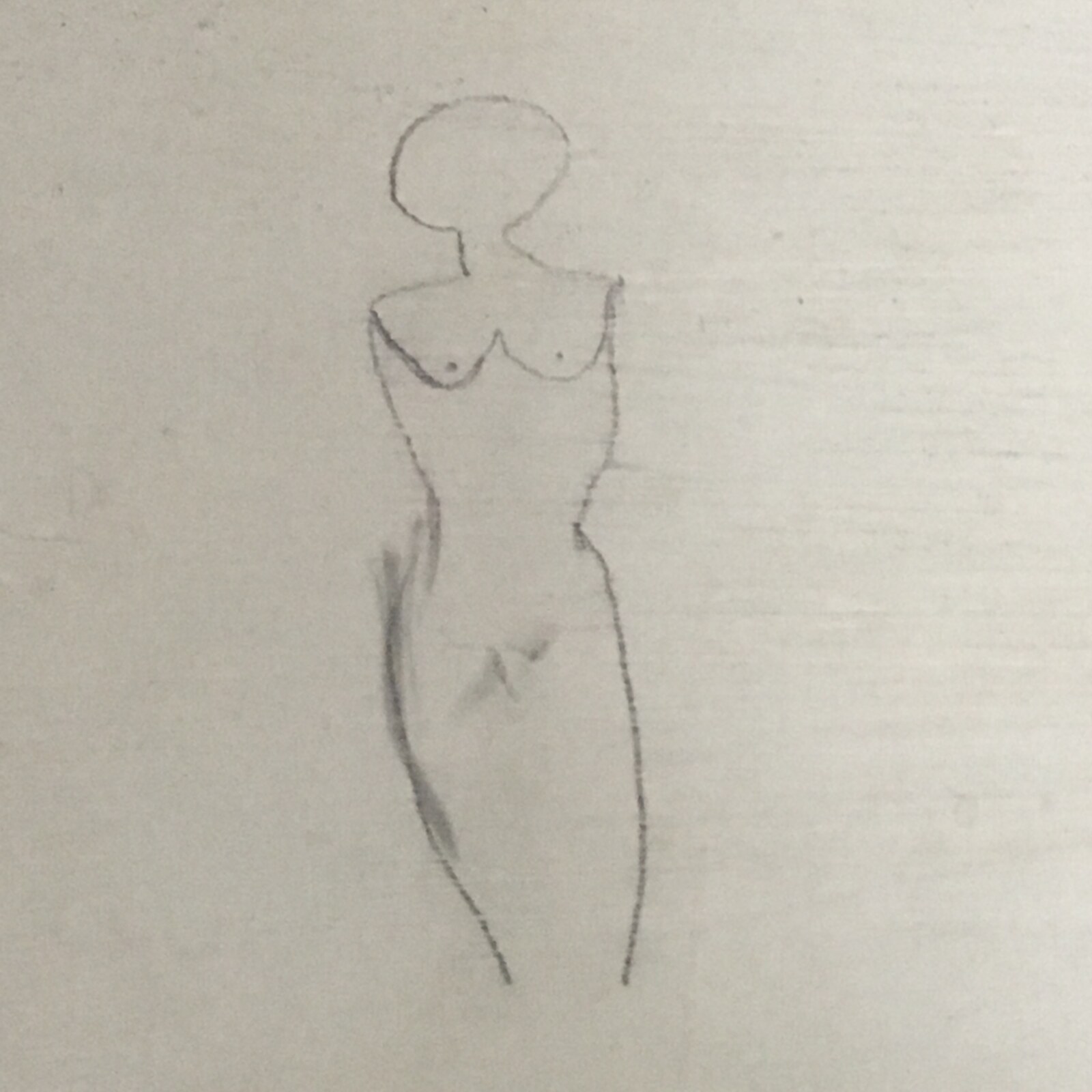
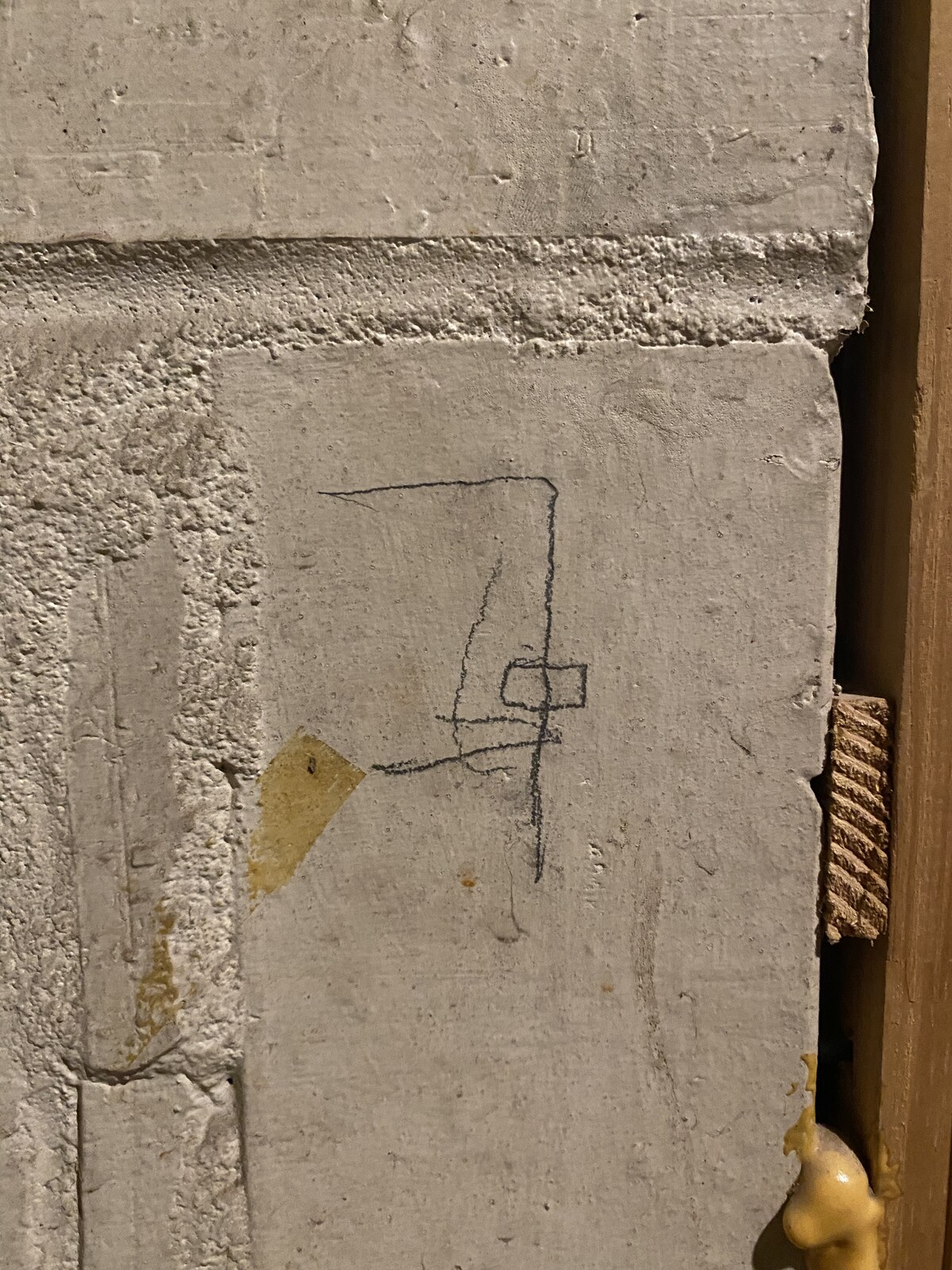
- An informal pencil figure study on an upstairs stucco wall — undated.
- A downstairs schematic pencil sketch at the foot of the stairs to the second floor beside a later-cut secondary doorway into a first-floor bathroom — a post-1930s alteration to the original fabric.
Four dated pencil marks on the walls and ceiling of one small upstairs room, covering 1952 through 1956 — the quiet handwriting of whoever was working up here in the decade after the plant’s second-floor expansion was built out.