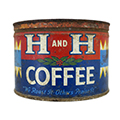
Coffee Museum (planning)
Plan to raise funds, develop a museum at the former Hoffmann-Hayman Coffee Company factory at 601 Delaware Street, and pursue listing on the National Register of Historic Places.
This page is unlisted — projected to a public URL for sharing with specific funders and collaborators, but excluded from site search, the sitemap, and any public navigation. Link sparingly and direct only.
Key fact: The current building owner is the same person building this research site, conducting the historical research, and collecting artifacts. Unified ownership, stewardship, and documentation removes the primary obstacle most preservation projects face.
Overview
The 1932 plant at 601 Delaware is already a documented, artifact-rich site with an active research archive, a public-facing website, and physical evidence in-situ. The path to a funded museum and National Register listing runs through three parallel tracks: legal/organizational foundation, National Register nomination, and fundraising.
Track 1 — Organizational Foundation (Months 1–6)
1.1 Establish a 501(c)(3) Nonprofit
Without tax-exempt status, most grant programs are closed. Form a nonprofit (or fiscal sponsorship arrangement through an existing Texas historical organization) first.
- Name options: Hoffmann-Hayman Coffee Company Historical Foundation, or H&H Coffee Factory Preservation Trust
- Board: Recruit 5–7 members — local historians, a preservation attorney, a CPA, a museum professional, and a community representative from the South/East side neighborhood
- Cost: ~$800–$1,500 in filing fees plus attorney time; some Texas legal aid organizations help nonprofits pro bono
- Alternative (faster): Fiscal sponsorship through the San Antonio Conservation Society or Texas Historical Foundation to begin grant-seeking immediately while the 501(c)(3) processes (~6–9 months)
1.2 Establish a Collections Policy
Before soliciting donations or applying for museum grants, a written collections policy covering acquisition, deaccession, and care standards is required by the American Alliance of Museums (AAM) for credentialing and expected by most grant funders.
Status (2026-05-24): Policy in place — public summary at Collections Policy; full text at docs/collections/collections-policy.md with custodian operations checklist at docs/collections/accession-operations-checklist.md. Aligns with the accession registry under accessions/ and loan-readiness design.
Track 2 — National Register of Historic Places (Months 3–18)
The building meets multiple criteria for the National Register of Historic Places (NRHP). The process runs through the Texas Historical Commission (THC) as the State Historic Preservation Office.
2.1 Eligibility Criteria
The building likely qualifies under:
- Criterion A — 73 years of continuous operation (1899–1972); “Southwest’s finest modern coffee roasting plant” at opening; significant to San Antonio’s commercial and industrial history
- Criterion B — Association with the Menger family, whose Menger Hotel is already a National Historic Landmark
- Criterion C — Fireproof 1932 industrial construction designed by Morris, Nooman & Wilson; $130,000 purpose-built facility with documented original features (rail siding, roasting equipment, planned rooftop Crystalvac landmark per pre-construction drawings)
2.2 Hire or Partner with a Preservation Consultant
The NRHP nomination form (NPS Form 10-900) requires a detailed Section 7 (Description), Section 8 (Significance), and Section 9 (Bibliography). Options:
- Hire a THC-approved preservation consultant (~$3,000–$8,000 for a straightforward industrial nomination)
- Partner with UTSA’s College of Architecture, Construction & Planning or UT Austin School of Architecture — graduate students sometimes take nominations as thesis projects under faculty supervision
- Contact THC’s National Register program staff in Austin directly (free pre-nomination consultations) to assess eligibility before investing
2.3 Nomination Process
- Pre-nomination consultation with THC (free) → determine Criteria of Significance
- Prepare nomination form — the existing research archive and newspaper sources are a major head start; documented construction records, opening accounts, and family history are directly usable
- Submit to THC → THC reviews, requests revisions, schedules a Texas Historical Commission meeting
- THC forwards to NPS → NPS Keeper of the Register makes final determination
- Timeline: 12–24 months from first contact to listing if documentation is solid
The Menger Hotel (a National Historic Landmark) is directly connected via the Menger family. Citing this documented lineage strengthens the nomination.
2.4 Texas State Marker (Parallel Track)
Apply for a Texas Historical Marker (Commission Marker program, THC). Cheaper, faster (~1 year), publicly visible. Serves as momentum and credibility for the NRHP nomination and fundraising. Note: Three Rivers Glass Company received its marker in 1973 (see 1973 Three Rivers Glass marker) — a useful precedent in the same supply chain.
Track 3 — Fundraising (Months 1–36)
Phase 1: Seed Funding (Months 1–6, target: $25,000–$50,000)
Crowdfunding
- Platform: Patronicity (specializes in historic preservation / community projects) or Kickstarter
- Hook: “The building that kept San Antonio in coffee for 73 years”
- Offer tangible rewards: tin reproductions, research naming rights, brick sponsorships
San Antonio Conservation Society
- Annual grants for preservation projects; deep interest in industrial heritage
- Grants typically $2,500–$15,000
Texas Historical Foundation
- Preservation grants up to $10,000 for research and documentation
Phase 2: Institutional Grants (Months 6–18, target: $100,000–$300,000)
| Funder | Program | Range | Notes |
|---|---|---|---|
| National Trust for Historic Preservation | Preservation Fund Grants | $2,500–$10,000 | Requires 501(c)(3); good for planning phase |
| Texas Commission on the Arts | Cultural District / Heritage grants | $5,000–$50,000 | Tie to San Antonio arts economy |
| NEH | Preservation Assistance Grants | up to $10,000 | Collections care; artifact archive qualifies |
| NEH | American Heritage Grants | $50,000–$350,000 | Major museum planning; requires institutional track record |
| HUD / EDA | Historic Preservation / Economic Development | varies | Near the Alamodome; economic revitalization angle |
| San Antonio Area Foundation | Community grants | $5,000–$50,000 | Local foundation with deep SA heritage ties |
Phase 3: Capital Campaign (Months 18–36+, target: $500,000–$2M)
- Historic Tax Credits (HTC): Federal 20% HTC and Texas state HTC apply to certified historic structures. Once NRHP-listed, rehabilitation costs can generate ~$200K–$400K in tax credits on a $1M rehab, which can be sold to investors.
- New Markets Tax Credits: The Delaware Street neighborhood near the Alamodome likely qualifies as a low-income census tract; NMTC financing can leverage significant capital.
- City of San Antonio: Office of Historic Preservation and Development Services Department both have preservation programs; City Council District 2 covers this area.
- Coffee industry sponsors: Starbucks Heritage Fund, Blue Bottle, local San Antonio roasters — the 19th-century coffee roaster origin story is compelling for brand-conscious coffee companies.
- Naming opportunities: The Gustav P. Menger Room, the Hoffmann Roasting Hall, etc.
Track 4 — Museum Development (Months 12–36)
Core Exhibits — Phase 1 (Low Capital)
Existing assets support a first exhibit without major construction:
- The Archive Room: Newspaper transcriptions, brand grid, timeline — the website in physical form
- The Artifacts Room: Tins, jars, signs, sales report books, paprika barrel lid, crate fragment — already documented in accessions and gallery records
- The Factory Floor: In-situ features — Old Roaster power box, Master Chef plywood sign, structural I-beams — interpret the building itself as the artifact
- The Menger Connection: Menger Hotel → Menger family → Hoffmann-Hayman — San Antonio’s most famous hotel family running a coffee company for 60+ years
Museum Accreditation Path
- Step 1: Apply for AAM StandUp for Museums designation (entry level)
- Step 2: Pursue AAM Accreditation over 3–5 years (requires collections policy, governance, financials, professional staff)
Partnership Options
Rather than operating independently:
- Witte Museum — already has Hoffmann-Hayman in their records (
_data/2019-09-25-Witte_Museum-Hoffmann-Hayman Coffee.xls); potential co-presenter or loan partner - UTSA Institute of Texan Cultures — specialty in exactly this kind of South Texas heritage
- San Antonio Museum of Art — decorative arts / industrial design angle (tins, Crystalvac jars)
Track 5 — Earned Revenue and Programming (Year 2+)
Once the building is open to the public, ongoing operations are funded by a mix of admissions, retail, events, and earned revenue from the building itself. The list below leans on what is unique to H&H — the Crystalvac story, the Mi Tierra partnership, the Menger Hotel tie, the vault, the South Side / Alamodome corridor — rather than generic museum operations playbooks.
Recurring programming (low overhead, high frequency)
- Cupping nights with local SA roasters — Local Coffee, Estate Coffee Co., White Elephant — H&H artifacts as backdrop; monthly cadence
- Vintage roasting demos on the Old Roaster (if returned to working order) — quarterly “Old Roaster Sundays”
- Walking tours of the South Side industrial corridor — Delaware Street ↔ Hoefgen ↔ Southern Pacific rail spur ↔ Three Rivers Glass supply-chain narrative
- Brew bar pop-ups — manual-brew demos using current Master Chef beans
- Lecture series — Texas historians, Conservation Society partners, UTSA faculty; ticketed Thursday-evening cadence
Anchor events (annual / special)
- Founders’ Day every Oct 1 — anchored on the H&H Blend launch (1904); annual fundraiser + community open house
- Master Chef Centennial 2027 — Mi Tierra partnership; the brand still serves at Mi Tierra, making the centennial a natural cross-promotion
- Crystalvac Centennial Year 2032 — eight years out; build toward it with annual Crystalvac-themed programming starting now
- Texas Bottle Club / Three Rivers Glass Show rotations — leverage the Crystalvac → TRG → Ball → Owens-Illinois supply-chain story
- Specialty Coffee Association regional event hosting — the SA chapter does not currently have a permanent venue
- HemisFair-adjacent programming during Texas Folklife events
- German-American Heritage Night — Hoffmann roots, Menger Hotel ties
- WWII home-front nights — Flav-O-Tainer / rationing programming with the Witte
- Mystery nights — ticketed evening events leveraging the “slow-motion mystery” framing; attendees engage with open-question prompts at research stations
- Hosted galas for other orgs — Patronicity, Conservation Society, Texas Historical Foundation use the venue for their fundraisers (revenue + visibility for H&H)
Venue rentals (high-margin, low-effort)
- The vault as photo/film location — wedding portraits, music videos, period film shoots
- Private event buyouts — factory floor as industrial-chic event space
- Corporate offsites for SA coffee-trade companies and Whataburger HQ adjacent
- Podcast / oral-history recording sessions — the vault has natural acoustic dampening
Direct visitor revenue
- Admission — sliding scale; free for SA South Side residents
- Memberships — tiered after H&H brand line: H&H Blend ($25/mo) → Crystalvac → Flav-O-Tainer → Master Chef → Gus Menger → Delaware Founder
- Premium tours — “Private vault & collection” upcharge, by appointment
- On-site coffee bar — serving Master Chef (Mi Tierra wholesale arrangement) and rotating local roasters
Retail and products
- Reproduction merch — the 1923 SA Light H&H Day grid, Pitluk ad typography, Master Chef labels, paprika barrel reproduction tins
- The book (when published) — coffee-table format from the granddaughter collaboration (see Mystery § The irreplaceable piece)
- Coffee-of-the-month subscription — “Master Chef Society” rotating local-roaster boxes
- Glass reproductions — modern Crystalvac-style jars in partnership with a current Texas glass producer
- Online store — reaches the SA diaspora and Texas-history collectors nationally; uses the same gallery photography already shot
Programming revenue
- Workshops — home roasting, brewing technique, vintage advertising / typography
- School field trips — TEKS-aligned industrial-history curriculum (Texas standards for grades 4, 7, US History)
- Adult-ed partnerships — UTSA, San Antonio College, Northwest Vista
- Research access fees — university researchers, film/TV productions, podcast producers
Institutional and passive income
- Naming rights — Gustav P. Menger Room, Hoffmann Roasting Hall, Pitluk Advertising Wall
- Endowment campaign — perpetual operating funding (separate from capital campaign)
- Corporate sponsorships — coffee-trade brands (Cafe Bustelo / J.M. Smucker, Starbucks Heritage, La Colombe)
- Licensing — H&H imagery to Texas-history publishers, coffee-industry trade press, documentary producers
- Tour-package partnerships — Menger Hotel + H&H Museum combo (the Menger family thread); Conservation Society walking-tour bundles
Unique-to-H&H high-leverage plays
- The Mi Tierra partnership — every Mi Tierra customer sees Master Chef daily; a “show your Mi Tierra receipt for $2 off admission” deal converts existing brand familiarity into foot traffic
- The Alamodome adjacency — concert/game pre-event venue rental (“park here, drink here, walk to the dome”)
- The granddaughter’s published-author network — book-tour stops, author readings, regional-press authors hosted at the venue
Track 6 — On-site Roastery (Year 2+)
Build a small working roastery inside the building, serving three roles: small-batch production, training, and guest roaster residencies. The case for a working roastery on-site is identity-rooted: H&H was a roastery for 73 years and the building was purpose-built for roasting in 1932. Operating green coffee through a roaster inside the same walls converts a static museum into a living one — visitors smell roasting, watch a batch drop, and leave with beans that came from this address. The economics work too: an SCA-aligned training program plus retail/wholesale bag sales plus residency rentals can carry significant operating overhead that admissions alone never will.
Why on-site (vs. partnering with an outside roaster)
- Authenticity: The Old Roaster door and power box already on display gain a working sibling — past and present in the same room. Without a roastery, the museum interprets a coffee company from the outside.
- Education: Roasting demos move from once-quarterly demonstrations (Track 5) to continuous programming; visitors at any open hour can see green coffee at some stage of becoming roasted.
- Earned revenue: Bags, subscriptions, classes, and residencies create multiple recurring income lines. None of them depend on admission volume.
- Master Chef revival: The flagship brand can be roasted on the same site that made it famous, with packaging that references the original livery. Re-establishing the Mi Tierra wholesale account closes a documented historical loop.
- National network: The guest roaster program brings rotating talent, audiences from other markets, and SCA-community visibility that a static museum cannot generate.
Equipment plan
| Equipment | Purpose | Capacity | Approx. cost (new) |
|---|---|---|---|
| Sample roaster | Training, cuppings, R&D, single-origin micro-lots | 100–500 g per batch | $5,000–$15,000 (e.g. Probat Sample, Aillio Bullet R1, Loring Roaster Lab) |
| Production roaster | Retail/wholesale/cafe volume; centerpiece of the visitor view | 12–30 lb per batch | $35,000–$120,000 (e.g. San Franciscan SF-25, Probat P12/P25, Loring S15 Falcon) |
| Cupping table | Training classes, quality control, public cuppings | 8–10 seat | $1,500–$4,000 |
| Green coffee storage | Climate-controlled green bean warehouse | 5,000–15,000 lb | $5,000 build-out (existing space) |
| Destoner / chaff collection | Code-required for production roasting | — | $3,000–$8,000 |
| Packaging line | Heat-sealed bags, labels, valve installation | 1,000–5,000 bags/mo | $5,000–$20,000 |
Total equipment outlay: ~$55,000–$180,000 depending on production scale and roaster choice. The lower band is feasible with a Patronicity-scale capital raise; the upper band requires institutional sponsorship (likely from a specialty coffee company — see Coffee Industry Sponsors in Track 3).
Vintage / homage option: Source a restored period-correct Huntley Manufacturing Monitor roaster (the documented 1923 H&H roaster vendor; plausibly the same line installed in 1932) as a non-production display piece in the main visitor view, with the modern production roaster running behind it. This makes the working roastery a visible continuation of the documented 1932 plant rather than a generic modern installation.
Function 1 — Small-batch production
- Master Chef Coffee — flagship roast, current consumer-retail line; the brand still serves at Mi Tierra Café, making a wholesale agreement the natural anchor account
- H&H Single Origins — 4–6 rotating origins (Ethiopia, Colombia, Guatemala, Mexico Chiapas) sold as 12-oz bags
- Historical re-creations — best-effort revivals of Crystalvac, Sam Houston, Texas Girl, and Border Coffee blends from the documented 1942 wholesale price sheet
- Flav-O-Tainer Reserve — wartime story bag (premium tier; the Flav-O-Tainer story sells itself)
- Limited-edition guest collaborations — see Function 3
Distribution channels:
- On-site retail — gift shop and coffee bar
- Online shop — Shopify + Texas-history collector audience already engaging with the website
- Wholesale — Mi Tierra (anchor), Big John’s Sizzling Steaks, other documented historical accounts where successors exist; selected SA restaurants
- Subscription — Master Chef Society monthly box (see Retail and products in Track 5)
Function 2 — Training
A coffee-history museum is the unique training venue in the SA market — no other roastery training program teaches roasting alongside 700 documented artifacts of the industry’s regional history.
- Home roaster intro (1 day, $150) — for the SA hobbyist roaster community; uses the sample roaster
- Coffee history + roasting science (2 days, $400) — the museum-unique combo; pulls on the documented Crystalvac, Flav-O-Tainer, and 1923 sales-force material as a curriculum spine
- Professional roasting foundation (3 days, $1,500) — toward SCA Roasting Foundation Certificate alignment (requires Authorized SCA Trainer credential; partner with Texas Coffee Traders or apply for AST status)
- Cupping for buyers (2 days, $500) — wholesale-tier course aimed at SA restaurant beverage directors
- Q-grader prep (5 days, $2,500) — partnership with an existing Q-grader institute (Coffee Quality Institute)
Annual revenue ballpark (small program, 1 class/month average): $35,000–$80,000 gross; net depends heavily on instructor cost.
SCA Premier Training Campus designation is the long-term goal — only a handful of US sites carry it, and the H&H story (1899 origin, 700-artifact collection, museum context) is a credible differentiator.
Function 3 — Guest roaster residencies
A 1–2 week residency program that brings visiting roasters from outside the SA market to roast on H&H equipment, teach a class, run a public cupping, and produce a limited-edition collab bag co-branded with H&H.
Structure of a residency week:
- Days 1–2: Resident roasts production batches under their own profile; H&H stores green
- Days 3–5: Public-facing programming — one cupping ($30 ticket), one talk ($15 ticket), one open-roastery day
- Days 6–7: Resident roasts the collaboration bag — limited run (50–200 bags) co-branded with both names, sold on-site and online
- Throughout: Resident has access to the artifact collection for inspiration / research
Revenue per residency: ~$3,000–$8,000 (bag sales + cupping + talk + small honorarium offset by retail margin); 12–20 residencies per year.
Reputation/network compound: Each resident becomes a permanent H&H ambassador in their home market. The collab bag photographs well and circulates on coffee industry social channels. Over 3–5 years, the residency alumni list itself becomes a draw — peer roasters compete to be invited.
Target residents (year 1–2 of program):
- Texas peers: Greater Goods (Austin), Cuvée (Austin), Wild Gift (San Antonio), Houston roasters
- National third-wave: Sey, Onyx, La Cabra (US), George Howell, Coava
- Specialty heritage: Mr. Espresso (Oakland), Caffe Vita, Stumptown
- International: Tim Wendelboe (Norway), Square Mile (UK), April (Denmark) — long shot but career-defining for H&H if landed
Capital and operational considerations
Build-out (one-time):
- Ventilation / exhaust upgrade for production roaster: $15,000–$40,000
- Fire suppression / monitoring system: $5,000–$15,000
- Electrical (3-phase if required by chosen roaster): $5,000–$20,000
- Climate-controlled green storage: $5,000–$15,000
- Cupping room finish-out (lighting, plumbing, ventilation): $10,000–$25,000
Build-out subtotal: $40,000–$115,000 on top of equipment
Staffing (recurring):
- Head roaster (1 FTE) — $50,000–$70,000/yr; ideally with SCA Roasting credentials
- Roastery assistant / barista (0.5–1 FTE) — $25,000–$45,000/yr
- Training instructors — contracted per course; budget ~$300–$500/day each
Compliance and permits:
- FDA food facility registration (free, annual)
- Texas Department of Agriculture wholesale food permit
- City of San Antonio roasting / processing permit
- Insurance — product liability + commercial kitchen + fire (roasters are insurance-relevant)
- Mobile vendor / cottage food rules — irrelevant once permitted
Building considerations: the 1932 plant was designed for roasting, so HVAC, electrical, and fire suppression scopes are simpler than retrofitting a residential or office shell. The structural I-beam retrofit and load history on the first floor is a planning concern for siting the production roaster — locate the unit on a load path independently verified, not on a section of the documented retrofit.
Revenue projections (rough orders of magnitude, steady state Year 3+)
| Stream | Annual gross | Confidence |
|---|---|---|
| Retail bag sales (on-site + online) | $80,000–$200,000 | High — bags are a known specialty model |
| Wholesale (Mi Tierra + 3–5 secondary accounts) | $60,000–$150,000 | Medium — depends on whether Mi Tierra agreement is reached |
| Coffee bar (on-site) | $40,000–$100,000 | Medium — depends on visitor volume |
| Subscription (Master Chef Society) | $25,000–$60,000 | Medium — recurring revenue once base of ~150 subscribers exists |
| Training program | $35,000–$80,000 | Medium — scales with instructor capacity |
| Guest roaster residencies | $40,000–$120,000 | Lower-medium — depends on program reputation |
| Custom batch / private label | $15,000–$50,000 | Lower — opportunistic |
| Total gross | $295,000–$760,000 | — |
Net margin in specialty coffee retail/wholesale typically runs 8–18%. Training and residencies are higher margin. The roastery should be planned to break even by Year 3–4 on a small program scale and to subsidize museum operations (not the other way around) by Year 5+.
Funder angles specific to the roastery
- SCA Coffee Roasters Guild — grants and equipment-loan programs for non-profit/training roasteries
- Coffee equipment manufacturers — Probat, Loring, San Franciscan, and Diedrich all have heritage-project sponsorship programs; the H&H story is a marketing fit
- Texas specialty coffee community — Texas Coffee Traders (Austin) green coffee importer is a natural green-bean and curriculum partner
- National Trust Preservation Fund — adaptive-reuse component (using a documented industrial building for its documented industrial purpose strengthens the preservation argument)
- USDA / FDA food-business grants — small-batch food production programs at historic sites occasionally qualify
- Specialty Coffee Association competitions — hosting US CoffeeChamps qualifiers, US Brewers Cup regionals — competition fees + visibility
H&H authenticity layer
These details make the roastery feel like a continuation of the documented company rather than a generic modern installation:
- The Old Roaster, displayed beside the working roaster — visitor pivot point connecting 73 years of operation to current work
- Restored Huntley Monitor as homage display piece (if sourceable)
- The 1904 hand roaster reference — every Master Chef bag carries a small “since 1899” mark and a footnote on the founder’s first roaster (“hardly larger than a 50-pound lard can”)
- The 1932 Open House script — re-stage the original 21 December 1932 plant tour for an annual Founders’ Day event, ending with a public roast on the modern equipment
- Mi Tierra wholesale account — a documented historical supply line reopened, with the Mi Tierra family’s awareness/blessing
Track 7 — Local Roaster Partnerships
Strategic posture: the museum and on-site roastery are additive to the SA coffee scene, not competitive with it. The roastery’s volume target is small-batch (12–30 lb production), the brand orientation is historical-revival (Master Chef, Sam Houston, Flav-O-Tainer Reserve), and the programming layer (museum, training, residencies) is something no existing SA roaster operates. Cultivated partnerships make that posture legible to the community and convert potential competitors into collaborators, audience pipelines, and curriculum contributors.
Why partnerships, not solo operation
- Avoid the “museum competes with locals” narrative — fatal to community goodwill, fundable grants, and SA press coverage
- Tap existing customer bases — every partner roaster’s regulars become potential museum visitors via the partnership channel
- Skills and curriculum depth — established SA roasters bring expertise H&H cannot replicate from scratch (sourcing relationships, roast profiles, retail know-how)
- SA scene is collaborative, not zero-sum — the recent decade of SA specialty growth has been characterized by cross-pollination, not competition; H&H slotting in as a community catalyst aligns with how the scene already operates
- Operating leverage — a roastery anchored by 5–7 community partnerships is more resilient than a roastery flying solo; partners cover for staff turnover, equipment downtime, and capacity spikes
SA specialty roaster landscape (starter map, refresh as scene evolves)
The current SA specialty roasting community spans Pearl District anchors, neighborhood operators, and newer entrants. Starter list — verify and expand as relationships develop:
- Brown Coffee Co. (Pearl District) — most established Pearl roaster; deep SA brand recognition; natural anchor partnership
- Local Coffee — multi-location SA chain; distribution footprint across north-side
- Estate Coffee Co. — boutique tier; cupping-night collaborator from Track 5
- White Elephant Coffee Co. — long-running SA roaster with own SA history depth worth co-documenting
- Theory Coffee Roasters — younger demographic reach
- Merit Coffee (multi-city Texas, originated as local) — multi-market distribution
- Pulp Coffee — newer specialty entrant; third-wave-aligned
- OK Decent — newer specialty operator; small-batch
- Texas Coffee Roasters — SA-based roastery with a broader-product line (single origins including Mexican Chiapas, flavored coffees like Texas Bourbon Pecan, Cafe De Olla, teas, spices, K-Cups) plus equipment sales and servicing — a uniquely valuable partner for maintaining the Old Roaster restoration and servicing the modern production unit; also a peer in the “Texas coffee roaster” lineage closer in product breadth to historical H&H than the third-wave specialty cohort
The list should be reviewed annually with input from the Local Roasters Advisory Council (below). New entrants, openings, and closings reshape the map every 2–3 years.
Partnership models
Distribution and product
- Featured shelf / “guest roaster of the month” in the museum gift shop — rotating partner with co-promotion
- Co-branded collaboration bags — limited editions (50–200 bags) blending H&H story with partner roast profile; sold through both shops
- Coffee bar guest rotation — single-origin from a featured local roaster pours alongside Master Chef every month
- Reciprocal retail — partner shops stock H&H Master Chef Society subscription cards or limited-edition H&H bags
Programming and training
- Co-hosted cupping nights — partner brings beans + cupping lead, H&H provides venue and audience; quarterly per partner
- Industry skill exchange — partner roasters teach segments of H&H training courses (specific origin profiles, business operations); H&H roaster guests at partner cuppings
- Joint workshops — origin-focused (Ethiopia week, Latin America week) co-branded with multiple partners
Equipment and capacity
- Sample roaster access for small partner R&D batches — booked time, modest hourly rate, builds peer relationships
- Cupping room rentals for partner quality-control sessions
- Overflow / contract roasting during partner equipment downtime or capacity spikes — opportunistic revenue + relationship deepening
Events and advocacy
- SA Coffee Week / SA Coffee Day — annual industry-wide programming with multiple-partner co-hosting; museum as anchor venue
- SCA chapter events hosted at H&H — competitions, monthly meetings, certification courses
- Joint policy work — preservation, neighborhood economic development, specialty coffee advocacy at city level
- Co-curated traveling exhibits — partner roaster’s coffee history alongside H&H artifacts at other SA venues
Documentation and research
- Oral history of the SA specialty coffee scene — H&H interviews founders/operators; partner contributes time and access; archive becomes part of museum collection
- Coffee industry archive partnership — partner roasters deposit ephemera (early menus, packaging, photos) into H&H’s research collection for preservation
Candidate partnerships (starter framing)
Tier 1 — SA anchor partnerships (first 6 months) The first relationships to land. Two distinct partnership types fall into Tier 1: brand-collaboration anchors (custom collab bag, permanent shelf presence) and an operational anchor (equipment, supply, technical know-how) that the on-site roastery in Track 6 materially depends on.
Brand-collaboration anchors:
- Brown Coffee Co. — Pearl-district anchor; tour-package opportunity (Pearl + South Side combo); custom collab bag and permanent shelf presence
- Local Coffee — distribution depth; H&H bags into their cafes; reciprocal retail
- One Pearl-area newer entrant — younger demographic reach; rotates among Pulp, OK Decent, Theory based on relationship chemistry from the Months 1–3 listening tour
Operational anchor:
- Texas Coffee Roasters — uniquely positioned as a maintenance and supply partner rather than a brand-collab partner. Their equipment-servicing arm is the most credible local resource for restoring and maintaining the Old Roaster display piece (and a candidate restored Huntley Monitor, if sourced) and for ongoing service on the modern production roaster. Their broader product line — single origins, flavored coffees, spices, teas — is also a closer historical analogue to H&H’s documented 1920s–1960s product range than any third-wave specialty roaster on the list. Tier 1 because Track 6 cannot reliably operate without a local equipment-service relationship, and committing early signals respect for their distinct role on the map (no brand-collab competition; clear specialization).
Tier 2 — Texas regional (Year 1–2) Beyond SA, into Austin and Houston where the H&H story has regional resonance.
- Texas Coffee Traders (Austin green-coffee importer) — green-bean supply + curriculum partnership; potentially the most strategic Tier-2 relationship
- Houndstooth, Cuvée, Greater Goods (Austin) — guest roaster residency targets (Track 6) with longer partnership potential
- Katz Coffee, Greenway Coffee (Houston) — Texas-roastery network depth
Tier 3 — National third-wave (Year 2+) Already covered as guest-roaster residency targets in Track 6. Partnership upgrades from one-week residency to ongoing collaboration where chemistry develops.
Governance — Local Roasters Advisory Council
- Size: 5–7 SA-area roasters, balanced across Pearl, neighborhood, and newer entrants
- Term: 2 years, staggered so half rotate each year
- Cadence: Quarterly cupping + working dinner at the museum; one annual public event
- Role: Review the museum’s roastery program for community fit, advise on the partner shelf rotation, host the SA specialty coffee scene oral-history project, identify new entrants to invite
- Compensation: Annual honorarium ($1,000) plus collab-bag royalty arrangements; small enough to keep it about relationship, large enough to respect their time
Anti-competitive positioning principles
These public commitments make the strategic posture above legible to the community and to grant reviewers:
- H&H production stays small-batch. No wholesale account east of New Braunfels or west of Castroville. No grocery-channel push beyond Mi Tierra-style historical accounts. Volume cap revisited only with Council input.
- The roastery is a teaching and history venue first. Programming and training revenue exceeds bag retail revenue at steady state, by design.
- Partner roasters get the museum’s audience. Every visitor leaves knowing the names of the SA specialty roasting community, not just H&H.
- No private-label competition. H&H does not contract-roast for SA-based brands that compete with Council members’ lines.
- Press wins are co-signed. Major media coverage of the museum names the partnership ecosystem, not just H&H.
How to start (Year 1 sequence)
- Listening tour (Months 1–3) — 1:1 conversations with 12–15 SA roasters; questions are about the scene, the museum concept, what would feel collaborative vs. competitive
- Three pilot collaborations (Months 4–9) — soft launch with three Tier-1 partners; one collab bag, one co-hosted cupping, one reciprocal retail trial. Document and publish results
- Formalize the Council (Months 9–12) — based on the listening tour and pilots, invite the first 5–7 Council members; commit to the governance rhythm above
- Public launch (end of Year 1) — first SA Coffee Day at the museum doubles as Council unveiling and partnership cohort announcement
Track 8 — Operations and Staffing
Small museums and roasteries live or die by operational discipline. Personnel is the largest recurring cost line; hours of operation determine visitor volume, programming throughput, and earned-revenue capacity. The model below scales in three phases tied to the build-out: Year 1 (museum only, soft open), Year 3 (museum + on-site roastery + coffee bar), Year 5 (full programming, training program, residency cohort).
Reference scale: the documented 1932 H&H plant opened with 60+ employees at full production. Even at Year 5 the museum + roastery will run on a small fraction of that headcount — ~6–8 paid roles — so framing should be “small-batch by design,” not aspiring back to the original industrial scale.
Public hours by phase
Year 1 — Museum soft open (~30 public hours/week)
| Day | Public hours | Notes |
|---|---|---|
| Mon | closed | Building maintenance, archive work, board meetings |
| Tue | closed | Closed |
| Wed | 10am–4pm | Standard museum hours |
| Thu | 10am–4pm + 5pm–8pm | Evening programming slot (lectures, cuppings) |
| Fri | 10am–4pm | Standard |
| Sat | 10am–5pm | Extended; busiest day |
| Sun | 11am–4pm | Family-friendly programming |
Year 3 — Museum + roastery + coffee bar (~70 public hours/week)
| Day | Public hours | Notes |
|---|---|---|
| Mon | closed | Production roasting only (private); maintenance |
| Tue | 7am–4pm | Coffee bar opens early; museum opens 10am |
| Wed | 7am–4pm | Same |
| Thu | 7am–4pm + 5pm–9pm | Evening programming; cupping nights |
| Fri | 7am–4pm + 5pm–9pm | Evening programming; partner residency events |
| Sat | 8am–7pm | Extended; SA Coffee Day-style programming |
| Sun | 9am–5pm | Family-friendly + Mi Tierra brunch traffic |
Year 5 — Full programming (~80 public hours/week + private hire windows)
| Day | Public hours | Notes |
|---|---|---|
| Mon | private hires only | Corporate offsites, photo shoots, podcast recording |
| Tue | 7am–5pm | Full schedule |
| Wed | 7am–5pm | Full schedule |
| Thu | 7am–9pm | Continuous; evening programming integrated |
| Fri | 7am–9pm | Continuous |
| Sat | 8am–9pm | Extended; double programming slots |
| Sun | 9am–6pm | Extended |
Roastery production schedule (Year 3+): production roasting Mon 6am–noon and Tue/Wed 6am–9am (before coffee bar opens); cuppings and training cluster Thu/Fri afternoons; residency batches typically Tue–Thu of residency week. The roastery is not open to the visiting public during production hours; the rest of the day a viewing window into the roastery is part of the museum experience.
Closed days (Year 1–5): January 1, Easter Sunday, Thanksgiving, December 24–26, plus one full week each year (typically early August) for deep maintenance, staff training, and exhibit rotation.
Staffing model by phase
Year 1 — Museum soft open
| Role | FTE | Annual salary band | Notes |
|---|---|---|---|
| Founder / Executive Director | 1.0 | $40k–$60k (partial; transitions up as revenue allows) | The user; 501(c)(3) compensation rules apply (board sets, fair-market, documented) |
| Visitor Experience Lead | 1.0 | $40k–$50k | Front of house, tours, gift shop, ticketing, basic event coordination |
| Collections / Research Coordinator | 0.5 | $20k–$28k (PT) | Artifact catalog maintenance, research updates, KB curation |
Year 1 total personnel: ~$100k–$140k. ~2.5 FTE.
Year 3 — Museum + roastery + coffee bar
| Role | FTE | Annual salary band | Notes |
|---|---|---|---|
| Founder / Executive Director | 1.0 | $60k–$85k | Full salary as revenue supports |
| Visitor Experience Lead | 1.0 | $42k–$52k | Cost-of-living raises |
| Head Roaster | 1.0 | $55k–$75k | From Track 6; SCA-credentialed |
| Roastery Assistant / Barista | 1.0 | $32k–$45k | Coffee bar lead + green coffee handling + packaging |
| Education and Programs Coordinator | 0.75 | $28k–$42k | Workshops, school visits, residency logistics |
| Collections / Research Coordinator | 0.5 | $22k–$30k (PT) | Continued |
| Development / Grants Coordinator | 0.25 | $15k–$22k (PT/contract) | Grant cycles, funder reports |
Year 3 total personnel: ~$260k–$370k. ~5.5 FTE.
Year 5 — Full programming
| Role | FTE | Annual salary band | Notes |
|---|---|---|---|
| Founder / Executive Director | 1.0 | $80k–$120k | Full-market |
| Visitor Experience Lead | 1.0 | $50k–$62k | Senior level |
| Head Roaster | 1.0 | $65k–$90k | Authorized SCA Trainer credential |
| Second Roaster / Production | 1.0 | $42k–$58k | Added once residency program at scale |
| Roastery Assistant / Barista | 1.0 | $36k–$50k | |
| Education and Programs Coordinator | 1.0 | $42k–$58k | Full-time |
| Curator / Exhibits Designer | 0.5 | $30k–$45k (PT/contract) | Rotating exhibits, traveling shows |
| Development / Grants Coordinator | 0.5 | $30k–$45k (PT) | |
| Collections / Research Coordinator | 0.5 | $25k–$35k (PT) | |
| Bookkeeper | 0.25 | $15k–$22k (contract) |
Year 5 total personnel: ~$415k–$585k. ~7.75 FTE.
Roles in detail
- Founder / Executive Director. Strategic direction, board governance, major-funder relationships, public-facing voice. The dual role of founder + ED is common in early-stage cultural nonprofits but requires careful board oversight on compensation and conflicts of interest — see compliance flags below.
- Visitor Experience Lead. First hire after the founder. Owns the day-to-day visitor journey: ticketing, tours, gift shop operations, basic event coordination, volunteer/docent supervision. Hospitality background preferred over museum credentials at this stage.
- Head Roaster. From Track 6. SCA-credentialed; runs production, training curriculum, residency logistics. Often the second-most-public face of the museum.
- Roastery Assistant / Barista. Coffee bar lead during public hours, roastery support during production hours. Cross-trained on packaging line. Pathway role: many former assistants become Head Roaster elsewhere.
- Education and Programs Coordinator. Owns workshops, school field trips, lecture series, residency on-the-ground logistics, public cupping nights. Curriculum development with input from Council partners.
- Collections / Research Coordinator. Continues the existing KB-curation work the founder currently does solo: artifact cataloging, research updates, source-bucket maintenance. Often filled by a UTSA museum-studies graduate.
- Development / Grants Coordinator. Maintains funder relationships, writes grant applications, runs annual fundraising calendar. Contract-to-hire is common in this role.
- Curator / Exhibits Designer. Designs and rotates exhibits, manages traveling-show partnerships. Part-time or contracted until exhibit-rotation cadence justifies more.
Volunteers and interns
- Docent pool (10–20 trained volunteers) — semester-long commitment; lead tours, staff weekend events. Free admission for volunteer’s household + annual recognition dinner
- Event volunteers (rotating) — staff fundraising events, SA Coffee Day, Founders’ Day
- Archive assistants (3–5 volunteers) — supervised by Collections Coordinator on cataloging tasks
- UTSA museum-studies interns (1–2 per semester) — paid stipend ($1,500/semester or hourly minimum); structured learning plan; potential pipeline to permanent Collections role
- UTSA / San Antonio College hospitality interns (1–2 per semester) — visitor-experience and coffee-bar rotations
- SA Coffee community interns (1–2 per year) — roastery rotations, often placed via Council member roasters
Volunteer governance: all volunteers complete a 4-hour orientation (museum content, safety, customer service, harassment policy). No volunteer covers roles that warrant paid staff — this is both a labor ethics commitment and a quality control measure.
Compensation philosophy
Five commitments that should be documented in the personnel policy:
- Living wage floor. No paid role pays below the MIT Living Wage for Bexar County (currently ~$18/hour for single adult, recalculated annually). This forms the lower bound of every salary band.
- Health benefits at 30+ hours/week. Medical coverage offered to roles at 0.75 FTE or higher.
- No “passion field” exploitation. Salary bands are benchmarked against comparable Texas regional museums and SA-area food/beverage roastery roles; not against unpaid intern norms.
- SCA / professional development covered. Roastery staff certifications, training instructor credentials, museum-studies continuing ed all funded by the museum.
- Performance bonuses tied to revenue. Quarterly bonuses (0–10% of quarterly salary) tied to combined museum + roastery + programming revenue; sets staff incentives toward the same business outcomes the museum is funded against.
Compliance flags
These deserve explicit attention during Track 1 (Organizational Foundation) and again at each staffing-phase transition:
- 501(c)(3) private benefit / private inurement rules. The founder-as-director compensation must be set by the board (not the founder), benchmarked to comparable nonprofits, and documented. The IRS scrutinizes founder-led nonprofits closely. The board should engage an independent compensation consultant for each material increase.
- FLSA classification. Most roles above are exempt (salaried, $35,568+ threshold federal as of 2026; verify current); Roastery Assistant and Barista likely non-exempt. Misclassification is a common nonprofit pitfall.
- Texas Workforce Commission unemployment insurance. Required for paid employees; not for true volunteers or 1099 contractors.
- Workers’ comp. Texas does not require it for most employers, but a roastery handling hot equipment, heavy bags, and fire risk should carry coverage anyway.
- Background checks for any staff or volunteer with unsupervised access to the collection, building keys, or financial systems.
- Volunteer vs. employee distinction. A volunteer who is paid (even stipend) for the same work an employee does becomes an employee for IRS purposes. Stipend structures (interns, docents) need legal review.
Year 1 hiring sequence
- Months 1–3: Founder transitions to formal ED role once 501(c)(3) status is granted; board sets initial compensation
- Months 3–6: Recruit Visitor Experience Lead; start ~2 weeks before public soft open
- Months 4–9: Recruit Collections / Research Coordinator (0.5 FTE) — UTSA museum-studies graduate is the natural candidate pool
- Months 9–12: Recruit Development / Grants Coordinator on contract basis to support Track 3 grant applications; transition to permanent PT in Year 2
- Year 2 ramp: Add Head Roaster recruitment 4–6 months ahead of roastery opening; Roastery Assistant 2 months ahead
Operating-hours and staffing — open questions
- What’s the right Year 1 admission pricing tier that doesn’t gate community visitors but still produces meaningful revenue? The “sliding-scale + free for South Side residents” framing from Track 5 needs a specific implementation (verify-by-zip-code? receipt-style? trust-based?) that the board approves before opening.
- Should the museum partner with an existing SA hospitality-staffing agency for backup coverage (sick days, vacation, surge events), or maintain an on-call docent/volunteer pool that handles all unscheduled shifts?
- At what visitor-volume threshold does the Mon/Tue closed schedule become unsustainable? Track this in Year 1 metrics; if Saturday traffic consistently spills into Mon/Tue demand, add Tue first (preserves Monday for maintenance).
Immediate Next Steps
- Call the Texas Historical Commission — request a free pre-nomination consultation for 601 Delaware Street. THC National Register staff: (512) 463-6100.
- Contact the San Antonio Conservation Society — introduce the project; ask about fiscal sponsorship or grant guidance.
- Draft a one-page project summary — for every conversation with funders and partners: what the building is, what you have, what you’re asking for.
- Inventory documented assets — the website, posts, artifact records, and research files are fundable assets; a simple list of what’s in hand is your first deliverable to any grant reviewer.
Pitches
Draft outreach text tailored to each funder. Adapt salutation and any bracketed fields before sending.
San Antonio Conservation Society
Angle: Local industrial heritage, in-situ artifacts, building at risk of loss without preservation investment.
The Hoffmann-Hayman Coffee Company factory at 601 Delaware Street is one of San Antonio’s last intact industrial landmarks from the city’s early commercial era. Built in 1932 and described at its opening as “the Southwest’s finest modern coffee roasting plant,” the building operated continuously for 40 years under a family whose name is synonymous with San Antonio hospitality — the Mengers, direct descendants of William L. Menger, founder of the Menger Hotel.
I am the current owner of the building and have spent [X] years reconstructing the company’s history from newspaper archives, industry journals, and physical artifacts recovered from the structure itself. Sales ledgers pulled from above the office ceiling. A hand-painted Master Chef sign still on the factory wall. A paprika barrel lid. An embossed roaster power box with its original Dymo label intact. The building is, in itself, a primary source.
I am seeking [grant amount / support] from the San Antonio Conservation Society to [specific use: fund a THC pre-nomination consultation / develop a collections policy / support a Texas Historical Marker application]. This project is uniquely positioned: the building owner, researcher, and collection custodian are the same person, and the documentation foundation — a 700-artifact catalog, 300+ transcribed newspaper sources, and a public research website — is already in place.
The Hoffmann-Hayman story is San Antonio’s story: a German immigrant roaster, a Menger Hotel family connection, 150 Texas cities served, and 73 years of continuous operation. I would welcome the opportunity to discuss how the Conservation Society might support its preservation.
Texas Historical Foundation
Angle: Texas history documentation, research support, marker precedent in the same supply chain.
The Hoffmann-Hayman Coffee Company of San Antonio operated from 1899 to 1972 — 73 years that spanned the founding of modern Texas commerce, two world wars, and the postwar consumer boom. Their 1932 factory at 601 Delaware Street, built by San Antonio architects Morris, Nooman & Wilson at a cost of $130,000, remains standing and in private ownership by the researcher currently reconstructing the company’s history.
The Texas Historical Foundation’s support would fund [specific use: NRHP nomination preparation / preservation consultant engagement / archival digitization]. The research archive already includes 300+ transcribed newspaper sources, a 700-artifact photographic catalog, and documented supply-chain relationships with Three Rivers Glass Company — itself the subject of a 1973 Texas Historical Marker. This project is a natural companion to that recognized history.
The company’s connections run deep in Texas history: the Menger family tie to the landmark Menger Hotel; sales across 150 Texas cities by 1934; wartime packaging innovations during WWII rationing; and a customer roster that included Mi Tierra Café and the San Antonio city jail. A formal preservation record for 601 Delaware would fill a significant gap in the documented industrial heritage of San Antonio and South Texas.
National Trust for Historic Preservation — Preservation Fund Grant
Angle: Nationally significant industrial heritage, Menger Hotel / National Historic Landmark connection, threat of loss.
The Hoffmann-Hayman Coffee Company factory at 601 Delaware Street, San Antonio, Texas, is eligible for the National Register of Historic Places under multiple criteria — including its direct association with the Menger family, whose Menger Hotel is a designated National Historic Landmark. The building is a rare surviving example of 1930s purpose-built industrial food-processing architecture in the American Southwest, constructed in 1932 at a cost of $130,000 with a specialized railroad siding, vacuum-packing line, and rooftop brand landmark visible for blocks in every direction.
I am requesting a Preservation Fund Grant of [$2,500–$10,000] to fund [specific use: engagement of a THC-approved preservation consultant to prepare the NRHP nomination form / a structural assessment to determine rehabilitation scope / development of a collections management policy]. I am the building owner, researcher, and artifact custodian. The documentation foundation is unusually complete for a project at this stage: a 700-artifact catalog, 300+ transcribed primary sources, a public research website, and in-situ physical evidence including sales ledgers recovered from the building’s walls, original painted signage, and intact roasting-line hardware.
The National Trust’s support at this stage would unlock the NRHP listing that in turn makes the building eligible for Historic Tax Credits — the capital mechanism for full rehabilitation. The project is shovel-ready at the nomination stage; what is needed is professional support to formalize the documentation already in hand.
NEH — Preservation Assistance Grant
Angle: Collections care for a growing artifact archive; research and documentation standards.
The Hoffmann-Hayman Coffee Company collection at 601 Delaware Street, San Antonio, currently comprises more than 700 cataloged artifacts spanning 1899–1972: lithographed coffee tins, vacuum-pack glass jars, advertising ephemera, sales ledgers, radio transcription discs, and in-situ industrial hardware recovered from the factory structure. The collection is housed in the building it documents.
A Preservation Assistance Grant would fund [specific use: a conservation assessment by a professional conservator / purchase of archival housing materials / development of a formal collections policy meeting AAM standards / digitization of paper artifacts at risk]. The archive is already cataloged to museum standards — each item carries a unique accession ID, condition record, provenance note, and cross-reference to primary newspaper sources — but professional care guidance and proper housing are needed before the collection can be considered loan-ready or grant-eligible at larger scales.
This is an unusual case: a single researcher owns the building, built the catalog, and is actively expanding the collection through purchase and site recovery. NEH support at this stage would bring the existing documentation up to the preservation standards required for the next phase: museum development and NRHP nomination.
NEH — American Heritage / Humanities Collections and Reference Resources
Angle: Educational mission, public research website, underrepresented industrial and immigrant heritage.
The Hoffmann-Hayman Coffee Company (San Antonio, 1899–1972) represents an underrepresented chapter in American industrial and immigrant heritage: a German-born founder who built a regional coffee empire, a family dynasty rooted in the Menger Hotel legacy, and 73 years of commercial life documented almost entirely through the physical artifacts and newspaper archives the company left behind — not in corporate records or institutional histories, because none were written.
The project at 601 Delaware Street — the company’s 1932 factory, now owned and stewarded by the researcher — has already produced a public research website, a 700-artifact catalog, 300+ transcribed newspaper sources, and a documented timeline from 1899 to 1972. The humanities work is in progress; what is needed is support to bring it to the level of a publicly accessible, professionally curated museum and research collection.
An NEH grant would fund [specific use: development of interpretive exhibit content / oral history documentation of surviving employees or community members / a formal site history study meeting preservation standards / digitization and public access infrastructure]. The interpretive framework is clear: immigrant enterprise, family stewardship, industrial innovation (the Crystalvac vacuum-pack jar, the wartime Flav-O-Tainer bag), and the long arc from a back-room roaster in 1899 to a 60-employee plant serving 150 Texas cities. This is a story that belongs in the public record.
Texas Commission on the Arts — Cultural Heritage Grant
Angle: San Antonio cultural identity, creative economy, tourism, the coffee industry as living culture.
Coffee is woven into San Antonio’s cultural identity in ways that most cities’ histories do not capture. The Hoffmann-Hayman Coffee Company supplied Mi Tierra Café from the 1940s through the company’s 1972 closure. Their Master Chef brand was on the table at the city’s landmark restaurants and hotels for half a century. Their Crystalvac jar — a vacuum-packed glass canister introduced in 1932 — was a recognizable household object across Texas, Louisiana, Oklahoma, and Arkansas.
The project at 601 Delaware Street — the company’s original 1932 factory — is building a museum and research collection that tells this story. The building owner is the researcher and collection custodian; the archive includes 700+ artifacts, 300+ transcribed newspaper sources, and a public website at handhcoffeefactory.com that is already attracting researchers and collectors.
A Texas Commission on the Arts grant would support [specific use: interpretive exhibit development / public programming / artist-in-residence documentation project / educational materials for school and community programs]. The Alamodome sits three blocks away. The South Side neighborhood the factory anchors is underserved by cultural institutions. A museum here is both a preservation project and a community cultural asset.
San Antonio Area Foundation
Angle: Community benefit, neighborhood revitalization, South Side history, accessible public institution.
The block at 601 Delaware Street, three blocks from the Alamodome, has been part of San Antonio’s working South Side for nearly a century. The Hoffmann-Hayman Coffee Company employed more than 60 people here at its 1932 opening. They supplied the city’s restaurants, hotels, and institutions for 40 years. When the company closed in 1972, the building passed through other hands and eventually into mine.
I have spent [X] years reconstructing the company’s history — interviewing community members, transcribing hundreds of newspaper sources, cataloging 700+ artifacts, and maintaining a public research website. The next step is formalizing that work as a public museum accessible to the neighborhood and the city.
The San Antonio Area Foundation’s support would fund [specific use: feasibility study for museum conversion / community engagement programming / 501(c)(3) formation costs / collections policy development]. This project addresses multiple Foundation priorities: historic preservation, neighborhood cultural investment, immigrant and working-class heritage, and the development of a community institution on the South Side. The story here — a German immigrant founder, a Menger Hotel family tie, 60 employees, and 73 years of San Antonio life — deserves a permanent home in the city it served.
Patronicity Crowdfunding Campaign
Angle: San Antonio community pride, tangible connection to the building and its history.
Campaign title: Keep San Antonio’s Coffee Story Alive — Help Us Save the H&H Factory
In 1899, a German immigrant named William Hoffmann started roasting coffee in the back of a grocery store on Commerce Street. By 1932, the company he founded had become the Southwest’s largest coffee roastery, employing 60 people at a purpose-built factory at 601 Delaware Street — a building that still stands today.
For 73 years, Hoffmann-Hayman Coffee kept San Antonio caffeinated. Their blends were on the table at the Menger Hotel, at Mi Tierra, at the city jail. Their Crystalvac jars were in kitchens across five states. Their Master Chef Coffee outlasted the company — Mi Tierra still serves it today.
I bought the building. I’ve spent [X] years piecing the story back together from old newspapers, recovered artifacts, and things literally pulled from the walls. Now I want to turn it into a museum — and get it listed on the National Register of Historic Places.
Your contribution helps fund:
- A Texas Historical Commission pre-nomination consultation (first step toward National Register listing)
- Professional archival housing for 700+ artifacts
- A public open house / first exhibition
Rewards:
- $25: Your name in the research archive acknowledgments
- $50: A reproduction of an original H&H Coffee label
- $100: A named brick on the donor wall
- $250: A private tour of the factory and collection
- $500+: Naming rights to a display case or exhibit panel
Coffee Industry Sponsors (Starbucks, local roasters, specialty coffee community)
Angle: Origin story of American regional coffee culture; brand heritage; industry roots.
The Hoffmann-Hayman Coffee Company is the kind of story the specialty coffee industry was built to celebrate: a 19th-century immigrant roaster, a purpose-built 1932 factory, vacuum-pack innovation ahead of its time, and 73 years of continuous regional operation before the national chains arrived.
The project at 601 Delaware Street — the original 1932 factory, now a preservation and museum project — is documenting and interpreting that story for the public. The building owner is the researcher and collection custodian; the archive includes 700+ artifacts, 300+ transcribed sources, and a live public research website.
[Company name]’s support would fund [specific use: exhibit development / conservation of the original roaster hardware / a named gallery space / community programming]. In return, we offer [acknowledgment in all materials / named sponsorship of the roasting floor exhibit / speaking opportunity at the opening / co-branded educational content]. The H&H story is your industry’s prehistory — the regional roasters who built American coffee culture before Starbucks was founded. It deserves to be told.
City of San Antonio — Office of Historic Preservation
Angle: Neighborhood revitalization, tourism, the Alamodome corridor, industrial heritage as civic asset.
601 Delaware Street is three blocks from the Alamodome and sits in a South Side corridor that is underinvested in cultural infrastructure. The building is the former Hoffmann-Hayman Coffee Company factory — constructed in 1932, operated for 40 years, and now owned by the researcher reconstructing the company’s history for a public museum.
The City’s Office of Historic Preservation is well-positioned to support this project at multiple levels: a City historical designation to complement a pending NRHP nomination, inclusion in heritage tourism programming, technical assistance with the THC marker application, and potential connection to neighborhood economic development funding through the Alamodome corridor plan.
This project is shovel-ready at the documentation stage. The research archive is complete enough to support a nomination; what is needed is institutional support and coordination with the THC. The Menger family connection — the same family behind the Menger Hotel — gives this project a clear thread into the city’s most recognized historic identity. A coffee factory that supplied the Menger Hotel, Mi Tierra, and the San Antonio jail for 40 years is, in every meaningful sense, a City of San Antonio heritage asset.
Crowdfunding — Patronicity Platform
Patronicity (www.patronicity.com · info@patronicity.com · (313) 765-0498 · Detroit, MI) is a community-based crowdfunding platform that specializes in local place-making and preservation projects. Campaigns run 30–60 days. The platform pairs each project with a Patronicity Coach.
Source: Patronicity Crowdfunding Strategy Guide (Feb 2023) — 9-page guide detailing the full campaign workflow.
Four campaign phases
| Phase | Name | Key actions |
|---|---|---|
| 1 | Preparing | Assemble team, build donor/influencer lists, create campaign calendar, draft all outreach materials, set budget and fundraising goal |
| 2 | Launching | Mass announcement (email, press release, eNewsletters, social media), launch party, all team members personally donate and share |
| 3 | During | Weekly team check-ins, tailored outreach each week, media follow-up (TV/radio), personal calls to new patrons, thank-you notes, manage offline donations |
| 4 | Final Push | Straggler follow-up calls, final social media posts, celebration/wrap-up event, prepare rewards, final “Thank You” emails |
Team roles to fill
- Campaign Management — point person, timelines, donor target list
- Marketing Coordination — social media calendar, appeal letters, fundraising emails, flyers/posters
- Event Coordination — launch party, mid-campaign events, partnerships with community orgs
- Doing the Books — donation tracking, thank-you notes, managing patron rewards
- Teams, Networks & Influencers — artists, educators, small business owners, elected officials
Supporter categories to target
Historical societies · schools · alumni groups · local foundations · hospitals · volunteer groups · City Hall / redevelopment commission · Chamber of Commerce · tourism organizations · large corporations · small business owners · religious organizations · local sports teams · senior centers · banks · anyone adjacent to the project site (601 Delaware Street neighbors).
Giving levels — recommended structure
At least 5 levels (e.g. $20, $50, $100, $500, $1,000). Name them after H&H-related things (brands, eras, products). Reward ideas ranked by cost-to-fulfill:
- Gratitude — handwritten thank-you card, social media shout-out, website recognition
- Donor recognition events — behind-the-scenes visit, coffee with the research team, Q&A session
- Tangible rewards — sticker, postcard set, tote bag, mug (only if merch already on hand)
- Naming rights — a display case, exhibit section, or room named after a generous patron
- Dedication plaque / mural wall — donor names at different tiers
- Coupons and discounts — partner with local businesses (coffee shops, restaurants) for supporter discounts
Outreach materials checklist (prepare before launch)
- Solicitation emails (mass and personal)
- Donor “Thank You” email templates
- eNewsletter draft
- Social media post schedule (daily or several times/week for 30–60 days)
- Handouts: posters, postcards, business cards with campaign URL
- QR code pointing to campaign page (free generators online; Canva for branded design)
- Press release for local papers and blogs
Applying this to the 601 Delaware project
- Patronicity fit: Community-based, place-making, preservation — exactly the platform’s wheelhouse.
- Story hook: “The 1932 factory that roasted coffee for the Menger Hotel, Mi Tierra, and the San Antonio jail for 40 years — now being preserved by the researcher who reconstructed its history.”
- Local influencer targets: San Antonio coffee community (local roasters, specialty coffee shops), Southside neighborhood organizations, San Antonio Conservation Society, Menger Hotel management (Menger family connection), Texas Historical Commission contacts.
- Giving level names idea: “The H and H Blend” ($25) · “The Crystalvac” ($50) · “The Flav-O-Tainer” ($100) · “The Master Chef” ($250) · “The Gus Menger” ($500) · “The Delaware Founder” ($1,000+).
Open questions
(Placed under H3 deliberately — the auto-aggregator at /open-questions/ only scrapes ## Open questions H2 sections, so these stay off the public index for this unlisted page.)
- Has any prior NRHP or THC marker application been filed for 601 Delaware or the broader Delaware Street industrial district? Search the Texas Historical Commission’s atlas of designated and surveyed properties and the National Register database for prior nominations, withdrawn applications, or determinations of eligibility.
- Are there living descendants of the Menger or Hoffmann families who could serve on an advisory board or lend documentation? Research angles: Menger Hotel ownership history and the Mengers’ civic ties; Hoffmann family records in San Antonio German-American community archives; obituary genealogy from the Hoffmann and Menger entries already cataloged.
- What is the current condition of the building’s envelope — roof, windows, structural — relative to museum-use code requirements? Independent structural and envelope assessment is needed before applying museum-development funding. Tied to the first-floor I-beam retrofit question on the 601 Delaware page.
See also
- 601 Delaware Street Plant — the building itself
- Hoffmann-Hayman Coffee Company — company overview
- Menger family — Menger Hotel lineage; central to the NRHP Criterion B argument
- Delaware Street factory built (1932) — construction event this plan is grounded in
- Texas Historical Marker — Three Rivers Glass Company (1973) — precedent marker in the same supply chain