Remington’s Broncho Buster and the H&H brand spelling
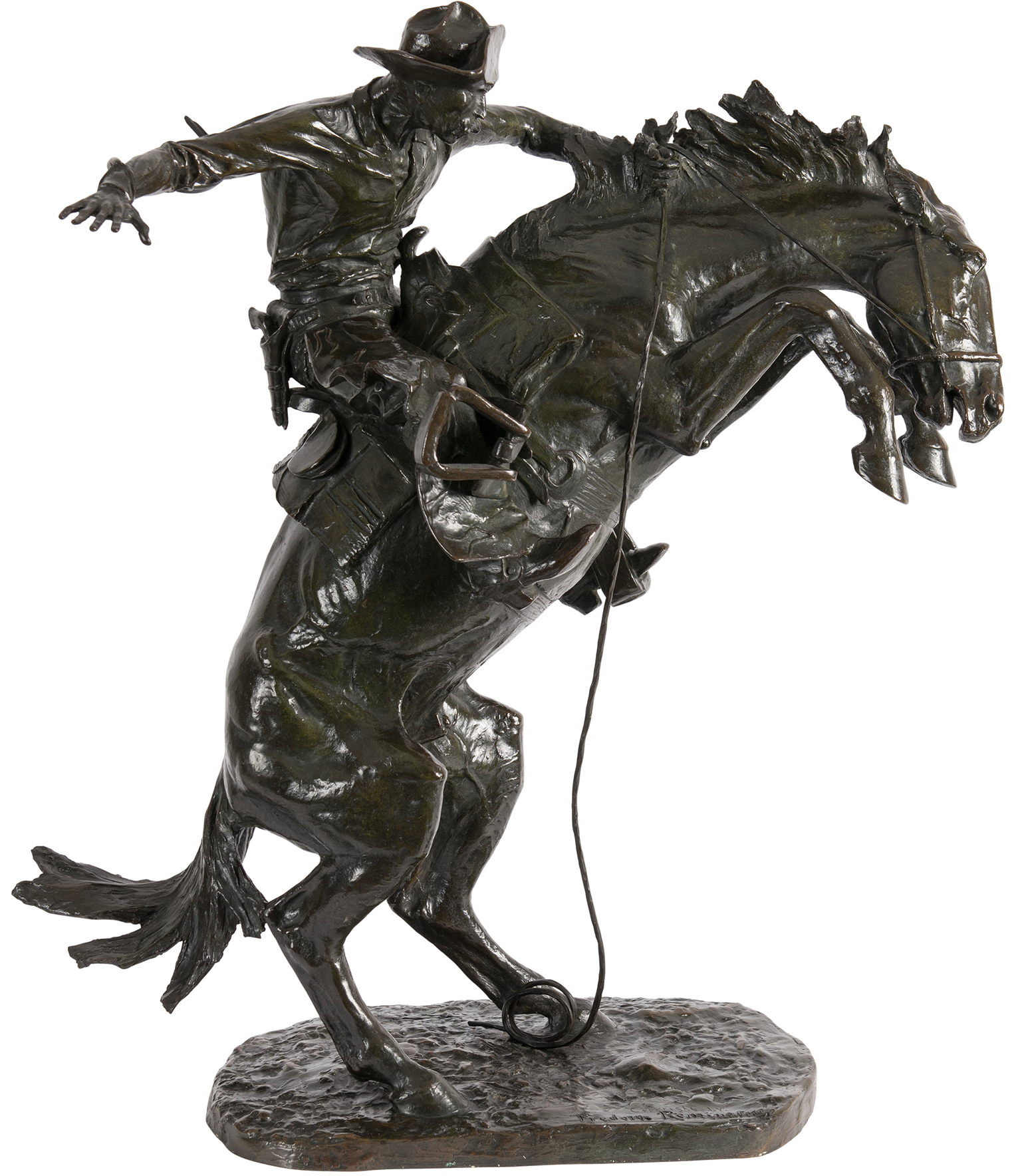
Frederic Remington, The Broncho Buster — bronze, modeled 1895, cast in multiple editions by Roman Bronze Works and Henry-Bonnard Bronze Co. One cast (accession 2005.23.2) is held by the Smithsonian American Art Museum; others appear regularly at auction. This photograph is a Heritage Auctions listing reference.
The sculpture is the most widely reproduced Western bronze in American history and the defining image of the bucking horse + cowboy iconography. Critically for this project: Remington used the Broncho spelling — with H — the same form used by the Morrison Coffee Company and carried forward by Hoffmann-Hayman on their San Antonio coffee tins and pails.
By the time Morrison coined the brand (pre-1912), Remington’s Broncho Buster had been in wide circulation for nearly two decades. The “Broncho” spelling was the prestige American form of the word in that era, distinguishing the Western equestrian term from the generic Spanish bronco. It appears on Remington’s own signature and on period exhibition labels.
The same spelling appears on the H&H tin in our collection — a three-pound Hoffmann-Hayman Broncho pail, post-1917 acquisition trade dress carrying the bucking-horse vignette inherited from the Morrison era.
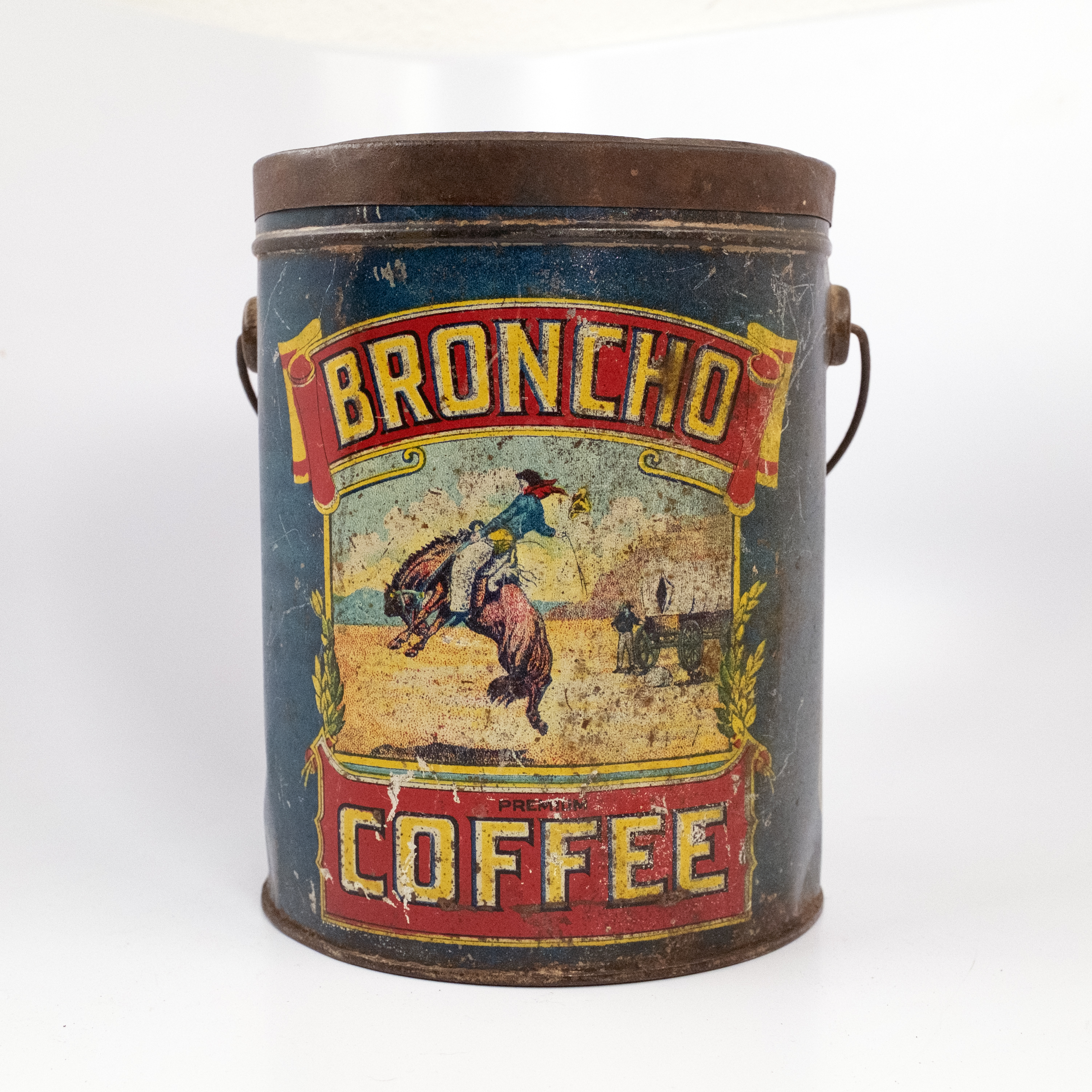
Full rotation and auction context: Broncho Coffee tin, three-pound pail.
The Smithsonian American Art Museum entry on the work notes that the original bronco busters were Mexican vaqueros — with mixed European, Indigenous, and African heritage — grounding the word in its Spanish origin: bronco (rough, wild, unbroken). San Antonio, where Hoffmann-Hayman operated, had deep Tejano roots; the word carried both cowboy-English and Spanish resonance simultaneously for local consumers.
See also: Broncho Coffee · O.S.T. Old Spanish Trail Coffee · Corning Museum of Glass — Rakow Library