Two Things Changed This Year
This is not a post about a tin or a newspaper clipping. It is a progress report — a note on where the research stands after roughly a year of sustained work, and on two changes that will shape everything that comes after.
The first thing: the newspaper backlog is cleared
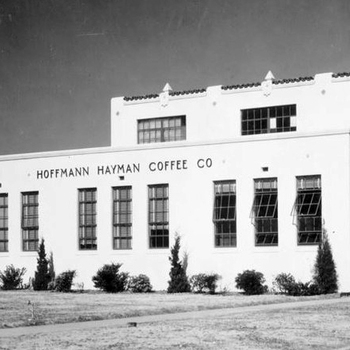
The Hoffmann-Hayman Coffee Co. ran from 1899 to 1972. For most of that span, they advertised heavily in the San Antonio newspapers — the Express, the Light, the Express-News, and a handful of trade papers. Those ads and features have been available on Newspapers.com for years. They were not, however, compiled anywhere in one place with cross-references to the people, brands, and products they documented.
That changed this year. Working in batches, we combed through the newspaper record from 1913 to 1965: the Hayman founding years, the early H and H Blend campaigns, the competitive landscape of the 1920s, the Depression-era packaging transitions, the Flav-O-Tainer years, and the long Master Chef run into the 1960s. Each batch was read, transcribed where OCR couldn’t, tagged, and compiled into the knowledge base.
The most significant discovery in that sweep was Helen Hoffmann. She was William R. Hoffmann’s daughter — born around 1911 or 1912, a year before her father died. The Texas Girl Coffee brand launched in 1933, more than two decades after his death, and the evidence had always suggested the brand was named in her honor. This year we found the full arc of her life: her social record in the 1930s through Phi Zeta Chi sorority, the teas she hosted at 126 W. Agarita, her stepfather Dr. William J. Schlosser, and finally her obituary with portrait from January 1945. She was thirty-three years old. The Texas Girl brand outlived her by nearly thirty years.
A second synthesis that came out of this year’s work was the premium programs: five distinct eras of coupon-redemption, deposit-jar, and trading-stamp programs running from 1912 through the early 1960s. The earliest program — pails redeemable for premiums in the company’s first years — was something we’d seen in passing before. Pulling it into a single cross-cutting view made visible a thread that ran the entire life of the company.
The practical result: the knowledge base now holds 144 pages covering people, companies, brands, places, events, and artifacts, and passed its last lint check with zero defects. The post archive now reaches back to the company’s founding years.
The second thing: the lemon wiki
The work kicked off this spring around Fiesta — our way of celebrating puro San Antonio. H and H Coffee was a San Antonio institution for seventy-three years, so it felt right to mark the season by throwing everything at the project: hundreds of photographs, advertisements, and archival files added in a concentrated push. By the time Fiesta week was over, the collection had grown faster than any previous stretch of the project.
That flood of new material made a structural problem impossible to ignore. Researchers have a name for the pattern where notes pile up faster than they can be connected: the pile. The newspaper PDFs were going into a pile. The transcriptions were going into a pile. The photographs, the brand crops, the accession records, the observations about who worked there, which brands overlapped, and when the packaging changed — pile.
The change we made this year is a structural one. The knowledge base is now maintained as an LLM wiki: a curated, lint-validated layer where every fact lives in one place, carries its source, and links to every related page. We have been calling it the lemon wiki in conversation, because LLM wiki is a mouthful and the nickname stuck.
The mechanics: raw sources (newspaper PDFs, transcriptions, accession records) go in. An LLM reads them, extracts what is research-grade, and writes it into the appropriate knowledge base page — or creates a new page if one is needed. Cross-links are explicit. A schema governs what each page type can contain. A linter enforces it. The Jekyll site renders from a projection of the wiki rather than from the wiki directly, which means the wiki stays clean and the site stays flexible.
What this changes is not the facts — those were always there, in the pile. What it changes is whether the facts can be found and combined. When we compile a new newspaper batch now, the discoveries from it immediately surface against everything already known: the employee who appears in a 1923 feature shows up in the 1934 product roster, which links to the brand page, which links to the accession. The pile is a graph now.
The graph produces things the pile never could. Once the cross-links were in place, we could ask questions that span the full 73 years and get answers built from dozens of sources at once. That produced two new kinds of pages this year.
Synthesis pages pull a single thread across the whole company history. The premiums synthesis, mentioned above, is one. There are also synthesis views of the full people record, the related companies, the open research questions, and a mystery register — documented gaps where the evidence points somewhere but hasn’t arrived yet.
Story pages are longer-form narratives assembled from whatever the wiki knows. Eight of them exist now:
- The Menger Connection — how Minnie Menger’s family came to run the company for fifty years, and how that connects H and H to the Menger Hotel dynasty of the 1850s.
- The Glass Story — the supply chain behind every Crystalvac jar in the collection: Three Rivers Glass, the Ball Brothers acquisition, the Owens-Illinois era, and the $1.35 million antitrust suit that followed.
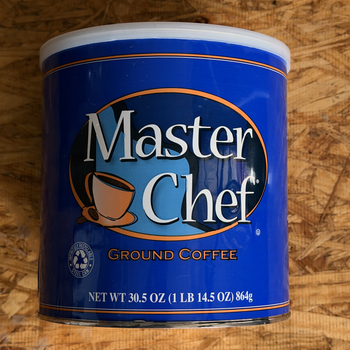
- Master Chef: Hotel to Home — how the institutional coffee trade at H and H (documented in a job title from 1923) became the brand’s longest-running product line, still visible on the wall at Mi Tierra more than seventy years later.
- H and H in San Antonio: A Business Arc — the company’s founding, growth, and eventual end, read through the newspaper record.
- Factory Modernization, Packaging and Preservation, People Behind H and H, and San Antonio Brand Presence complete the set.
None of those stories existed as written pieces a year ago. The facts were scattered across dozens of posts and accession records. The lemon wiki connected them; the stories fell out of the connections.
What comes next
There is still work to do. Three posts from the early 1920s resisted every OCR pass and are waiting on manual transcription. The Crystalvac accession records are being extended with full catalog links. Several open questions on the people pages remain open — the research record has edges that don’t yet connect to primary sources.
But the foundation is in place. The newspaper record from 1913 to 1965 is compiled. The structure that makes it compoundable is built. The next source we add doesn’t go into the pile.