Research Update: July 30, 2026
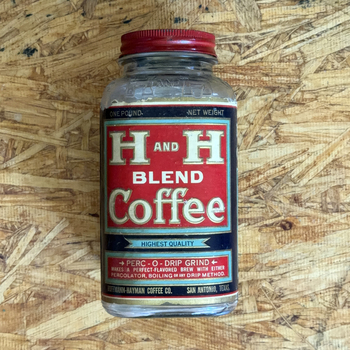
Most of this session was quiet provenance work under the hood, but it turned up two findings worth a diary entry — because between them they document both ends of what happened to the Hoffmann-Hayman brand after the family let it go. We already had the physical terminus of that line on the shelf (the current-production Master Chef can). This week we put a name and a certified document on the start of it, and a company page on the end.
How Continental actually bought H&H — a shelf company named “Country Coffee”
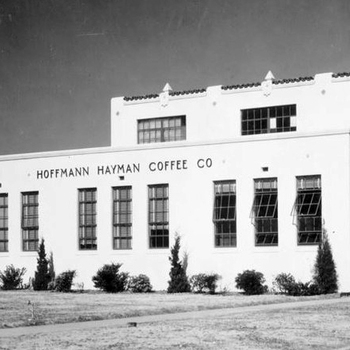
We’ve long recorded that Continental Coffee purchased Hoffmann-Hayman in December 1962. What we didn’t have was the mechanism. A certified copy of the Texas Secretary of State filing — pulled from SOSDirect and now compiled into the KB — supplies it, and it’s more deliberate than a plain sale.
Continental didn’t buy H&H under its own name. On November 29, 1962 it filed articles of incorporation in Texas for a company called Country Coffee Company — a generic, anonymous name with nothing coffee-famous about it. Twelve days later, on December 11, 1962, that brand-new corporation took the name “The Hoffmann-Hayman Coffee Company” — the same day the original 1912 corporation surrendered it. The handoff was synchronized to the day.
The document gives up the disguise in a few places. All five initial directors sat at a single address — One North La Salle Street, Chicago — Continental’s corporate orbit (Paul Homer, Jerome Marks, Sheldon Karon, Charles N. Salzman, Henry H. Koven). The two local incorporators, Kathleen Paisley and Luella Fabian, worked out of the N.B.C. (National Bank of Commerce) Building in San Antonio and were notarized in Bexar County on November 19 — there to satisfy the Act’s Texas-citizen requirement, and a lead on which San Antonio firm papered the deal. And the certified copy issues under the entity’s final legal name, “Continental Coffee Company of Colorado” — the shell and the parent visible on one page.
Read together, it’s a confidential acquisition being staged: a clean corporate vehicle stood up in advance to receive the brand and the plant without announcing Continental’s hand. It then ran the plant under the H&H name until the 1965 rename to Continental Coffee Company of Texas. New page: Country Coffee Company.
Who holds “Master Chef” now — the far end of the chain
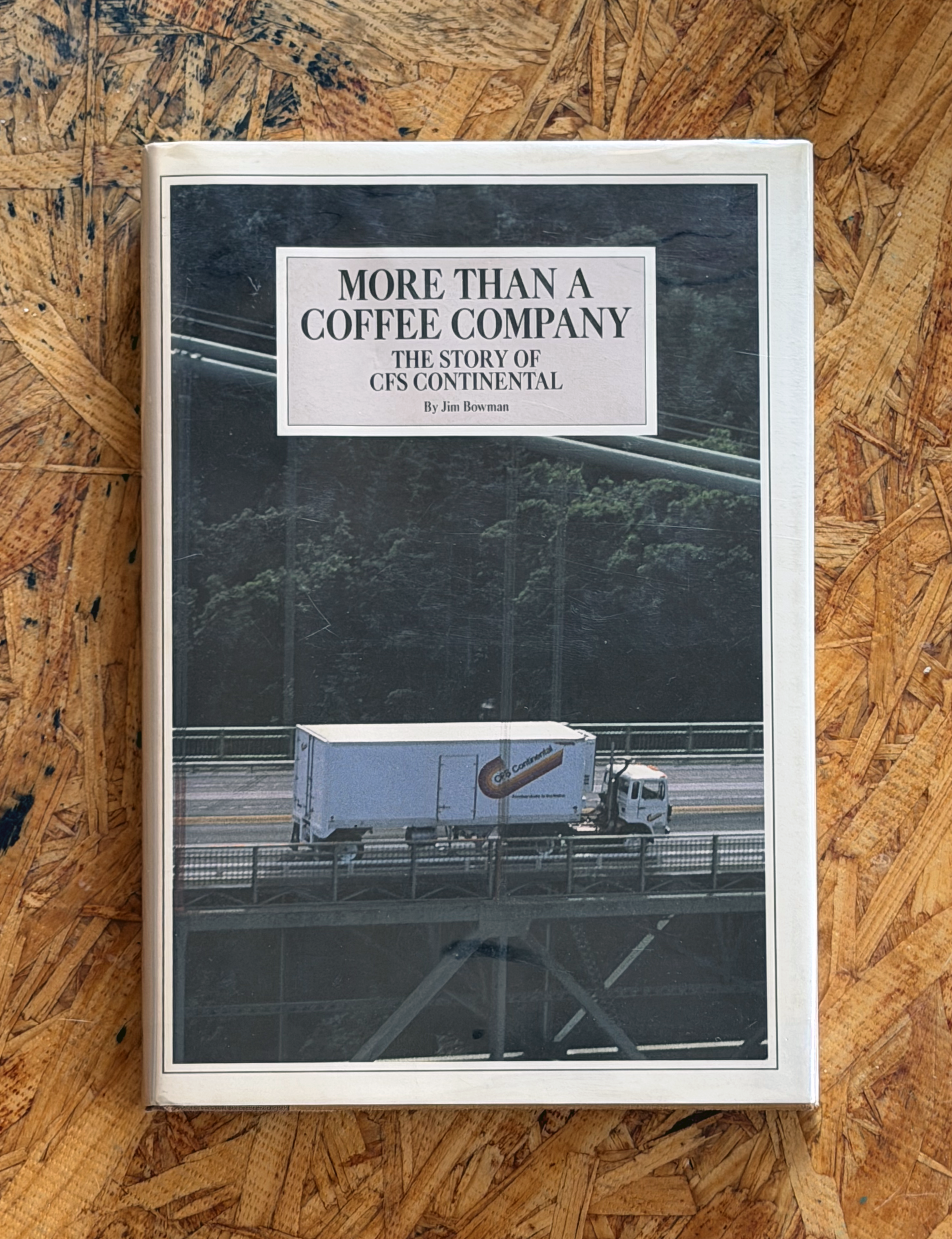
At the other end of the line is Massimo Zanetti Beverage Group, now a page of its own. It’s a privately held Italian coffee company out of Bologna, built from the 1970s around the historic Segafredo brand, and its US arm — Massimo Zanetti Beverage USA, headquartered in Portsmouth, Virginia — is the current owner of MASTER CHEF, U.S. trademark registration 2366913 for coffee. That’s the live mark that blocks a Master Chef revival at 601 Delaware, and it’s the corporate descendant of the company that bought us. The full chain reads Hoffmann-Hayman → Continental → Massimo Zanetti.
One honest caveat, recorded on the page: the Wikipedia source we compiled from has no history section and never mentions Sara Lee, Continental, CFS, or Master Chef. It cannot corroborate the chain — that link rests on the trademark record, not the encyclopedia. The 1968–1998 use gap in the Master Chef lineage stays open, with the CFS Holdings filing (Serial 76299847) still the most promising thread.
Clippings we cite but don’t actually hold
Reconciling the KB’s source citations surfaced something worth being explicit about: a set of period documents the research refers to but the collection doesn’t hold — no scan, no clipping, no image. Most are Three Rivers Glass company news from 1929–1936 and the 1946 Owens-Illinois / Hartford-Empire antitrust suit cluster (the “$1,350,000 Suit Is Filed Here” run and its follow-ups), plus the 1962 Stevens Outdoor Advertising farewell letter.
Rather than let those sit as citations pointing at nothing, we’ve logged each as an acquisition candidate — a standing to-find list, honest about the difference between what we cite and what we hold. When one of these turns up on Newspapers.com or in an archive, it has a record waiting for it. It’s a small discipline, but it keeps the collection’s provenance from overstating itself.
Housekeeping
Two other threads, briefly. The Macro-Sea dumpster-pool prototype on the building’s south face — the piece acquired in 2015 from MOCA Tucson’s mobile-pools exhibition — moved out of the coffee-history knowledge base and into the 601 Delaware adaptive-reuse wiki, where the building’s forward-looking material lives. And we ran a broad provenance-and-quality pass: reconnecting citations to their canonical gallery records, and formally settling that this KB uses its own native cataloging schema rather than a generic one.
The corporate line is now documented end to end — 1912 charter, 1962 Continental handoff, and the trademark’s living owner in 2026. The open ends are the same two that have been open a while: who those five Chicago directors were on Continental’s side, and where the Master Chef mark actually went during the 1968–1998 gap. Both are trademark-and-corporate-record problems now, not mysteries — which is a better place to be stuck.